
AI news ·
UK creative industries at risk from generative AI, says Lords committee-calls for licensing-first, transparency and identity protections
UK creatives face a real hit as AI trains on their work without consent or pay. Back licensing, protect voice and style, make transparency law so growth won't trample creators.
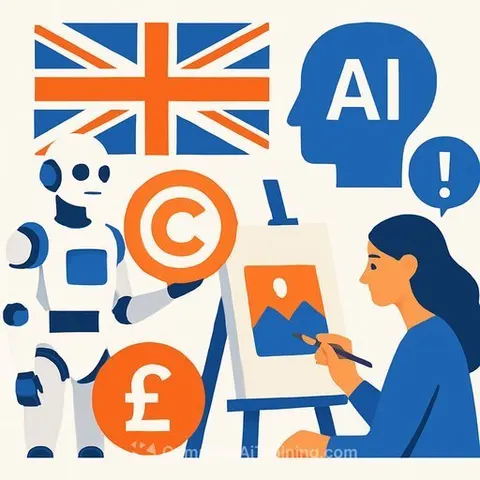
UK creative industries face a clear and present danger from generative AI
6 March 2026 - The UK's creative economy is being undercut by generative AI systems trained on copyrighted work without clear consent or pay. This isn't a problem with the law being outdated. It's a problem of unlicensed use, weak protection for digital likeness, and almost zero transparency from model developers.
The call to action is simple: back a licensing-first AI market, strengthen protections for identity and style, and make transparency a legal requirement. Do that, and the UK can lead responsibly-without sacrificing creators or weakening copyright.
What the committee is saying (in plain terms)
- Copyright isn't the issue. Unlicensed scraping and opacity are.
- Creators lack clear rights over their voice, style, and digital replicas.
- AI firms should license content and disclose training sources.
- The UK can build a fair market for AI training data-and benefit from it.
Key recommendations at a glance
- No new commercial TDM exception with opt-out. Issue a final decision within a year and state clearly now that an opt-out model for training commercial AI is off the table.
- Protect identity, style, and digital replicas. Give creators and performers the legal means to control "in the style of" outputs and voice/likeness clones.
- Make transparency statutory. Require UK AI developers to disclose training sources and consider using public procurement to push international compliance.
- Build a fair licensing market. Support open, global standards for rights reservation, data provenance, and labelling of AI-generated content.
- Prioritise sovereign AI models. Back domestically governed systems that disclose training data and respect copyright from the start.
Why this matters
The creative industries delivered £124 billion in 2023 and are projected to reach £141 billion by 2030. Every uncredited imitation chips away at jobs, bargaining power, and the incentive to create. A licensing-first approach protects incomes and still gives AI developers legal, scalable data access.
What creatives can do now
- State rights clearly: add licensing terms to your website, contracts, and portfolios. Use machine-readable signals for rights reservation where available.
- Adopt provenance tools (e.g., content credentials) so your work carries origin data wherever it travels. See the emerging C2PA standard for content provenance.
- Monitor for "in the style of" outputs and voice clones; document evidence and seek legal advice early.
- Pool leverage via collecting societies or guilds for scalable licensing deals.
- Use AI ethically and transparently in your own workflow. For practical, rights-aware practices, explore AI for Creatives.
What government and public bodies should do next
- Issue a clear public statement ruling out a new commercial TDM exception with an opt-out mechanism.
- Legislate training-data transparency (sources, licensing status, opt-outs honoured), and require it through procurement.
- Introduce protections for identity, style, and digital replicas-covering "in the style of" outputs and voice likeness.
- Fund open technical standards and tools for rights reservation, provenance, and AI-content labelling across the sector.
- Back sovereign UK models and datasets that are licensed, auditable, and compliant by design.
- Engage SMEs and individual creators in market design so licensing isn't captured by only the largest players.
- For structured learning on governance and policy levers, see the AI Learning Path for Policy Makers.
What transparency should actually include
- A list or registry of datasets and sources used for pretraining and fine-tuning.
- The licensing basis for each source and how opt-outs are implemented and enforced.
- Clear labelling of AI-generated outputs and support for content credentials.
- Versioned model cards that explain updates, safety mitigations, and known limitations.
What a fair licensing market needs
- Standard contracts and pricing models for dataset access and model training.
- Collective licensing options for creators and small publishers.
- Affordable access tiers for startups and SMEs to keep innovation broad-based.
- Reliable registries and identifiers to attach rights and provenance to content.
- Fast, low-cost dispute resolution and penalties for non-compliance.
Context for policy
- Text and data mining exceptions exist for non-commercial research, not blanket commercial training. For definitions and scope, see UK guidance on text and data mining exceptions.
- Provenance and labelling standards are maturing; government support can speed adoption across media, advertising, and platforms.
Bottom line
Protect creators. Require transparency. License the data. That's how the UK grows AI responsibly while defending a world-class creative sector.