
AI news ·
UNDP pilots first AI and elections training for Arab electoral bodies in Jordan
Jordan's Independent Election Commission became the first electoral body to complete a combined UNDP AI governance training and digital readiness assessment, with more than 20 staff from five Arab nations participating.
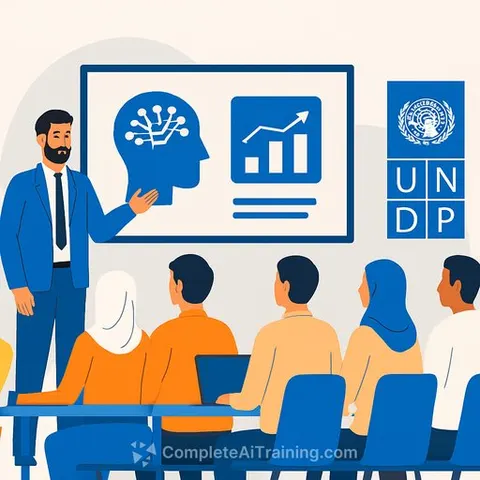
More than 20 staff from Jordan's Independent Election Commission (IEC) and representatives from four other Arab electoral bodies completed a three-day UNDP pilot training on AI and electoral administration in Amman from 16-18 August 2026. The programme combined practical capacity-building with a Digital Readiness Assessment, making IEC Jordan the first electoral management body to undertake this combined approach - a model that will inform similar efforts globally.
The training was delivered through the Arab States regional component of UNDP's Governance for People and Planet (G4PP) programme, in partnership with the Organization of Arab Electoral Management Bodies (ArabEMBs). Supported by the Swedish International Development Cooperation Agency (Sida), it marked UNDP's first dedicated training on AI for Government and elections.
Governance requirements before technical adoption
The sessions treated governance as an operational prerequisite, not an afterthought. Participants worked through who should authorize an AI initiative, which technical, legal and operational expertise must inform the decision, and how institutional responsibility should be maintained throughout implementation and oversight.
A South-South exchange with Mexico's National Electoral Institute (INE) grounded these questions in practice. Electoral Councilor Norma Irene de la Cruz Magaña and José Alberto Pérez de Acha, General Coordinator of INE's Information Technology Services, described how the institute connects decisions about AI and digital transformation to its institutional mandate and public accountability obligations. EMB representatives from Iraq, Libya, Palestine and Tunisia also shared perspectives from their own institutions.
Measurable gains in AI knowledge and detection skills
Pre- and post-training self-assessments showed progress across all ten learning areas, with the average score rising from 60.6% to 82.6%. The strongest result came in identifying AI-generated or manipulated text, images, audio and video, where the post-training score reached 87.3%. That gain points to stronger capacity for recognizing synthetic content that could be weaponized for disinformation during electoral periods.
Practical exercises pushed participants to start with the institutional problem, assess whether AI was an appropriate response, and identify the safeguards and accountability arrangements required before any system goes live. Discussions covered bias, cybersecurity, data protection, testing protocols, approved platforms and human oversight - all filtered through an electoral lens.
What the pilot means for future elections
IEC Jordan will use the Digital Readiness Assessment findings and training results to build its longer-term capacity plan. With local elections expected in 2027 and parliamentary elections due by 2028, the plan will address identified gaps, strengthen staff capability and establish governance arrangements for future AI decisions.
UNDP will draw on feedback from IEC Jordan and regional participants to refine the training before delivering it with electoral bodies in other regions. Lessons from the Sida-supported programme will inform both the ArabEMBs network and UNDP's global electoral support strategy.
Why this matters for IT and development professionals
For teams working in AI for IT & Development, this pilot offers a concrete reference for what institutional AI readiness looks like in practice. The governance-first approach - requiring authorization chains, multidisciplinary input and ongoing oversight before any system is deployed - maps directly to the controls IT professionals are expected to implement. The 87.3% post-training score on detecting AI-generated content also underscores a growing demand for technical staff who can build or manage detection pipelines, not just deploy generative tools. As more public-sector bodies follow this model, the need for professionals who can bridge AI systems, security requirements and institutional accountability will expand.