
AI news ·
UNESCO Seeks Partners to Develop AI Literacy Training for Women with Disabilities in China
UNESCO seeks OPDs to lead an AI training program for women with disabilities in China, enhancing digital skills from June to November 2025. Apply by May 23, 2025.
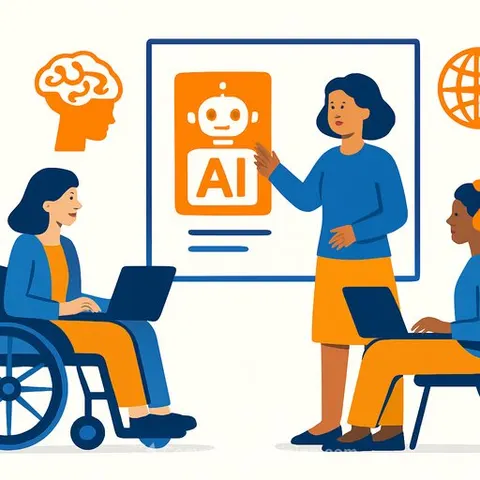
Call for Proposal: AI Training Program to Boost AI Literacy Among Women with Disabilities in China
UNESCO Regional Office for East Asia invites Organizations of Persons with Disabilities (OPDs) to lead a project focused on AI education for women with disabilities in China. This initiative runs from June to November 2025 and aims to close the digital skills gap by delivering accessible, inclusive AI training.
Background
Since 2014, UNESCO's Global Disability Fund in China has improved various aspects of life for persons with disabilities, including employment and education. The current phase, in partnership with UNFPA and ILO, addresses key challenges like digital literacy, accessibility, and employment.
Women with disabilities often face barriers in accessing digital tools and learning materials. This project seeks to equip them with AI skills to improve their opportunities in education, work, and social engagement.
Objective
The goal is to partner with an OPD to design and implement an AI training program that meets the unique needs of women with disabilities across China.
Expected Results
- Enhanced AI skills and confidence among women with disabilities.
- Strengthened capacity of educators and community leaders to deliver inclusive AI training.
- Established support networks ensuring sustainability and program growth.
Scope of Work
The selected partner will collaborate with UNESCO to:
1. Curriculum Design and Course Development
- Create a modular AI curriculum with at least three parts: foundational AI concepts, accessible AI tools, and practical applications.
- Develop inclusive learning materials such as subtitled videos, sign language content, accessible e-books, podcasts, and visual infographics.
2. Capacity Development
- Train 20 educators and community leaders, prioritizing women with technology and disability rights backgrounds, to independently deliver AI literacy sessions.
- Conduct at least four workshops (around 20 participants each) through webinars and in-person sessions at universities and disability centers.
- Launch an accessible online community platform for peer learning and mentorship, targeting active engagement from at least 100 participants in the first year.
3. Evaluation and Feedback
- Use pre- and post-training assessments to measure improvements in AI literacy and confidence.
- Collect participant feedback to refine curriculum and teaching methods.
4. Sustainability and Scalability
- Build partnerships with colleges, OPDs, women's groups, and technology companies to embed the program long-term.
- Develop a framework for expanding the training to new regions and ensuring continuity beyond the pilot phase.
Deliverables
- A full AI curriculum and inclusive learning materials available under open access licenses.
- Documentation of all training sessions, including participant lists, schedules, and summaries.
- An operational peer-learning platform with a sustainability plan.
- A comprehensive final report covering outcomes, participant success stories, evaluation results, challenges faced, partnership details, and plans for scaling.
All reports must be submitted in English and Chinese.
How to Apply
Only OPDs may apply. Submit your application in English by 23:59 (GMT+8), 23 May 2025 via email to q.zeng@unesco.org. Your submission should include:
- Technical Proposal referencing the project title, including organization profile, relevant experience, team structure with CVs (experts in AI, digital literacy, accessibility, gender equality, and disability inclusion), and a detailed workplan with timelines.
- Financial Proposal with a clear budget breakdown and unit costs.
This initiative offers a valuable opportunity for OPDs to lead AI literacy efforts that create meaningful digital inclusion. For individuals and organizations interested in expanding AI skills, exploring resources on latest AI courses might provide additional insights into the skills and tools shaping AI education today.