
AI news ·
Unesco strengthens digital and AI learning in Tanzania's vocational education
UNESCO trained 60 staff from two Tanzanian vocational colleges to integrate AI and digital learning into TVET curricula through the BEAR II project, partnering with Korea and Tanzania.
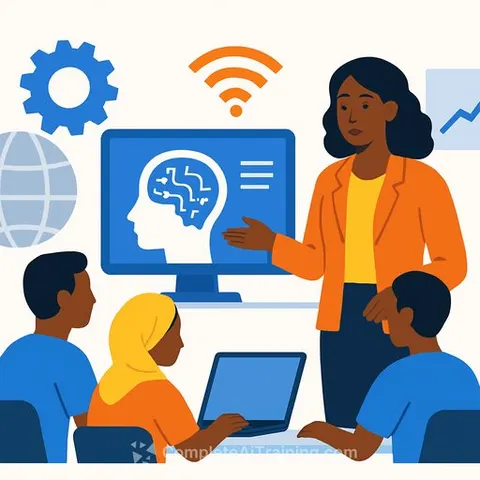
UNESCO has completed two capacity-building workshops aimed at integrating digital learning and AI into Tanzania's Technical and Vocational Education and Training (TVET) system, part of a broader effort to modernise vocational education and prepare students for a digital labour market.
The initiative, delivered through the Better Education for Africa's Rise (BEAR II) project, brought together 60 academic staff, institutional leaders and technical personnel from the Karume Institute of Science and Technology in Zanzibar and the Morogoro Vocational Teachers Training College. The workshops focused on helping educators implement competence-based curricula while developing practical approaches to digital learning, assessment, quality assurance and cooperation with industry.
Hands-on training, not theory
Rather than focusing only on theoretical digital skills, the training involved curriculum design, simulations, demonstrations and peer learning. Participants worked directly with their institutions' curricula and systems, allowing them to develop approaches that could subsequently be applied in classrooms.
Educators explored how digital technologies and AI can be integrated into teaching and learning alongside work-based learning and more practical forms of assessment. The workshops were organised in partnership with the Republic of Korea and the government of Tanzania.
Connecting education to labour-market needs
UNESCO said the programme is intended to help Tanzania modernise vocational education while preparing young people for an increasingly digital labour market. Through the BEAR II project, UNESCO is supporting TVET institutions in developing education that responds more closely to labour-market needs while incorporating digital innovation and practical skills for employment and lifelong learning.
For educators and institutional leaders in vocational training, the takeaway is that digital transformation depends on more than providing technology. It requires teachers who can integrate digital and AI tools effectively into learning, which is why the programme links those tools with curriculum reform, teacher capacity and labour-market needs. For those working in education, resources like AI for Teachers or broader coverage of AI for Education can offer practical starting points for building those skills.
Why this matters for education professionals
Tanzania's approach illustrates how digital education policies can become part of broader workforce development. The model - pairing teacher training with curriculum reform and industry cooperation - offers a reference point for education professionals elsewhere who are expected to integrate AI into their teaching without losing sight of what students actually need to learn.