
AI news ·
UnitedHealth's $3 billion AI investment sends bots to call doctors
UnitedHealth is deploying voice AI bots to call physician offices, backed by a $3 billion technology investment. The bots handle routine tasks like prior authorizations and claims follow-ups, but provider groups warn of confusion when the AI cannot answer off-script questions.
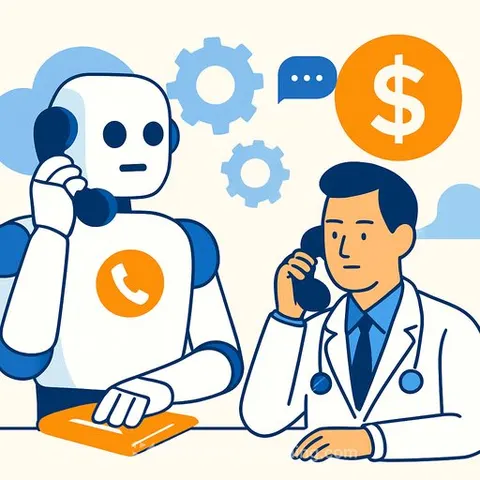
UnitedHealth Group is deploying voice AI bots to call physicians as part of a $3 billion technology investment aimed at automating clinical and administrative workflows. The insurer confirmed the program in June 2026, signaling a major escalation in how the nation's largest health insurer uses artificial intelligence to interact directly with provider networks.
The initiative places automated calls to doctor offices for tasks such as verifying patient information, checking on prior authorizations, and following up on claims status. UnitedHealth has not publicly detailed the full scope of the rollout, but the $3 billion figure underscores the scale of the commitment. The company employs more than 90,000 physicians through its Optum Health unit and processes claims for millions of patients.
For clinicians and practice managers, the shift means phone lines that once connected to human representatives may now be answered by AI-driven systems - or, in some cases, the calls themselves will originate from a bot. The technology is designed to reduce the administrative burden on both sides, though early reactions from provider groups have been mixed.
What the bots actually do
The voice AI agents handle routine, high-volume calls that typically require a human to read from scripts and enter data into a system. Tasks include confirming a patient's insurance eligibility, requesting clinical documentation for a pre-authorization, or scheduling follow-up appointments. UnitedHealth said the bots are not making clinical decisions. They operate within structured, rules-based parameters and escalate to human staff when a conversation falls outside their scope.
One industry analyst described the move as "the natural endpoint of a decade of payer digitization." The insurer has already deployed AI across its claims processing and internal operations. Extending that automation to the phone lines is a logical, if contentious, next step.
Reaction from physicians and practice staff
Provider groups have raised concerns about transparency and the potential for error. The American Medical Association has previously warned that AI-driven prior authorization tools can create new friction if they are not clearly identified as automated systems. Some practice managers said they were unaware that calls from the insurer were being handled by bots, leading to confusion when the AI could not answer off-script questions.
UnitedHealth said it is working with provider organizations to improve disclosure. A spokesperson told Bloomberg that the technology "is designed to make these interactions faster and more consistent, not to replace the clinical judgment that only a physician can provide."
Why this matters for healthcare professionals
For anyone working in clinical operations, revenue cycle management, or practice administration, this development changes the nature of payer-provider communication. The same AI Agents & Automation that are reshaping back-office claims processing are now moving into real-time, voice-based workflows. That means fewer hold times for some, but also new training needs for staff who must learn to interact with and escalate from automated systems.
The $3 billion investment signals that these voice bots are not a pilot program - they are a permanent part of the infrastructure. Health systems and independent practices will need to decide how to integrate AI-driven calls into their own workflows, and how to train front-desk teams to recognize when a bot is on the line. As AI voice tools become more common across AI for Healthcare applications, the pressure to adapt will only grow.