
AI news ·
Universities weigh integrity against learning as AI reshapes assessment
Universities are redesigning assessment around fear of AI rather than evidence of learning, warns University of Melbourne academic Dr. Nira Rahman. The shift risks eroding trust, equity, and the very learning processes assessment exists to measure.
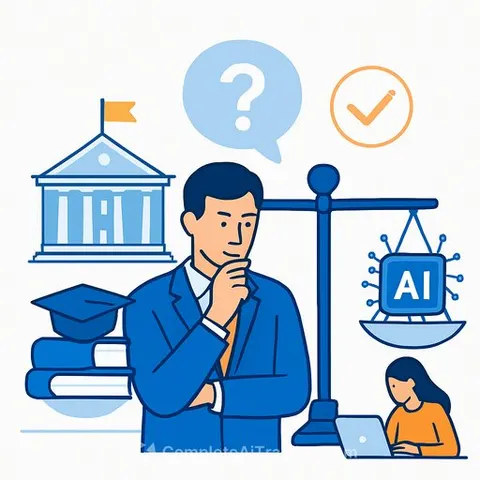
Generative AI has forced universities to confront a question at the heart of higher education: how do they know students have actually learned? Institutions worldwide are rethinking assessment with urgency, driven by the need to protect academic integrity and public confidence in degrees. But Dr. Nira Rahman, an academic at the University of Melbourne, argues the response risks being shaped more by fear of AI than by educational evidence.
Why assessment evolved
Assessment has never been static. For much of the last century, it focused on measuring what students knew at a particular moment. Over recent decades, educational research reshaped that view. Learning is now understood as developmental, social and contextual - emerging through reflection, dialogue, feedback and practice. No single assessment, however rigorous, can capture the full breadth of what students know and can do.
That understanding broadened how universities evaluate students. Authentic, reflective and collaborative assessments emerged because they aligned more closely with how learning develops. Assessment became part of the learning process itself, not just a way of judging achievement.
Rahman says this history matters because it shows educational change has traditionally been driven by a deeper understanding of learning. Today, AI risks shifting that conversation. "Instead of asking how assessment can best support learning, we are increasingly asking how it can best resist AI," she writes. "The distinction may appear subtle, but it is profound. One question begins with learning; the other begins with technological anxiety."
What AI-driven assessment changes
The distinction has real consequences. Assessment does more than verify learning - it shapes it. Research has long shown that assessment influences what students pay attention to, how they study and what they ultimately learn. If assessment is redesigned primarily to authenticate learning rather than advance it, universities change not just how students are tested but what they value and how they engage.
The shift also affects the relationship between students, educators and institutions. Rahman argues that trust is fundamental to effective education, alongside accountability. "Trust enables students to take intellectual risks, make mistakes, seek feedback and grow," she writes. "These are not signs of weak learning - they are the very processes through which deep learning occurs." Assessment built around suspicion rather than trust raises the question of what kind of learning culture universities are creating.
Equity is another concern. No assessment is neutral; every format advantages some learners while creating barriers for others. Decades of work have broadened assessment to recognise diverse ways students demonstrate knowledge. If AI pushes universities toward more controlled and uniform assessment, Rahman asks who benefits and whether progress toward inclusive assessment is being undone.
The greater risk, she argues, is not AI itself but allowing technological urgency to narrow educational imagination. "If our primary goal becomes designing assessments that AI cannot touch, we risk overlooking a far more important question: what kinds of assessment best prepare students to think critically, exercise judgement, collaborate ethically and learn in a world where AI is becoming part of everyday professional life?"
Integrity and learning are not competing priorities
Rahman is clear that universities cannot ignore the challenges AI poses to authorship, originality and evidence of learning. Protecting academic integrity is essential to maintaining public confidence. But integrity and learning should not become competing priorities. "The purpose of assessment is not simply to verify that learning has occurred; it is to create the conditions in which meaningful learning can occur."
The central question, she says, is whether universities are redesigning assessment based on what educational evidence says about learning, or based on what technology makes vulnerable. If the latter, assessment becomes a matter of defence rather than education. If the former, assessment can evolve while preserving trust, inclusion, authentic engagement, critical thinking and human judgement.
For educators navigating this shift, practical training can help bridge the gap between integrity concerns and effective teaching. Resources like AI for Education and the AI Learning Path for Teachers offer guidance on integrating AI into pedagogy without abandoning educational principles.
Why this matters for education professionals
For teachers and academic staff, the stakes are immediate. The way you redesign assessment now will determine whether AI becomes a tool that expands what students can learn or a threat that narrows how you can teach. Rahman's argument offers a practical lens: when you revise an assignment or exam, ask whether the change is grounded in how students actually learn - or simply in what AI can't do. If the latter, the assessment may protect integrity while undermining the learning it exists to measure. The choices made in classrooms and faculty meetings now will shape not only how students are assessed, but what universities ultimately value.