
AI news ·
Utah announces $5 million AI grant program to fund mental health care research
Utah announced a $5 million AI grant program for mental health research. It will automate clinical tasks as one in five young Americans use chatbots for mental health advice.
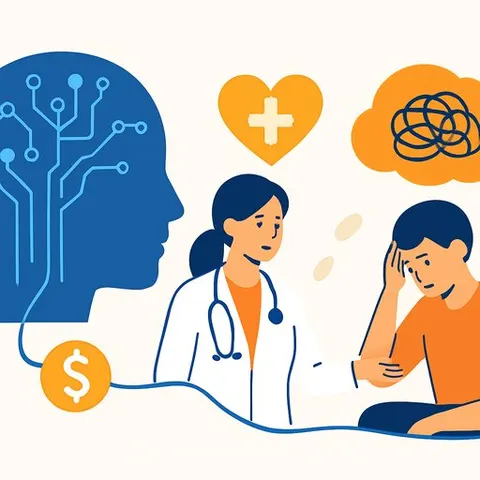
Utah Governor Spencer Cox announced a $5 million AI Moonshot grant program designed to fund research tackling state challenges in mental health, water, healthcare, and autonomous systems. Applications open Saturday, with grants ranging from $50,000 to $1 million. The push arrives as a Rand study found nearly one in five Americans aged 12 to 21 have already used an AI chatbot for mental health advice, underscoring the need for safe, effective tools.
A $5 million push to address mental health with AI
The program, administered by the Nucleus Institute and funded through the Higher Education Research Funding Pilot, will include student and rural researchers alongside established institutions. "Mental health across the state has been increasing in recent years," said Angela Smith, CEO of Nucleus Institute. "We see AI as an opportunity to help work on solving some of these issues." Smith added that the state is looking for ideas that reach as many residents as possible: "We're looking for big ideas that are going to impact as many Utahns as possible. Success looks like we're making a positive difference." Governor Cox echoed that ambition, saying in a statement, "We are stepping forward with the ingenuity that has always defined our state. Actively guiding the future of technology to enhance the lives of every Utahn."
Automating bureaucracy to free up clinicians
Dr. Warren Pettine with the Huntsman Mental Health Institute believes AI's biggest near-term impact may not be replacing providers but giving them more time with patients. "The biggest impact is going to be increasing human-to-human time through taking a lot of those bureaucratic tasks and automating them," Pettine explained. That could mean handling billing, scheduling, and other administrative work while researchers continue studying how to use AI safely. Pettine stressed that the technology will keep moving regardless. "People aren't going to stop using these things. What we need to do is come together and really understand the impacts." For healthcare professionals, the promise of reducing administrative burdens through tools like automated billing and scheduling reflects a tangible benefit of AI for Healthcare.
Why this matters for healthcare professionals
Utah's investment signals a state-level push to channel AI into concrete mental health applications, with a clear focus on safety and clinician workflow. The program's emphasis on automating non-clinical tasks could directly reduce burnout in overburdened practices, while the inclusion of rural researchers may expand access in underserved areas. Healthcare professionals should watch for grant-funded tools that reshape daily workflows and improve patient access to mental health support-and for the rigorous safety research that accompanies them.