
AI news ·
VIPR Solutions and WCL introduce AI workflow to automate delegated authority bordereaux processing
VIPR Solutions and WCL launched an AI workflow to automate bordereaux data ingestion for London market underwriting. It removes manual bottlenecks to deliver cleaner data faster.
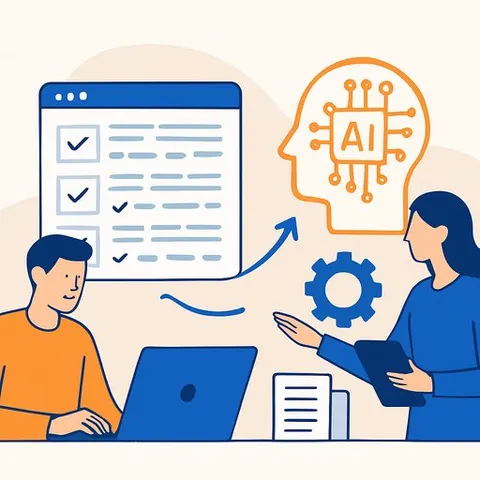
VIPR Solutions and WCL have launched an end-to-end AI workflow for non-bureau delegated authority underwriting in the London market. This collaboration automates the manual ingestion of bordereaux data, aiming to replace current workarounds with cleaner, decision-ready data earlier in the underwriting process.
Delegated authority underwriting currently relies on a broken handoff. Brokers send placement messages with attached bordereaux, but this data drops out of the digital workflow once it passes front-end systems. Carriers, managing general agents (MGAs), and reinsurers are forced to manually reload this information into downstream systems to price, reserve, and monitor their books of business.
Closing the workflow gap
The new partnership connects broker submissions directly to AI-enabled validation, reconciliation, and reporting. This integration eliminates the manual bottleneck that has long frustrated the market. According to VIPR Solutions, "the real value in deploying AI in the delegated authority space is in giving underwriters, operations teams and capacity providers better data, at greater speed."
Instead of replacing human underwriters, the technology focuses on practical workflow automation. Teams are seeing measurable gains in data validation, exception handling, bordereaux ingestion, and audit trails. By automating these repetitive tasks, AI for Operations allows professionals to focus on oversight rather than manual data entry.
The evolution of AI in underwriting
A recent whitepaper from VIPR Solutions outlines how this technology has matured beyond basic optical character recognition (OCR). A year ago, carriers used AI primarily to route claims and flag anomalies. Last year, reasoning models began analyzing risk scenarios and recommending pricing adjustments.
Today, AI manages entire workflows end-to-end, with humans providing oversight only at key decision points. Over the next 12 to 24 months, the technology will focus on surfacing data quality issues at the point of capture. This approach gives (re)insurance carriers a single, defensible data trail to improve reporting and portfolio visibility.
Why this matters for insurance professionals
For practitioners adopting AI for Insurance, the immediate value of automation lies in data integrity, not replacing human judgment. By fixing the bordereaux bottleneck at the point of capture, underwriters and capacity providers can accelerate onboarding. This reduces the operational friction that currently slows down delegated authority deals.