
AI news ·
Wake schools draft policy discourages AI detectors and requires students to explain AI use
Wake County's 4-page draft AI policy discourages AI detectors and requires students to disclose AI use. The board reviews the document Wednesday before a final August vote.
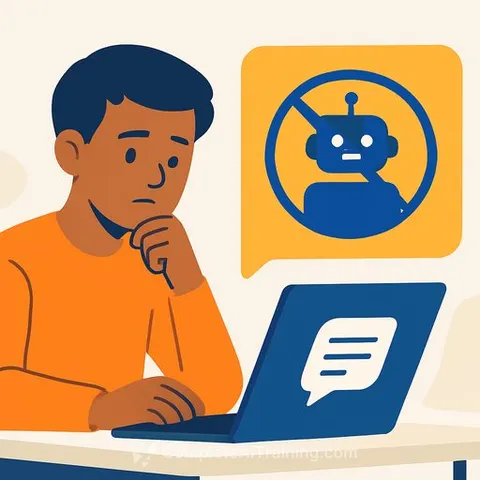
A new draft policy from the Wake County Public School System discourages teachers from using AI detection tools, requires students to acknowledge and explain any use of generative AI, and details ethical guidelines for staff and students. The four-page document, set for a policy committee review Wednesday, offers more specific direction than earlier versions or policies adopted by nearby districts as schools confront AI's disruption of traditional learning.
The school board has moved slowly toward a formal AI policy, relying on internal guidance while many other districts adopted brief, stock language about AI literacy and academic integrity. A final vote is not expected before August, requiring approval at two separate meetings. Whatever the board adopts may soon be reshaped by state legislation: House Bill 301 would direct the State Board of Education to create age-appropriate AI literacy standards, developed by the Friday Institute at North Carolina State University, and approve a model policy for local boards covering data privacy, security, and AI use standards.
Publicly discouraging the use of AI detectors
The draft policy states the district "does not support" the use of tools that attempt to estimate how much of an assignment was generated by AI. These detectors have been discouraged by experts, including the North Carolina Department of Public Instruction, because they are error-prone and produce both false positives and false negatives. A Green Hope High School student, Eleanor De Coster Canina, told the school board this spring that a detector flagged an essay she wrote herself, resulting in a zero. She called for a ban on the use of such tools.
District officials say internal guidance already discourages AI detectors, but that guidance has not been made public. Without a clear, public-facing policy, students may not know their teachers are advised against using the tools. The draft aims to make that stance explicit.
Using AI ethically
Unauthorized or undisclosed use of AI to complete schoolwork is classified as "academic misuse" in the draft. Violations would be handled under the existing honor code and code of conduct, which could require redoing an assignment or affect eligibility for activities. The policy calls for a human-centered approach, meaning any use of AI for official purposes by staff or students must be disclosed and explained. Staff should use AI to promote authentic learning, while students must avoid overreliance and use AI only when authorized by a teacher, explaining how it was used.
The draft does not outline enforcement mechanisms, which are typically kept in internal procedures that can be updated without board approval. Teachers have reported that students often use AI to cut corners, and some respond by avoiding technology-based assignments entirely. The state education department's AI guidance, issued in January 2024, includes sample assignments that integrate AI while requiring critical thinking. For example, students might use AI to model real-life scenarios in math or draft arguments in 18th-century style for a social studies debate, then evaluate the output against primary documents.
Why this matters for educators
The draft policy signals a shift away from policing AI use through unreliable detection and toward structured, transparent integration. Teachers should prepare for a classroom where students are expected to acknowledge AI assistance rather than hide it, and where lesson design must actively engage students in evaluating AI-generated content. As districts formalize these expectations, professional development becomes essential. Resources such as the AI Learning Path for Teachers can help educators build the skills to guide ethical AI use and design assignments that preserve academic rigor. With state legislation likely to standardize AI literacy requirements, early adopters of thoughtful policies will be better positioned to adapt.