
AI news ·
When AI Mimics Genius: How ChatGPT Undermines Authentic Creativity and Authorship
AI mimics creativity but lacks true originality born from struggle and intuition. It replaces human effort, turning creation into instant imitation without depth.
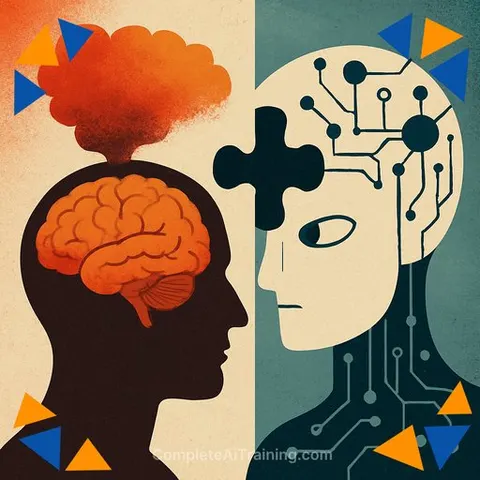
Why ChatGPT Isn’t Your Creative Assistant — It’s Just Cheap Mimicry of Deep Thinking
Think about this: how do you know this article wasn’t written by AI? You might say the flow, structure, and language don’t quite match typical AI output. Maybe you’ve noticed AI tends to overuse punctuation or follows predictable patterns.
Fair enough. But here’s a harder question — how can you be sure the reasoning here is genuinely human? Is there a reliable way to tell? Creativity and intellectual work have always been tied to struggle, refinement, and hours invested. Technology historically helped us do the heavy lifting, boosting productivity while keeping human creativity intact. Calculators and computers didn’t replace the thinking—they supported it.
The Shift Brought by AI
AI disrupts this. Instead of assisting, it starts to replace. Creators — writers, artists, philosophers — wrestle with their ideas over days and months, drafting and discarding work, pouring emotional energy into the process. AI skips all that. It produces essays, artworks, even solutions in seconds, bypassing the human experience of grappling with form, meaning, and inspiration.
The result? Products that look polished but lack the depth and authenticity born from struggle. AI’s output is mimicry, not true creativity.
Rethinking Creativity and Effort
Traditionally, creativity involved a clear link between effort and outcome. The long nights of frustration, those moments of breakthrough, and the physical labor of making something new were all part of creation.
Immanuel Kant offers insight here. He described genius as “the talent that gives rules to art,” meaning genuine creativity doesn’t follow rules—it creates them. True invention comes from an internal drive that resists replication. AI, on the other hand, rearranges existing data based on probabilities. It imitates rather than invents.
This may produce convincing results, but it lacks originality rooted in intuition and the human struggle.
What Happens to Authorship?
Roland Barthes declared the “death of the author,” saying meaning lies in the reader’s interpretation, not the creator’s intent. But he critiqued the authority of the human author, not the idea of authorship itself.
Now, AI-generated texts often appear without a real originator—no lived experience, no intention, no emotional investment. This changes everything. Walter Benjamin warned that mechanical reproduction dissolves the “aura” of artwork—the unique presence tied to human encounter. AI-generated works amplify this issue. They lack existential depth and the narrative of becoming.
In a world full of such artifacts, the question is no longer just “Who created this?” but “Is creation still happening?”
The Human Element in Creation Is Diminishing
Authorship used to mean more than making something; it meant investing part of yourself—intellectually, emotionally, ethically. Previous tech revolutions never challenged this. Calculators didn’t write theorems, word processors didn’t compose novels, and image editors didn’t create art from scratch. These tools extended human ability but never replaced it.
Generative AI changes the game. Simple prompts can produce creative products instantly. The line between human and machine authorship is blurring, forcing us to rethink what creativity even means.
Consider this: if this article were written mostly by AI with only a few genuine arguments from a person, who is the author? What if AI did the reasoning and a person just typed it out to avoid AI detection? Legally and ethically, the answer isn’t clear. AI detectors help a bit, but they’re not foolproof.
The Illusion of Human Agency
Some argue humans still control AI by prompting, editing, and curating outputs. True, but this agency is weaker. Picking from AI-generated options isn’t the same as wrestling with uncertainty and crafting meaning yourself. It’s like choosing a dish from a menu versus cooking a new recipe.
Take the recent trend of converting photos into Studio Ghibli-style images with AI. What took decades for artists to develop is now a quick filter. People unfamiliar with Ghibli’s cultural context jump on the bandwagon, missing the depth behind the style. AI replicates the surface but not the soul.
The Creative Process Diluted
Imagine a novelist spending years building characters and refining every line. Now compare that to someone who just prompts AI for storylines and picks the best one, barely editing. Is that creation or just consumption?
The human struggle, the agency, the becoming—all are missing. This leads to what Marx called “alienation” — a disconnect from the act of creation itself. The meaning of the final product and the process behind it both suffer.
AI Is Not Just Another Tool
Generative AI isn’t simply the next step in creative tools. It’s a categorical shift. Past technology augmented human creativity; Gen AI can replace it. The creative process collapses into mere prompting, sidelining the inner journey of the creator.
This shift is serious and deserves attention. As AI becomes more common, we’re not just adapting to a new tool—we’re questioning creativity, authorship, and human presence in a world where machines speak, paint, and think for us.
- Explore Immanuel Kant’s views on creativity in his Critique of Judgement for deeper understanding of artistic genius.
- Walter Benjamin’s essay The Work of Art in the Age of Mechanical Reproduction offers important context on how technology affects art’s authenticity.