
AI news ·
Why Banning AI in Job Applications Misses the Point of Progress and Authenticity
Fear of AI in hiring stalls progress as organizations reject tools that enhance creativity. Embracing AI can improve communication and reveal true candidate potential.
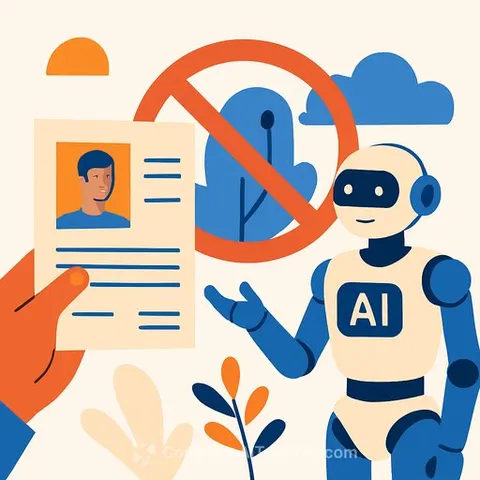
Romanticizing the Typewriter and How Fear of AI Is Holding Back the Future of Hiring
Recently, a debate in a professional WhatsApp group for media, communications, and PR job opportunities sparked a deep and urgent conversation. The discussion centered around a job advert from a reputable organization that explicitly banned the use of AI tools in crafting cover letters and answering pre-shortlisting questions, demanding “original creativity” instead. Applications that ignored this rule were to be dismissed outright.
This stance revealed a sharp divide about the future of hiring, what authenticity means in today's job market, and how technology should fit into recruitment processes.
Resistance to AI: A Step Backward
Warning candidates against using AI in 2025 is less about protecting creativity and more about resisting innovation. Organizations that refuse to adapt risk becoming irrelevant or fading away, as history has shown repeatedly. If humanity had clung to “unassisted effort” rigidly, we’d still rely on stone carvings or smoke signals instead of smartphones and instant communication.
Our progress has always been about adopting tools that amplify our abilities—from the loom to the typewriter, telegrams to Twitter. Technology doesn’t replace intellect; it enhances it.
Technology as a Natural Extension of Work
Consider how technology has eased our daily lives: from archaic medicines to MRI scans, from distant telephone booths to pocket-sized smartphones. The question is, why do some organizations want to reject AI when it’s simply another tool designed to make work better?
Is this resistance truly about protecting creativity, or is it discomfort, fear of losing control, or simply a failure to keep up? Many who oppose AI in applications likely use voice assistants like Alexa or Siri, automate calendars, or rely on AI-powered research tools. Yet, they publicly discourage others from using similar aids in job applications.
The Hypocrisy in AI Restrictions
We accept tools like Grammarly that correct and improve our writing without accusing users of cheating. Why then is AI in job applications seen as a threat? This double standard suggests a deeper unease with the democratization of excellence. Perhaps it’s a fear that others might use AI more effectively or a reluctance to share power.
Instead of disqualifying applicants who use AI to produce polished materials, employers should focus on evaluating the candidate’s actual understanding and creativity in an interview. The true test lies in how well candidates think on their feet and engage with ideas, not in whether they used AI to help prepare their application.
Reframing the Hiring Conversation
Is it possible that employers who forbid AI in applications still use AI internally to filter CVs, manage workflows, or automate tasks? If so, this contradiction exposes gatekeeping disguised as a commitment to “authenticity.”
We did not cling to typewriters because they made us think harder, nor do we abandon emails for handwritten letters out of nostalgia. We evolve because survival and competition depend on it.
Creativity does not emerge in isolation or “pure” form. Just as marathon runners use shoes to improve performance, candidates should be allowed to use AI tools as catalysts—not crutches—to sharpen their communication.
Moving Forward: Embrace Practical AI Use
Rejecting AI is not a principled stand; it’s a retreat from reality that isolates organizations from talent and agility. In fast-changing industries like PR and communications, this rigidity is unsustainable.
Instead of banning AI, evaluate how candidates use it. If someone leverages AI to communicate more clearly and effectively, engage with them. The future of work depends on adapting, not resisting.
For PR professionals and communicators looking to stay ahead, understanding how AI tools can enhance your work is essential. Explore courses and resources that help you integrate AI thoughtfully and skillfully—like those available at Complete AI Training.
In a world moving forward, relevance belongs to those willing to evolve, not those clinging to nostalgia.
```