
AI news ·
Why HR Should Welcome Skill Loss to Generative AI as a Strategic Advantage
As AI takes over routine tasks, HR should view skill loss as a chance to focus on human strengths like creativity and empathy. Embracing change helps build AI-ready, adaptable teams.
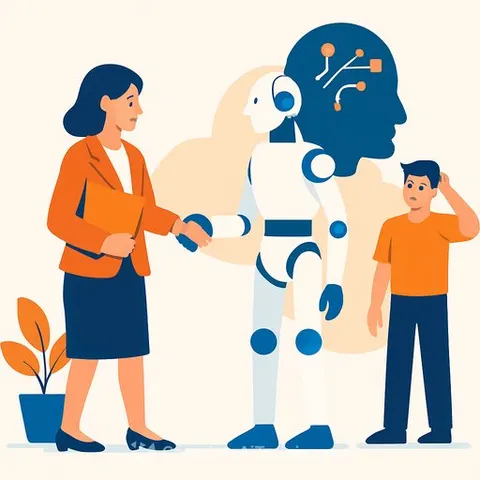
Why HR Should Embrace Skill Loss to Gen AI as a Strategic Advantage
Technology is reshaping work faster than ever. As generative AI takes over tasks once central to human roles, HR faces a tough question: What happens when employees lose certain skills to AI? Instead of resisting, HR leaders should see this as an opportunity to rethink talent and focus on what humans do best.
Letting go of some traditional skills isn’t a threat—it’s a chance to shift human effort toward higher-value capabilities like judgment, creativity, and empathy. These are areas where AI still falls short and where people can add unique contributions.
The Value of Letting Go: Lessons from the Past
Look back at the calculator. When it became widespread in the 1970s, some feared students would lose basic math skills. They did. But in exchange, people gained stronger analytical and problem-solving abilities, which are more relevant today.
The “Google Effect” shows a similar pattern: people rely less on memory and more on search skills. HR can take a page from this history. If AI can handle coding, content creation, or language translation more efficiently, insisting employees maintain those skills misses the point.
Instead, HR should focus on redeploying talent to areas requiring human insight, nuance, and emotional intelligence. Losing certain technical skills can be progress, not loss. Just as memorizing facts became less important when search engines emerged, spending hours on drafting reports becomes less valuable when AI can do it quickly.
Redefining Human Value in the Age of AI
The way HR measures talent must evolve. Traditional metrics rewarded precision in repetitive tasks, but AI now handles many of those. New performance indicators should emphasize adaptability, emotional intelligence, collaboration, and strategic thinking.
For example, AI can generate marketing copy or policy documents, but it can’t replicate authentic voice or emotional resonance. HR should reward the human ability to make content meaningful.
In tech roles, AI assists with coding and debugging, but the real value lies in architectural thinking and cross-team leadership. The fastest coder isn’t the most valuable engineer anymore; it’s the one who can design systems and guide teams effectively.
This isn’t about reducing human roles but refining expectations to align with what people do best. It’s a shift from skills-based hiring to strength-based development.
Cultivating an AI-Ready Workforce
HR’s focus should shift from upskilling (improving current skills) to reskilling (adopting new competencies). For instance, instead of advanced Excel courses, offer training in data storytelling and ethical data use. Rather than just language classes, provide cross-cultural communication training that complements AI translation.
Creating psychological safety is essential. Employees must feel secure enough to let go of skills that once defined their roles. HR should foster environments where experimentation and learning from mistakes are encouraged, framing career growth as a dynamic process.
This approach helps ease fears about AI making roles obsolete. Some jobs will change dramatically, but with transparent leadership, these changes can empower employees.
Leading Through the Real Challenges of AI
Concerns about skill loss often overshadow other serious AI challenges. Misinformation and bias are real risks. AI systems trained on biased data can reinforce inequalities. HR must work with IT and compliance teams to ensure AI tools in recruitment and evaluation are fair and aligned with company values.
HR must also maintain ultimate accountability for decisions AI supports, like hiring and promotions. AI can aid decision-making but can’t replace ethical judgment that weighs context and humanity.
Digital fatigue is another concern. The faster pace AI creates can overwhelm employees. HR needs to set boundaries, design sustainable workflows, and make sure automation serves people, not the reverse.
Finally, AI literacy is critical across all levels of the organization. Understanding AI’s capabilities and limits isn’t just for tech teams—it’s a leadership priority. HR is well-positioned to integrate AI education into training programs, from onboarding to executive development.
HR as the Conductor of Human-AI Collaboration
Skill loss to AI isn’t a crisis—it’s a call to rethink talent and performance. HR leaders don’t need to preserve every task humans once did. Instead, they should create environments where humans and AI complement each other.
When AI handles routine work, people can focus on what matters most: meaningful, creative, and strategic contributions. Success won’t be about holding onto old skills but about reimagining what work means.
By embracing this change, HR can guide organizations through transformation and help employees thrive alongside AI.
For HR professionals seeking to build AI-ready teams, exploring AI-focused training programs can provide practical pathways to reskill and adapt in this new landscape.