
AI news ·
Why Human Empathy Matters More Than AI During a Cyberattack
AI boosts efficiency in insurance but can’t replace human empathy, especially in crises. Offering both chatbot and real-person support builds trust and improves client care.
Honesty in Cyber: Why Smart AI Strategy Starts with Human Empathy
AI has become essential for organizations, especially in insurance, where automation and chatbots free up time to focus on critical tasks. The global AI in insurance market grew from $8.13 billion in 2024 to $10.82 billion in 2025, with projections reaching $141.44 billion by 2034, according to Precedence Research.
But are we relying too much on AI? Automating every task might reduce costs, but it can also hurt client satisfaction. AI isn’t a cure-all; it’s a tool that must be used wisely to avoid frustrating or alienating customers.
To Chatbot or Not to Chatbot?
Jack Brooks, head of Hackbusters and vCISO at BOXX Insurance, emphasizes that while AI should be part of any organization’s strategy, it’s crucial to know its limits. Chatbots are great for handling simple, non-urgent questions, especially for clients who prefer not to speak to a person.
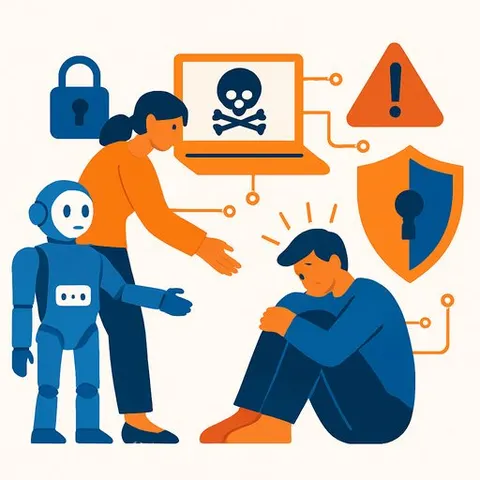
However, Brooks warns against relying on AI during emergencies like ransomware attacks. In those moments, customers already stressed and vulnerable need direct human support—not an automated response.
Brooks uses a fire department analogy: asking a chatbot where to place smoke detectors is fine, but you wouldn’t send someone to a chatbot if their kitchen was on fire. Similarly, cyber insurance clients facing a live cyberattack need immediate human assistance.
Research from Duck Creek Technologies supports this view, finding that 44% of customers prefer interacting with a human. Striking the right balance between automation and personal interaction is key. Organizations that ignore this risk damaging both customer experience and brand reputation.
Offering a Choice: Automation or Human Help
Brooks advises leaders to consider how they want their organizations to be perceived. If speed and cost-cutting are the priority, leaning heavily on chatbots makes sense. But if client care matters, there must be a clear way to bypass automation and connect with a person.
BOXX Insurance has taken this approach seriously. Customers can opt for chatbot assistance or speak directly to a dedicated professional, especially when facing stressful situations. This balance respects customer preferences and needs.
Brooks explains: “You want a quick answer without talking to anyone? No problem. Need to speak to a human? No problem either.”
This approach resonated with Martin Ginnis, a broker who struggled with an insurer using near-total automation. After hearing Brooks discuss the value of human connection at a BOXX Insurance webinar, Martin switched providers. He appreciated that BOXX focuses on building trust and supporting businesses, big and small.
Transparency and Trust in AI Use
Martin’s experience highlights a common issue: many companies treat chatbots as a cheap replacement for human interaction. This can backfire, as customers quickly see through insincere use of AI.
Brooks is clear that honesty must be at the core of AI deployment. BOXX Insurance provides multiple contact options, including a visible phone number to reach Brooks and his team directly. The goal is to combine AI’s efficiency with genuine human empathy.
Balancing technology with empathy remains a challenge for many providers, but BOXX shows it’s possible to innovate without losing the human touch.
As Martin put it: “I expected a sales pitch but found someone who genuinely cares about small businesses and cyber security for everyone.”