
AI news ·
Why Managing People Outpaces Managing Gen AI: Insights from Appspace’s Chief Innovation Officer
Managing people is harder than managing generative AI, says Thomas Philippart de Foy of Appspace. While AI handles tasks smoothly, human creativity and unpredictability demand constant leadership.
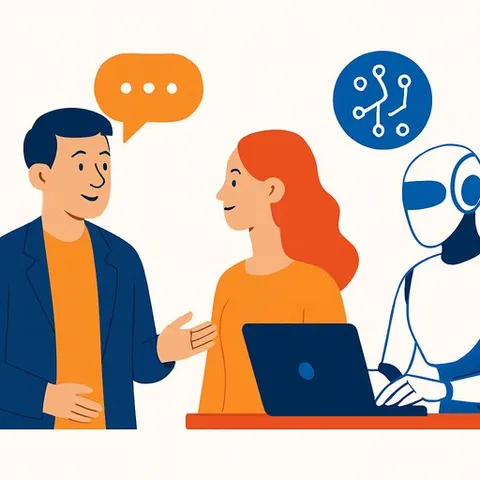
CEO Advisory: Managing Humans Is Harder Than Managing Gen AI
Thomas Philippart de Foy, Chief Innovation Officer at Appspace, shares a straightforward insight: managing people presents greater challenges than managing generative AI. His view comes from over a decade leading innovation at Appspace and previous experience with Cisco’s technology group. As Appspace integrates Gen AI into workplace communication and management, Thomas offers a clear perspective on why the human factor remains the hardest part of leadership.
Unlocking Gen AI’s Operational Potential
While many companies are cautiously approaching Gen AI, Appspace has already embedded it across nearly every team. From automating support tickets and generating code to crafting internal communications and narrating content, AI is deeply integrated. They even use their own app powered by Gen AI to communicate globally—curating tone, generating images, and translating content in multiple languages.
Appspace stands out by embedding Gen AI at the platform level, not just adding it as an afterthought. This allows users to create stories, auto-generate images, adjust tone and length, and receive AI-generated summaries and tags in real time. All this works across mobile, web, and digital signage, supporting multiple languages. Looking ahead, Thomas hints at features like AI-driven praise systems, live video with multilingual narration, and location-aware content delivery. Despite this, he stresses that human potential surpasses any AI capabilities.
Resistance, Integration, and Control: The Real Obstacles
Within Appspace, resistance to Gen AI is minimal thanks to a culture open to innovation. However, this isn’t the case everywhere. A year ago, large corporations resisted AI adoption, but now nearly every company has an AI strategy. For those still evaluating AI adoption, Appspace offers flexibility and strict governance. Clients can use their own AI models or Appspace’s, ensuring data stays within their environment with no external sharing. This approach addresses concerns about hallucinations, bias, and security risks.
Thomas points out the actual challenge lies not in the AI itself but in educating users. “You’re educating your users, not your AI,” he says. Appspace includes AI training in user onboarding, focusing on how to craft effective prompts, reuse successful outputs, and clarify intent.
Human Complexity Outpaces Any Algorithm
Thomas emphasizes that managing the creativity and unpredictability of humans is far tougher than aligning AI with corporate needs. Clients often repurpose Appspace's tools in unexpected ways—like a logistics company turning a desk-booking feature into a shuttle reservation system. This ingenuity requires constant engagement and adaptation from the Appspace team.
Unlike AI, which executes consistently when given clear instructions, people bring a mix of vision, resistance, misunderstandings, and creativity. This mix makes leadership in AI-integrated environments a complex but critical task.
The Future Is Personalized, Multilingual, and Always On
Thomas envisions a near future where Gen AI creates highly personalized, location-specific workplace experiences. Employees could see content on nearby screens tailored to their role, mood, language, and schedule. Appspace is experimenting with linking desk bookings to content algorithms to deliver timely, relevant information.
Video also plays a key role—not just passive streams but live events enhanced with AI-driven translations and captions in multiple languages. This approach improves content consumption and supports global team inclusion, which is essential for engagement and equity.
At the same time, Thomas acknowledges current AI limits. Image generation still falls short of corporate standards, so clients are encouraged to use licensed image databases rather than generated visuals. This honest assessment builds trust with enterprise clients.
The Bottom Line: Technology Isn’t the Hard Part
Generative AI is transforming workplace communication, but the real challenge remains managing people. The key is guiding employees, clients, and stakeholders as they adapt to new tools. As Thomas puts it simply: “Managing humans is harder than managing Gen AI.” For leaders focused on digital transformation, this is a vital reminder that people are the core—and the toughest part—of any innovation.