
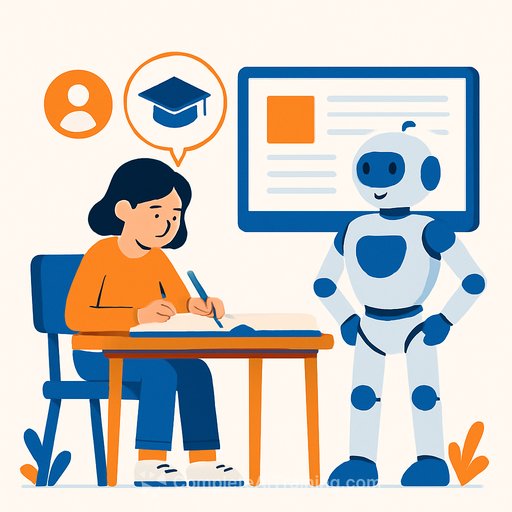
Opinion: Using AI for the 'Hard Part' Skips the Important Part
Before students can confidently edit and refine writing generated by AI, they first need to learn how to write clearly and convincingly on their own. That skill requires practice.
Imagine this: a little gray prompt pops up whenever you pause while typing, offering to “help me write.” For a professional writer, that’s both amusing and a bit frustrating. Getting started on writing assignments wasn’t always easy—even with positive feedback from teachers. But repeated practice in starting and finishing assignments turned that into a strength.
Now, with tools like ChatGPT available, fewer students might develop this essential skill. AI offers an easy way to bypass the initial struggle of putting thoughts on the page. This raises concerns about whether students are missing out on learning the core skills that come from wrestling with ideas themselves.
Balancing AI Use in Education
Experts in AI and higher education recognize both the risks and benefits of AI tools in writing. At the University of Puget Sound, professors have flexibility in guiding AI’s role in assignments. The goal is to avoid banning AI outright, which could leave students unprepared for workplaces where these tools are common. Instead, they focus on teaching students the value of original thinking and critical skills.
As Gareth Barkin, dean of operations and technology at the university, puts it: “We don’t want to live in denial and imagine that these tools won’t be available.”
The Real Concern: Skipping the Thinking Process
Writing tools like ChatGPT can replace some of the grunt work of generating text, but the real problem is students who use AI to avoid the mental effort writing requires. Traditional forms of cheating have been replaced by software that writes for you. Yet the heart of writing is the thinking that happens before and during the process.
Students with potential often find the process intimidating. They might feel overwhelmed or doubt their arguments. This is when AI can become a crutch, short-circuiting the crucial step of developing their own ideas.
Julie Christoff, who teaches rhetoric and composition at the University of Puget Sound, stresses that using AI to get started can rob students of the opportunity to engage deeply with their arguments. Instead, free-writing and brainstorming with peers can help students find their voice.
Learning to Embrace the Writing Process
Improving writing involves accepting imperfection. Everyone starts somewhere, often with drafts that don’t meet high standards. The cycle of perfectionism, procrastination, and self-criticism is common. It sounds like:
- I want this to be amazing.
- I avoid starting because I fear failure.
- I run out of time and feel worse about myself.
Many professional writers break through this by producing rough first drafts without judgment, then refining them. This process mirrors what AI does when generating initial text. But there’s no shortcut to developing your own ability to write convincingly and clearly.
By making writing a regular practice, it’s possible to reduce the stress and negative feelings tied to it. Barkin notes that students need to build this resilience to use AI tools effectively later in their careers. Editing AI-generated content requires a strong foundation in writing to add clarity, nuance, and precision.
Simply put, you can’t properly edit AI writing until you’ve learned to write well yourself. And to do that—you have to get started.
For educators and writers looking to better understand AI’s role in writing and education, exploring resources about AI tools and courses can be valuable. For example, Complete AI Training offers courses that cover AI’s impact and practical applications.