
AI news ·
Workplace surveillance tools track millions of workers long after pandemic peak
Workplace monitoring tools expanded rapidly during the pandemic, tracking location, productivity, and communications-with some programs sharing employee data with hundreds of outside brokers.
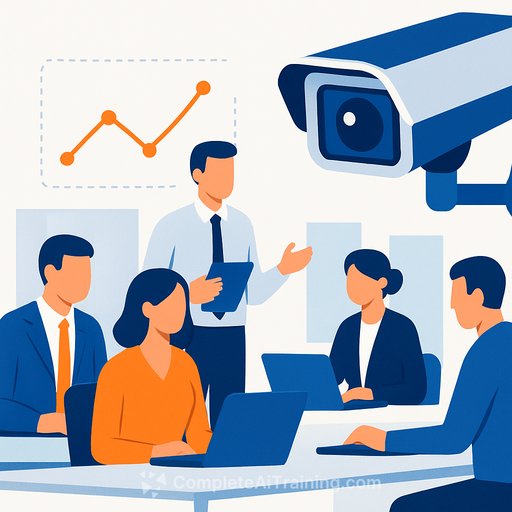
Thousands of employers continue to monitor the location, productivity, and communications of their workers using digital tools that expanded rapidly during the pandemic. These systems track task completion rates, collect location data, and can access work-issued device cameras, raising questions about how much privacy employees have given up, even when working from home.
Recent advances in AI and data science allow employers to build extensive data profiles on workers that can be used for discipline or to predict behavior, said Wilneida Negrón, director of research and policy at Coworker, a nonprofit that helps workers organize. "Oftentimes, the workers with the least amount of power in the labor markets tend to be testing grounds for some of the more intrusive forms of data collection."
Data sharing beyond the employer
Some of the most common workplace monitoring programs have shared names, email addresses, and other personal data with hundreds of outside data brokers and technology companies without clearly disclosing the practice, according to an investigation by Vanderbilt University, Northeastern University, and the University of California at Berkeley.
For HR professionals, this raises a practical concern: the tools you deploy may be sending employee data far beyond your organization. Knowing which vendors receive that data, and what they do with it, is becoming a compliance issue as much as a privacy one.
The human cost of constant tracking
Pharmacist Lannie Duong's employer tracked the length of her phone calls and appointments at a medical clinic, and performance evaluations questioned why she took so long with each patient. "Everything was counted. How many minutes you're on the phone. The minutiae of it was ridiculous," Duong said. "We're just tasked to do what feels like the impossible."
Duong described the pressure as unrelenting. She felt "not trusted, not appreciated, almost completely hopeless. It was so depressing." She eventually went on medical leave and began volunteering with other pharmacists to organize a union. Her employment was terminated after the leave ended.
Not all surveillance is hidden. Many employers using these tools do so transparently and involve employee boards in reviewing how they are used, Negrón said. But others track, rank, and score workers in ways that are not disclosed. "Workers are going to have to come together because the forces of centralizing this kind of tracking and monitoring are moving too fast," she said.
Workers are pushing back
As awareness grows, some workers are challenging tools that measure how long tasks take, arguing that such monitoring contributes to injuries and questioning what personal information is collected and how it is used, said Hayley Tsukayama, director of state affairs at the Electronic Frontier Foundation, a nonprofit focused on digital privacy.
HR teams should expect this scrutiny to increase. Tsukayama offered a blunt warning for employees: "Unfortunately, if you are on a machine that's been issued by your workplace, you should expect that there's some type of monitoring."
Why this matters for HR professionals
Workplace monitoring is no longer just an IT decision. HR is the function that will answer employee questions about what is tracked, face the morale fallout when tracking feels punitive, and carry the legal risk if data sharing is not disclosed. Review your current monitoring tools with three questions in mind: what data is collected, which third parties receive it, and what policy language actually tells employees about both. If you cannot answer those questions clearly, employees will find out anyway - and the trust damage will be harder to repair than the policy gap.