
AI news ·
Writer requests full article text before extraction
AI writing tools fail to extract article content when the source text isn't pasted into the prompt, leaving users with a clarification request instead. The fix is simple: always provide the full text in your message.
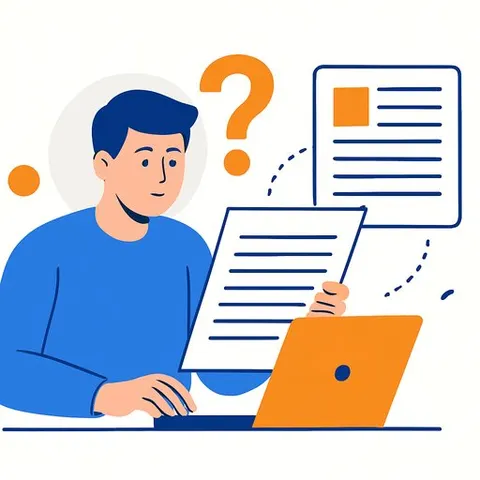
If you've asked an AI writing tool to extract content from an article and received an error message or placeholder text instead, you're not alone. A common issue occurs when the tool prompts you for source material, but the actual article content never gets pasted into the conversation. The result is a response that asks for the missing text rather than delivering the extraction you requested.
This typically happens for one of two reasons. Either the source content was never copied into the prompt, or the tool's interface truncated the input before processing. For writers who rely on AI assistants to pull quotes, summarize research, or reformat source material, this failure mode wastes time and interrupts workflow.
What the error message tells you
When an AI responds with a request for the full article text instead of an extraction, it's signaling that it received no usable source content. The response you see is a clarification request, not an output failure. The tool is asking you to paste the article so it can proceed with the task as originally specified.
The request itself is straightforward: provide the full text, and the AI will preserve the original wording, structure, and details without rewriting or summarizing. It will also handle formatting like plain text, paragraphs, headings, and bullet points, as long as the source material is present.
Why this matters for writers
For working writers, this interaction reveals an important limitation of current AI tools: they cannot retrieve or access external content on their own. The assumption that an AI assistant has already read the article you're referencing is incorrect. You must supply the text every time, even if you've discussed the same article earlier in the conversation.
This also highlights a practical workflow issue. If you're extracting content from a paywalled article, a PDF, or a document that cannot be copied easily, you'll need to convert it to plain text first. Tools that handle PDF-to-text conversion or browser extensions that strip formatting can help, but the core requirement remains: the AI needs the text in the chat window to work with.
Why this matters for writers
The takeaway for writers is to build a habit of pasting source material directly into your prompt, even when it feels redundant. If you're working with long articles, break them into sections and process each one separately. This avoids token limits and ensures the AI has the full context it needs.
It's also worth verifying that your prompt includes the source text before you hit send. A quick check of what's actually in the message field can save you a round-trip and keep your writing session moving. The error message isn't a tool failure - it's a prompt failure, and it's fixable on your end.