
AI news ·
Writers and filmmakers say artificial intelligence cannot replace the emotional depth of literature
Tencent News premiered five AI-generated short films in Beijing. Filmmakers agreed the tools accelerate visual prototyping but cannot replicate deep human emotion.
Tencent News premiered five AI-generated short films adapted from acclaimed literary works at a special screening in Beijing earlier this month. The event, "Literary Interface: AIGC Image Experiment," part of the company's Ideas creativity initiative, drew prominent filmmakers and writers who argued that while artificial intelligence can reshape production, the emotional weight of storytelling remains a human domain.
The films included Meng Mian (The Mask), adapted from Mao Dun Literature Award winner Xu Zechen's search for inspiration in Colombia; Liu Er Mi Hou (The Six-Eared Macaque), based on Xu's novella exploring the aspirations of 1990s Beijing drifters; and Bi Te Quan (Bit Circle), inspired by Wang Shuqi's story about a Bitcoin mining site in Sichuan's mountains.
AI should serve human creators, director says
Acclaimed director Li Shaohong, whose film Blush won the Silver Bear at the 45th Berlin International Film Festival, described AI as a creative tool that should always serve human creators rather than replace them. While acknowledging rapid progress in AIGC technology, she said it still struggles to portray subtle emotions and the textures of real-life experiences. Emotionally resonant storytelling continues to depend on live-action filmmaking.
"AI should always serve human creators rather than replace them," Li said.
A new aesthetic language for machine-generated art
Xu Zechen argued that new technologies will eventually develop their own aesthetic language. Rather than simply combining literature with conventional filmmaking, AIGC-generated imagery could evolve into a hybrid art form capable of creative breakthroughs. Cao Wenxuan, a writer and professor at Peking University, urged creators to avoid homogenized content. He encouraged artists to build their own creative identity by drawing from timeless literary classics while staying rooted in personal experiences.
The screening underscored how AI is becoming a fixture in the toolbox of modern creatives. For writers, the technology offers new avenues for experimentation, but the conversation made clear that the core of literary power-emotional depth and lived texture-eludes replication by machines.
Why this matters for Creatives
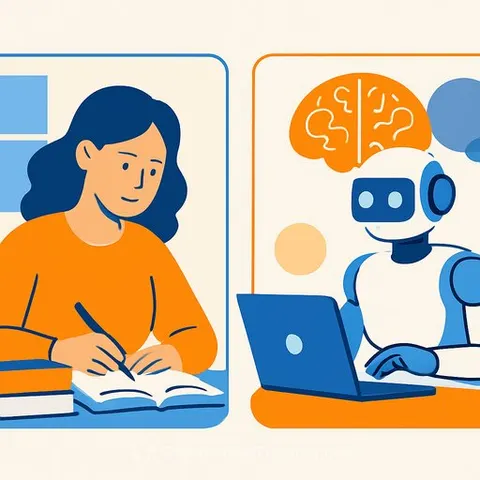
Directors and authors at the event agreed that AI tools can accelerate prototyping and visual experimentation, yet they insisted that the technology's output still lacks the spontaneity of human observation. The practical takeaway: learning to use AI generation tools now can add a rapid-iteration layer to your creative process, but the work that lasts will still come from your own eye and experience. The craft isn't just about generating images or text-it's about knowing what to keep and why.