
AI news ·
xAI Wants an AI Legal Tutor for Grok-Bigger Legal Move or Just Better Training Data?
xAI is hiring an AI Legal and Compliance Tutor to feed Grok sharper, real-world legal data. It hints at stronger legal features ahead-and rising demand for savvy annotators.
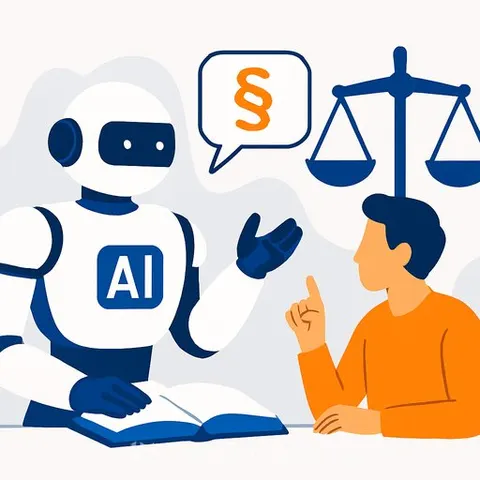
xAI Is Hiring an "AI Legal and Compliance Tutor." Here's What It Signals for Law
Elon Musk's xAI is recruiting an AI Legal and Compliance Tutor to improve its models with legal-grade annotations and inputs. The brief: feed Grok and related systems with accurate, context-aware data from real legal work.
On the surface, this looks like a pragmatic move. Legal text makes up a meaningful slice of public knowledge, and any model that serves professionals or the public needs to read statutes, contracts, and disputes with precision.
The open question: is this groundwork for a deeper push into legal, or simply a quality boost for a general model? It could also serve xAI's internal legal needs. All three are plausible.
What the role actually does
- Use internal tools to label and structure data for legal and compliance projects.
- Curate high-quality examples across regulatory work, contract analysis, legal research, and dispute scenarios.
- Partner with engineers to train new tasks and improve model behavior.
- Help design better annotation workflows and interfaces for legal data.
- Select complex legal problems to stress-test and improve model performance.
- Follow evolving instructions accurately and maintain consistency over time.
Who they want
- Background in legal or compliance: attorneys, compliance officers, paralegals, clerks, arbitrators, mediators, ALJs, court reporters, title examiners.
- Strong written English, communication, and organization.
- High reading comprehension and sound judgment with limited context.
- Genuine interest in improving how legal and compliance work interacts with AI.
Why this matters for legal professionals
First, better legal comprehension in a mainstream model means your clients and teams will query AI more often for research, clause comparisons, and policy checks. If Grok gets sharper on legal text, usage will rise-inside and outside firms.
Second, this could be a stepping stone to legal-focused features, even if unofficial at first. Clause extraction, policy mapping, issue spotting, and litigation summarization are obvious targets once a model digests enough quality signals.
Third, the role could simply meet internal needs-privilege review, compliance documentation, discovery support, or policy rollouts. Even that baseline would demand high-quality legal data handling and careful workflows.
Compensation: a quick reality check
The posted range is $45-$75 per hour. For many attorneys and seasoned legal ops pros, that's low relative to billable rates and risk exposure. For some paralegals, analysts, or career pivoters, it may be workable-especially as a stepping stone into AI-focused legal work.
If you're considering it, assess these points
- Data ethics and confidentiality: What data sources are used? How is sensitive information handled, redacted, and audited?
- Annotation standards: What are the label schemas (issues, clauses, obligations, remedies, citations)? Are there gold standards and reviewer tiers?
- Quality metrics: How are precision, recall, and consistency measured? How are disagreements resolved?
- Tooling: Can you speed up with templates, regex, clause libraries, and auto-suggest? How much manual effort is expected?
- Use cases: Are outputs supporting public features, internal legal tasks, or both? What's the review loop before deployment?
- IP and conflicts: Who owns derived work? Any restrictions if you're licensed or consulting with clients?
- Security: Access controls, logging, and incident response. Ask for the basics in writing.
Practical ways to prepare, even if you don't apply
- Build a small portfolio: anonymized clause labeling, policy mapping to regs, or case summarization with issue tags.
- Standardize your labels: party roles, obligations, triggers, exceptions, governing law, termination, remedies, risk flags.
- Practice with public documents: contracts, consent decrees, or agency guidance. Keep a log of decisions and edge cases.
- Learn evaluation basics: spot hallucinations, test for citation precision, and probe failure modes with tricky fact patterns.
If you want structured upskilling paths for legal-adjacent AI work, browse curated options here: AI courses by job.
Whether xAI is tightening Grok's legal chops, quietly building legal features, or shoring up internal ops, the trend is clear: models that read law well will set the pace. Legal professionals who can annotate, evaluate, and pressure-test those models will be in demand-title aside.
NIST AI Risk Management Framework can help you frame questions on risk, governance, and quality before you commit time or data.