AI tool
AI Visibility by TruLata
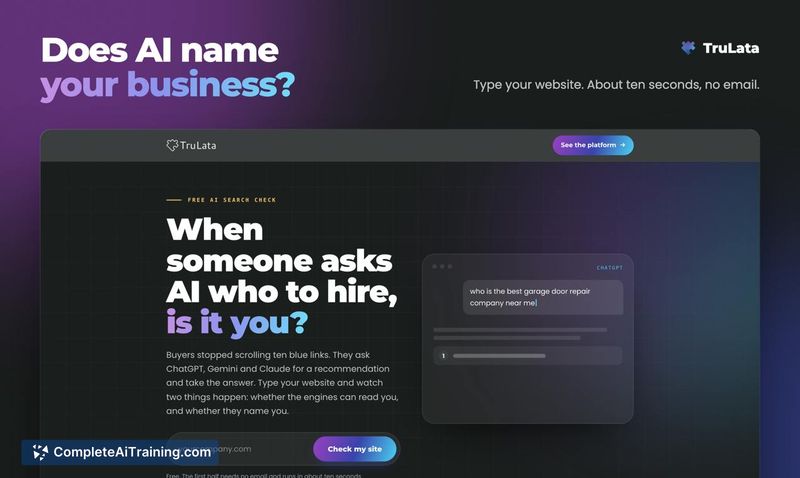
AI Visibility by TruLata shows whether AI engines like ChatGPT, Gemini, and Claude can read a website and answer buyer questions about it. It is for businesses that want to check and improve how they appear in AI-generated recommendations.
About AI Visibility by TruLata
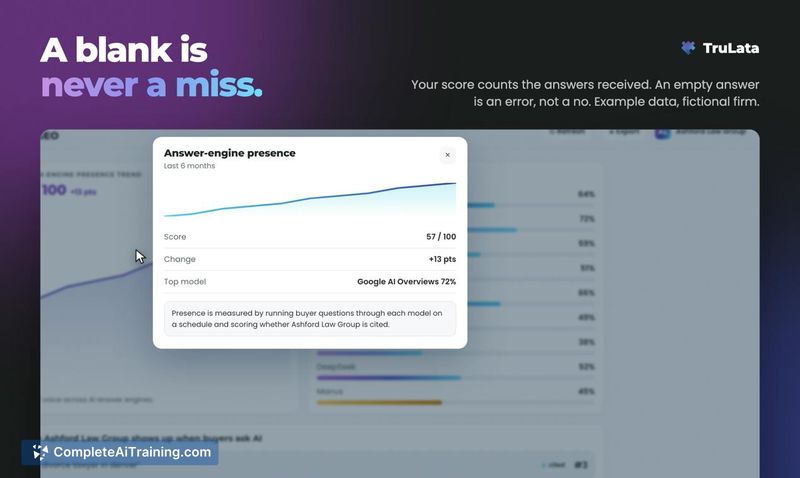
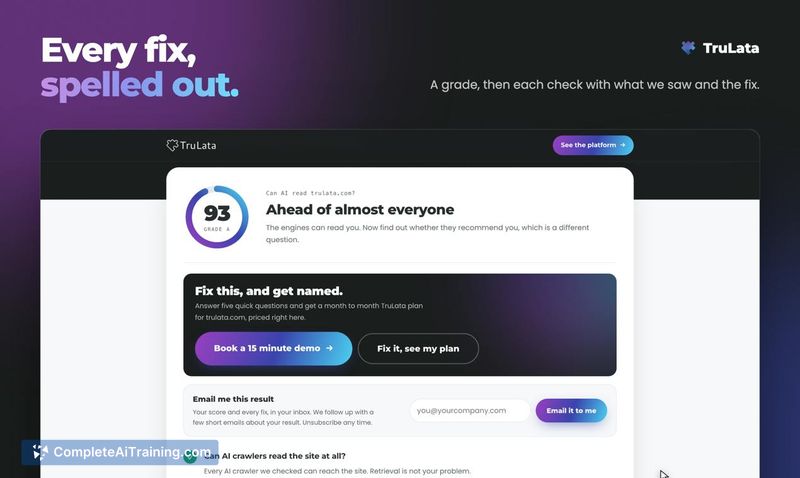
AI Visibility is a measurement tool within the TruLata marketing platform that checks whether AI engines like ChatGPT, Gemini, and Claude name a business when buyers ask for recommendations. A free version scans a website in about ten seconds, checking crawler access, HTML content, structured data, and llms.txt, then displays a fix list ranked by points. Inside TruLata, the same check runs weekly across nine AI engines and produces a score based on the share of answers that mention the business, with blank engine responses treated as measurement errors rather than misses.
Review
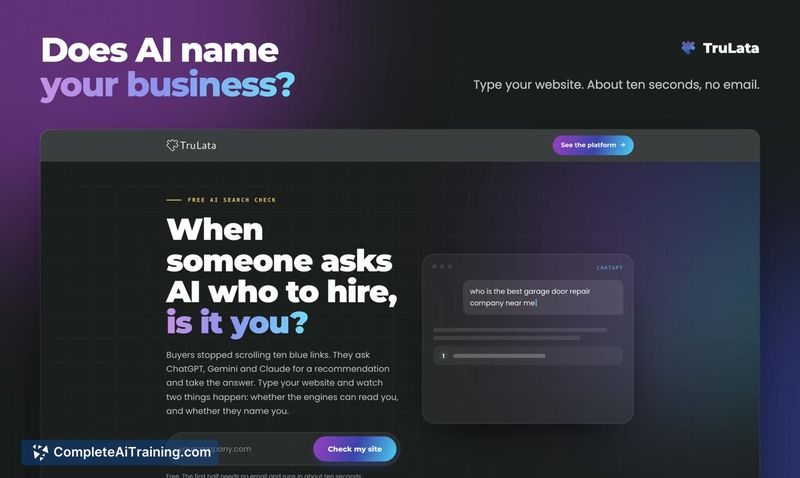
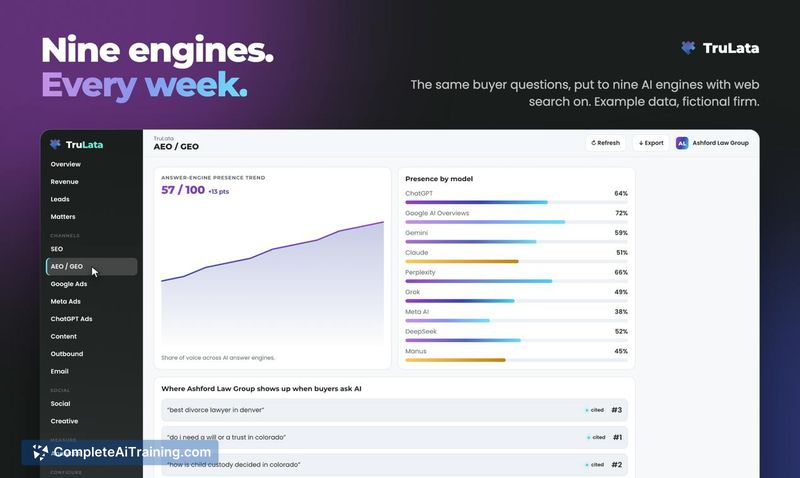
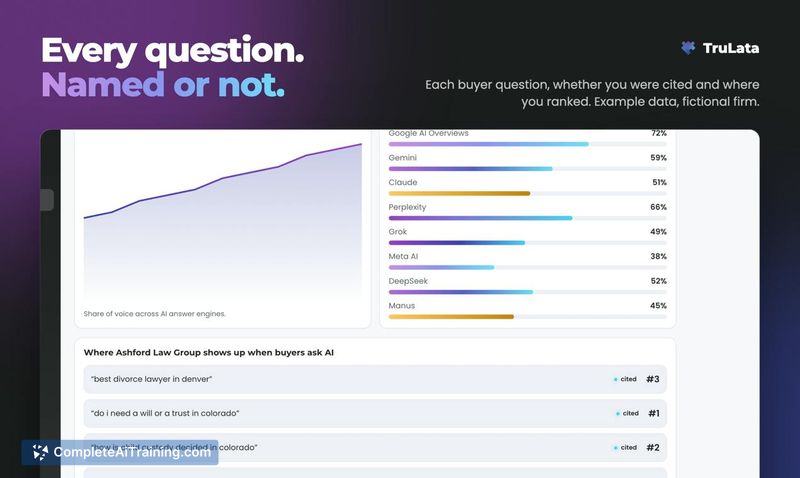
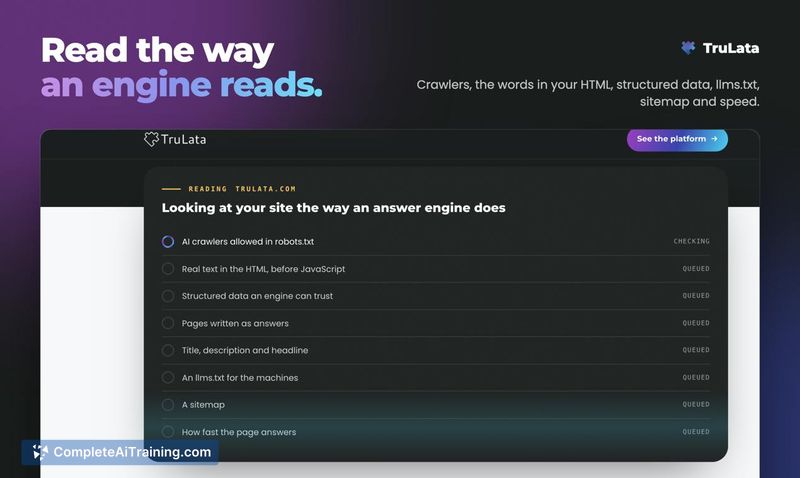
AI Visibility addresses a concrete shift in how local service businesses get discovered: potential customers asking AI tools who to hire, then acting on the answer without ever visiting a search engine. The tool reads a site the way an AI crawler does and surfaces specific technical issues that could prevent a business from appearing in those recommendations. It doesn't predict rankings or estimate traffic - it reports whether a business gets named when specific buyer questions run through live AI engines with web search turned on.
Key Features
- Free website scan that checks AI crawler access (GPTBot, OAI-SearchBot, ClaudeBot, PerplexityBot, Google-Extended), whether content lives in HTML or only in JavaScript, structured data presence, and llms.txt configuration, returning a fix list ranked by points.
- Live question simulation that runs six buyer-specific queries through ChatGPT, Gemini, and Claude with web search enabled, displaying all eighteen answers to show whether the business appears.
- Weekly recurring measurement across nine engines - ChatGPT, Gemini, Claude, Grok, Manus, Google AI Overviews, Perplexity, Meta AI, and DeepSeek - with a score calculated as the share of answers that named the business.
- Blank answer handling that excludes empty engine responses from the score calculation so they don't drag down results.
- Lead tracking dashboard that shows every lead alongside its source and cost, with alerts when something breaks, such as a form that stops sending.
Pricing and Value
AI Visibility is included with every TruLata plan. The Starter plan costs $399 per month. A Growth plan comes with a 7-day free trial that requires no credit card and ends automatically unless the user adds a card to continue on Growth or a smaller plan. The free website scan available at the product's link requires no email and completes in roughly ten seconds. TruLata also offers a free website builder that writes from user-supplied facts, with paid plans beginning when the site goes live.
Pros
- Reports on actual AI engine output with live web search, showing whether a business gets named rather than estimating visibility through proxies.
- Scan produces a ranked fix list with specific actions, so users know which technical issue to address first.
- Treats blank AI responses as measurement errors instead of misses, which prevents score distortion from engines that simply return nothing.
- Weekly checks run automatically across nine engines, giving ongoing visibility without manual re-testing.
- Free scan requires no email or signup, lowering the barrier to getting an initial readout.
Cons
- The free scan does not check Bing indexing or Copilot citation counts; that data only becomes available inside TruLata for sites connected to Bing Webmaster Tools.
- AI Visibility is tied to the TruLata platform - there's no standalone subscription for businesses that only want the visibility measurement without the broader marketing automation.
- The tool is not well suited for businesses that don't depend on local service recommendations from AI engines, such as ecommerce brands selling physical products nationally or companies whose customers still rely primarily on traditional search.
Service business owners who already suspect they're losing jobs to AI-recommended competitors will find the most use here, since the tool answers a specific question: "am I being named or not?" Marketing agencies running multiple local accounts could also use the weekly engine checks to monitor client visibility across nine AI platforms without manual testing. Businesses that don't yet have a website or whose site relies heavily on JavaScript-rendered content may see low initial scores, but the fix list gives them a concrete starting point for changes.