AI tool
Daytwo
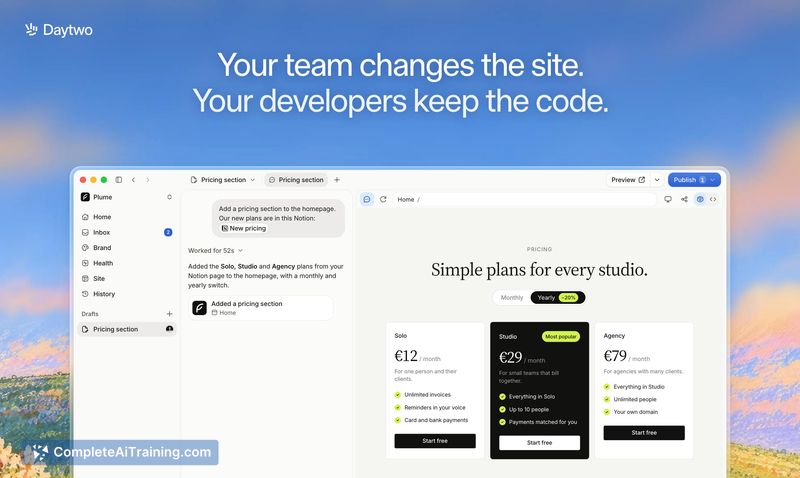
Daytwo lets marketing teams request and approve new website pages or sections by tagging it in Slack or using the Mac app. It generates private drafts from the site's own brand and components, and developers keep working in Git as usual.
About Daytwo
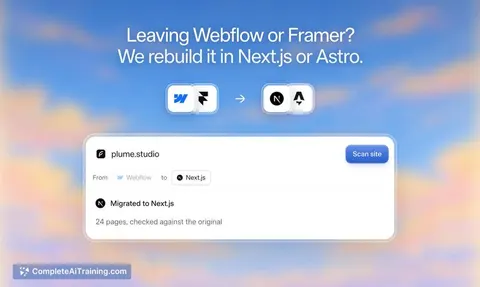
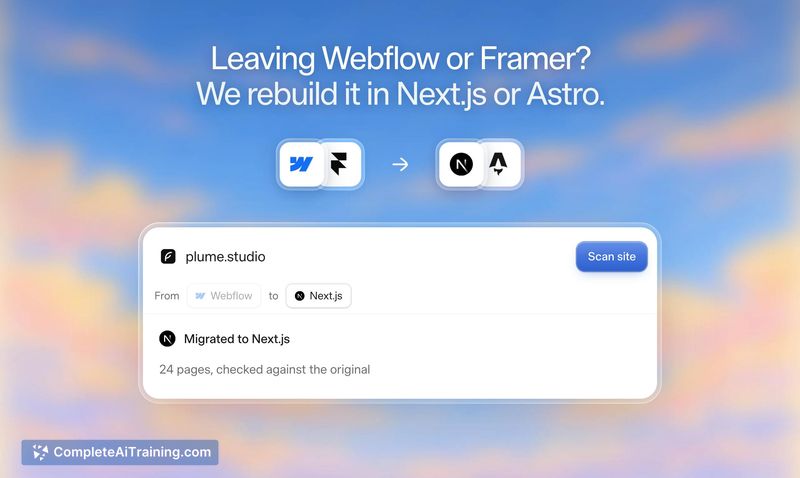
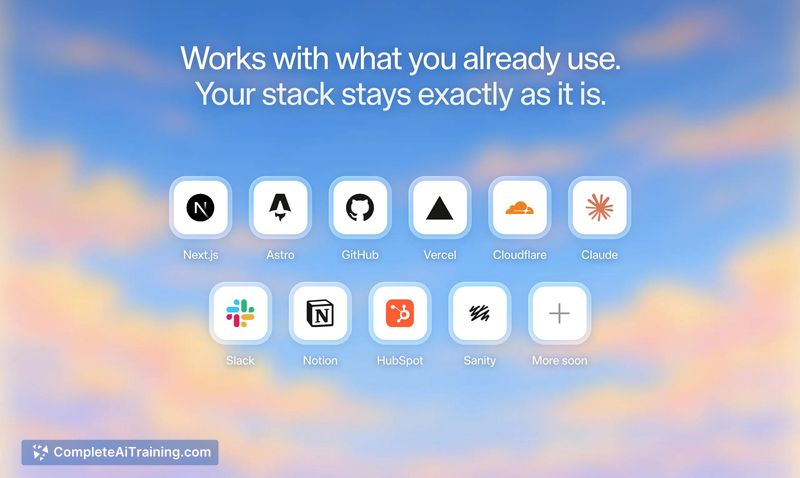
Daytwo is a Mac application that lets marketing teams request and approve changes to custom Next.js or Astro websites without touching code. A developer connects the GitHub repository once, and the tool generates new pages, pricing sections, or signup forms using the site's existing brand assets and components. Published changes become normal commits to the repository, and the site continues to function independently if a team stops using Daytwo.
Review
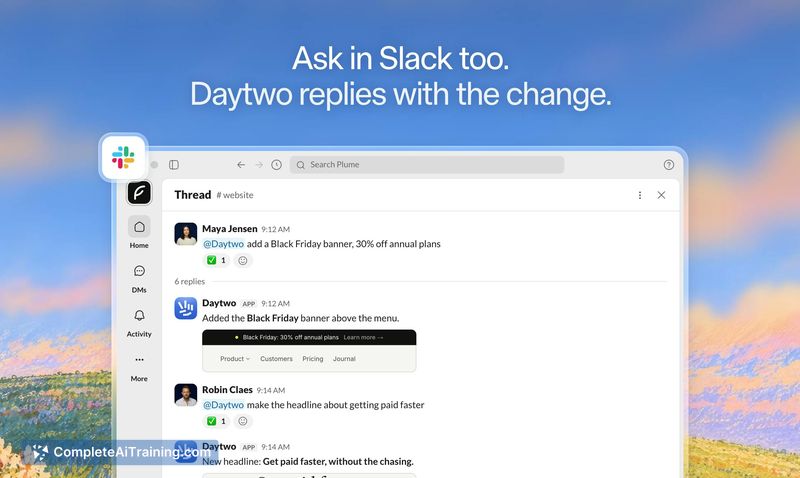
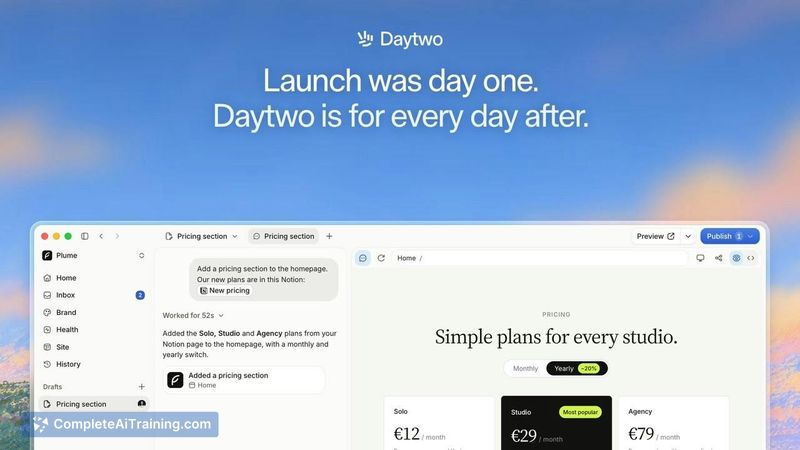
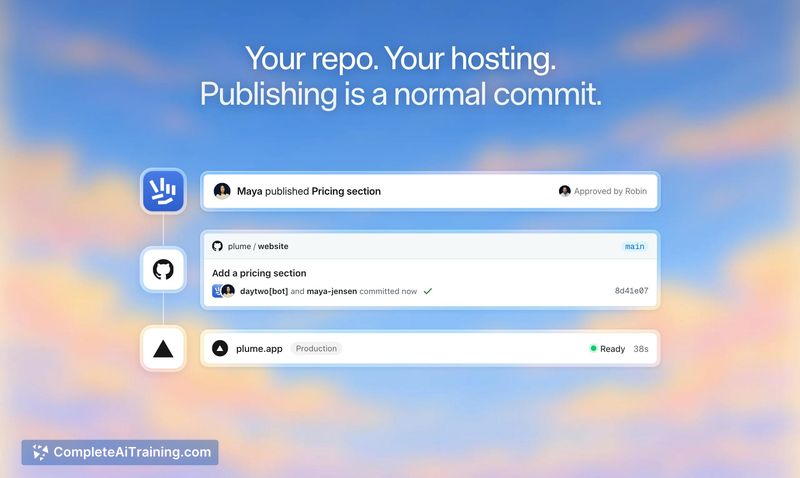
Daytwo addresses a specific friction point between marketing teams and developers who work on custom-coded websites. Instead of marketing sending requests through Slack that may never ship, team members can ask for changes directly and receive private drafts built from their own design system. The tool runs on a team's existing Claude plan and keeps engineers' workflows intact-drafts are branches, publishing is a commit, and undo is a revert.
Key Features
- Request via Mac app or Slack. Team members ask for a new landing page, pricing plan, or signup form by using the desktop app or tagging Daytwo in Slack. Drafts get built from the site's own brand and components.
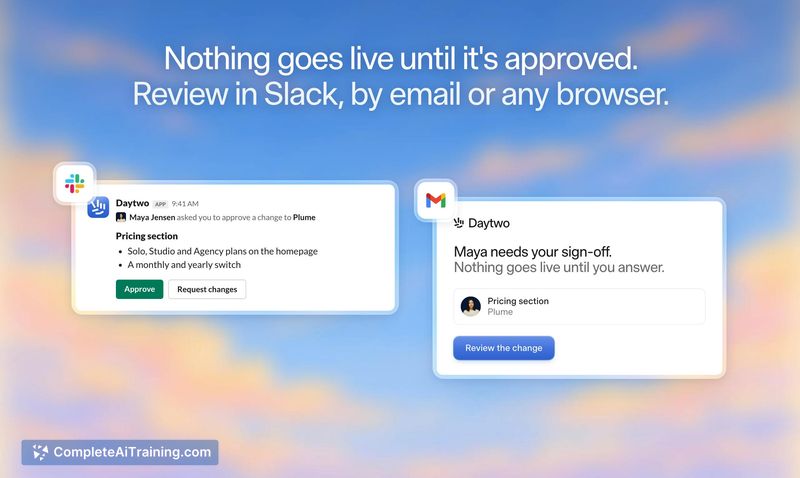
- Approval workflow outside the app. Approvers can review drafts in Slack, by email, or in any browser. The review view shows desktop and mobile screenshots, before-and-after comparisons, and supports comments directly on the page.
- Git-native publishing. Every draft is a branch, publishing produces a single commit, and undoing a change is a standard revert. Developers continue pushing to the repository as they normally would.
- Pre-publish checks. The tool checks redirects, SEO titles, alt text, and mobile layout before anything goes live. It surfaces items to fix or build next based on the makers' experience running startup websites.
- Runs on the team's Claude plan. Daytwo sets up Claude Code and operates on the organization's own Anthropic plan rather than bundling AI costs into its own pricing.
Pricing and Value
Daytwo offers a free 14-day trial. The makers have not published ongoing subscription pricing or tier details yet. Since the tool runs on a team's own Claude plan, the AI usage costs are separate from whatever Daytwo itself charges. Teams evaluating it should factor in both their Claude plan spend and the eventual Daytwo license cost once pricing is announced.
Pros
- Keeps the developer workflow completely unchanged-drafts map to branches, publishing maps to commits.
- Uses the site's existing components and brand, so generated drafts match the established design system.
- Approval doesn't require the Mac app; reviewers can act from Slack, email, or a browser.
- Pre-publish checks catch common issues like broken redirects, missing alt text, and mobile layout problems.
- No vendor lock-in for the site itself. Stopping Daytwo leaves the repository and site running as-is.
Cons
- Mac-only at launch. Teams with members on Windows or Linux cannot use the desktop app, though Slack-based requests and browser-based approvals still function.
- Limited to Next.js and Astro sites hosted on GitHub with Vercel or Cloudflare. Teams on other frameworks or hosting setups won't be able to connect their repositories.
- Not well suited for teams that need fine-grained control over every commit or prefer direct developer review of all content changes. The abstraction layer between marketing requests and the repository may hide details that some engineering workflows require.
Daytwo fits teams where marketing owns site content but engineering owns the codebase, and where the current handoff process creates a bottleneck. It's most relevant for startups and studios running Next.js or Astro sites on Vercel or Cloudflare who already have a Claude plan and want to reduce the back-and-forth over landing pages and pricing changes. Organizations outside that specific stack, or those who need cross-platform desktop support, will need to wait for broader compatibility.