AI tool
eu/jev
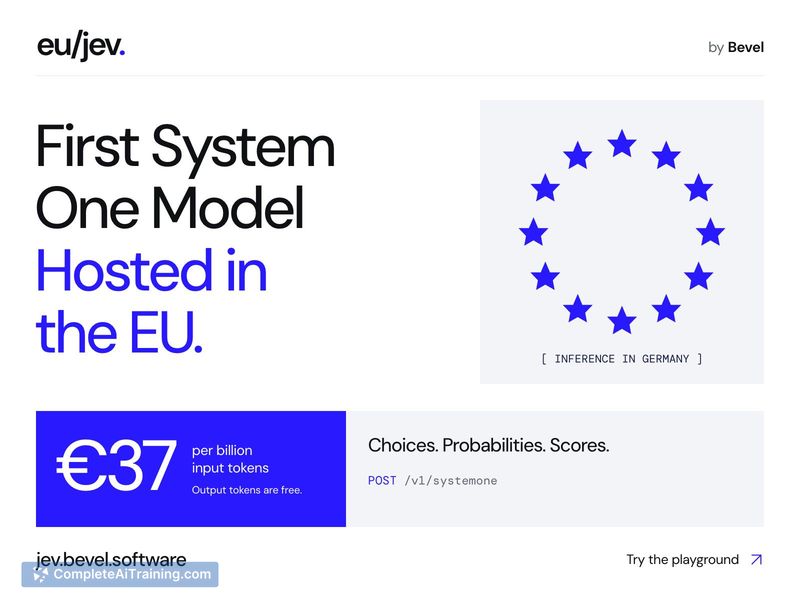
eu/jev provides GDPR-compliant access to a System One model hosted on GPUs in Germany for organizations with EU data sovereignty requirements. It functions identically to Jev, at the same pricing, and does not store any prompts or responses.

About eu/jev
eu/jev is a hosted AI model from Bevel, designed as a GDPR-compliant alternative for European teams who want to use System One models. Running on Hetzner GPUs in Germany, it replicates the API and pricing structure of Jev without saving any prompts or answers. The model is built on Winnow, which the team describes as the #1 open-source System One model on JevBench.
Review



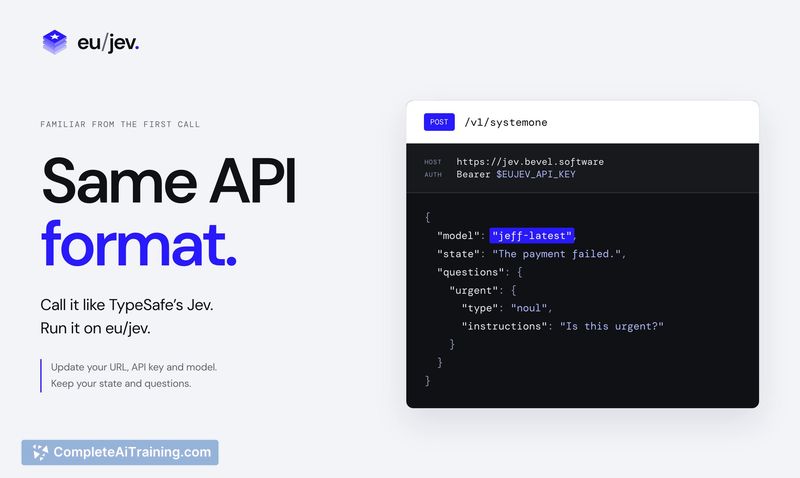
eu/jev addresses a specific regulatory hurdle: companies in the EU that couldn't adopt Jev due to data sovereignty requirements now have a drop-in replacement hosted within Germany. The launch is straightforward - same API, same pricing, different physical location. It's a narrow but clearly defined product that doesn't try to be more than what it is.
Key Features
- API compatibility with Jev, allowing teams to switch endpoints without rewriting integration code
- Hosting on Hetzner GPUs in Germany for EU data residency
- No storage of prompts or answers on the server side
- Free output tokens, matching Jev's pricing model exactly
- Playground environment available for testing before committing to API integration
Pricing and Value
Pricing mirrors Jev exactly, which includes free output tokens. Input token costs are not detailed in the available material, but the team states the model is offered "at the exact same pricing as Jev." A referral bonus program exists, though its specifics aren't spelled out. The payment model is listed as "Payment Required" on the launch page, but actual rate card figures are not published in the reference content.
Pros
- Removes GDPR and data sovereignty blockers for teams that previously couldn't touch Jev
- Zero data retention policy means prompts and responses aren't logged
- Drop-in API compatibility reduces migration work to near zero
- Runs on dedicated hardware in Germany rather than shared multi-tenant infrastructure
- Community-contributed SDKs already exist for Python, Rust, and Go
Cons
- Not well suited for teams outside the EU who don't face data residency requirements - Jev itself remains the more direct option
- Pricing specifics beyond "same as Jev" and "free output tokens" are not publicly documented on the launch page
- As a newly launched service, there's no public track record for uptime, latency consistency, or support responsiveness
eu/jev makes sense for European engineering teams that wanted to experiment with System One models for software automation but were blocked by compliance requirements. It's also a reasonable fit for organizations that need to keep data processing within German borders and prefer a service that doesn't retain conversation logs. Teams without EU regulatory constraints won't find a functional difference from Jev itself, so the hosting location is the sole decision point.
Jobs eu/jev suits
Useful in almost any job. We checked eu/jev against 500+ jobs; these get the most out of it.