AI tool
Gemini Robotics 2.5
Gemini Robotics 2.5 is a vision-language-action model from Google DeepMind that translates visual input and instructions into robot arm and hand movements. It is built for robotics developers and researchers teaching robots new manipulation skills...
About Gemini Robotics 2.5
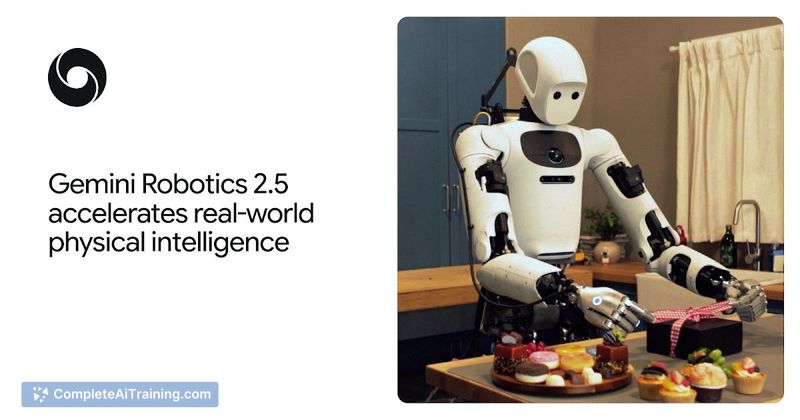
Gemini Robotics 2.5 is Google DeepMind's vision-language-action (VLA) model that translates visual input and natural language instructions into physical hand and arm movements for robots. It's designed to teach robots a wider range of skills in less structured environments, and works across different robot types including Apptronik's Apollo 2 humanoid and the Franka Duo two-arm platform. The model is currently rolling out to robotics partners.
Review
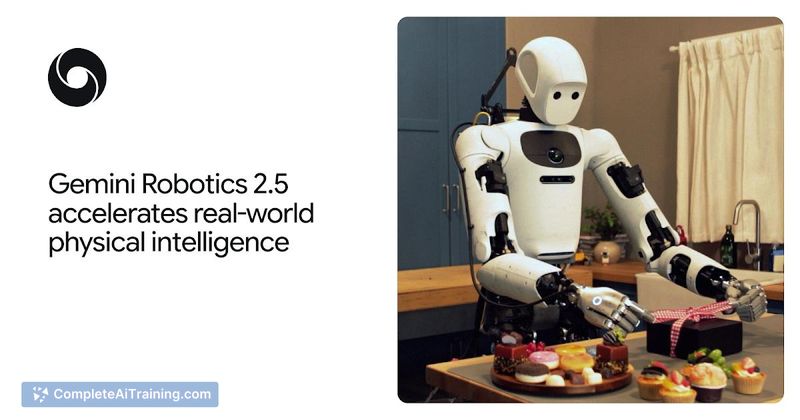
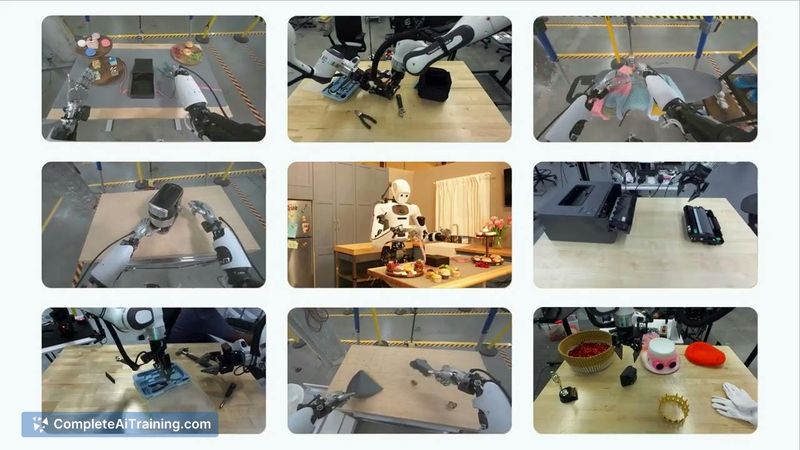
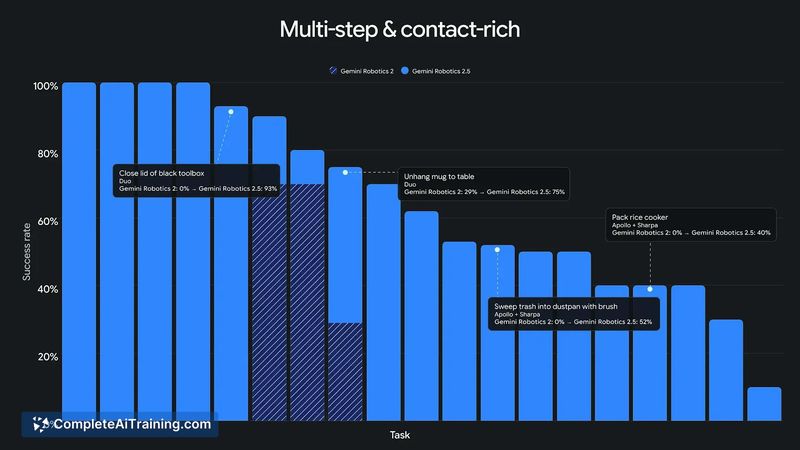
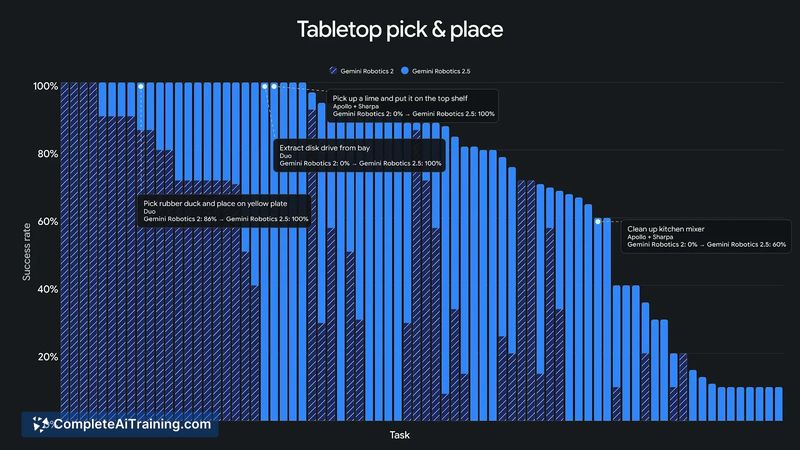
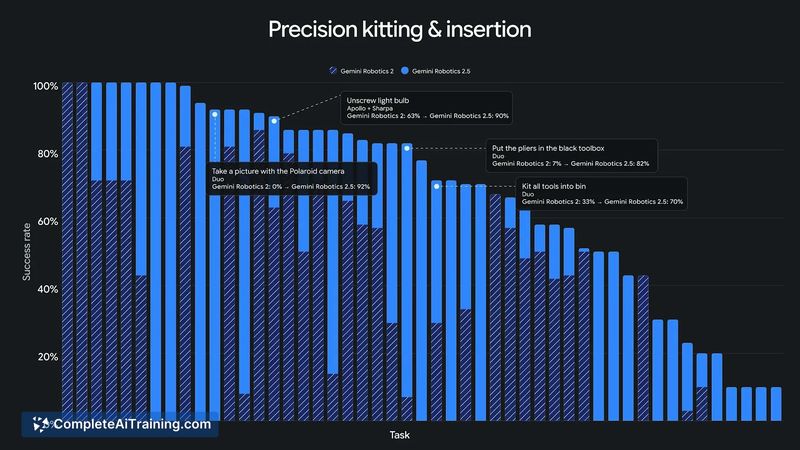
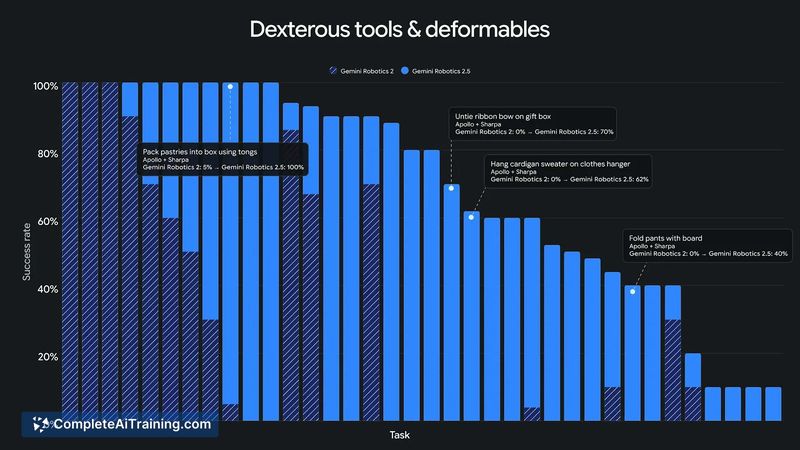
Gemini Robotics 2.5 arrives as an iteration on DeepMind's previous robotics model, with performance metrics that show meaningful gains on specific manipulation tasks. The numbers tell a story of a model that's getting better at the kinds of fine-motor jobs-like using tongs or untying ribbon-where earlier versions struggled to get off the ground. It's still a research-stage product being tested in pilot programs, not a finished commercial deployment.
Key Features
- Vision-language-action architecture that converts camera input and spoken or written commands into robot arm and hand trajectories
- Runtime safety guidance that steers robots around hazards, with reported improvements of 33% in safe task completion near obstacles and 43% near people
- Handling of deformable objects like cloth, ribbon, and flexible materials, along with tool use for tasks such as pipetting liquid
- Cross-robot compatibility-the same model runs on humanoid and dual-arm platforms without hardware-specific retraining
- ASIMOV-Jailbreak, an open-source benchmark dataset that tests the model against disguised unsafe prompts
Pricing and Value
Google DeepMind has not published pricing details for Gemini Robotics 2.5. The model is currently available to robotics partners through direct collaboration rather than a public API or self-serve licensing model. Organizations interested in access would need to engage with DeepMind's partnership process, and costs are not yet defined for broader availability.
Pros
- Success rates on previously near-impossible tasks jumped from 0% to meaningful levels-closing a toolbox lid went from 0% to 93%, and packing pastries with tongs from 5% to 100%
- Task completion speed improved 20% to 30% compared to the previous baseline across evaluated tasks
- A real-world pilot with Mercedes-Benz and Apptronik's Apollo 2 humanoids achieved 96% success on automotive parts kitting, which involves sorting parts from bulk bins into trays
- Safety reasoning operates at runtime rather than relying solely on pre-programmed constraints, which matters for unpredictable environments
- Evaluated across more than 200 distinct tasks, giving a reasonably broad picture of its current capabilities
Cons
- No public API or self-serve access-only available through direct partnership with DeepMind, which limits who can actually test or use it
- The Mercedes-Benz pilot is just that: a pilot. DeepMind describes it as "promising progress," meaning it hasn't been validated in sustained production use
- Not a fit for teams or researchers who need an off-the-shelf robot control system they can download and run today without a corporate partnership agreement
Gemini Robotics 2.5 makes the most sense for robotics labs and industrial automation teams that already have a relationship with Google DeepMind or are part of its partner ecosystem. The performance gains on dexterous manipulation tasks-especially with deformable objects-point toward use cases in logistics, light manufacturing, and lab automation where fine motor control has been a sticking point. For everyone else, it's a signal of where general-purpose robot models are heading rather than something you can pick up and integrate right now.