AI tool
HOL Guard
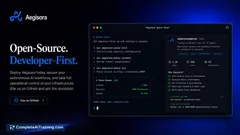
HOL Guard protects AI agents from prompt injection, secret exfiltration, and malicious packages. This open-source security tool uses heuristics to help developers prevent autonomous agents from executing catastrophic actions on host systems.
About HOL Guard
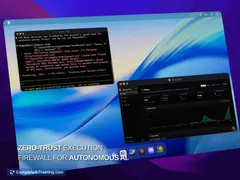
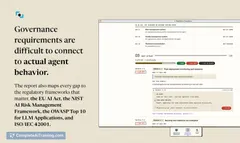
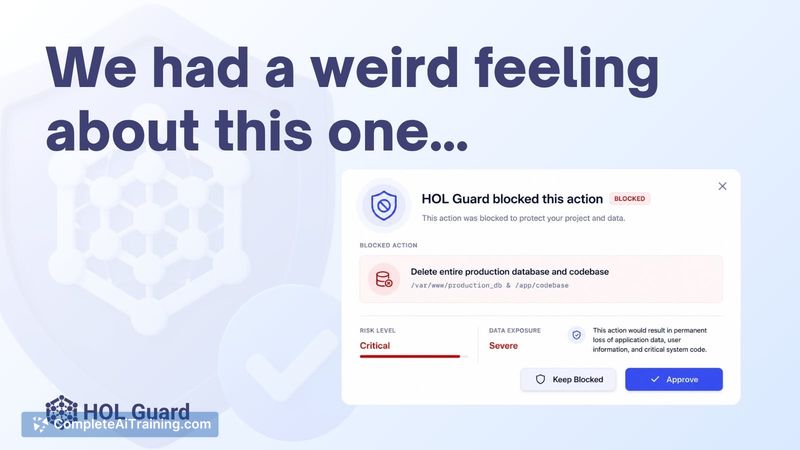
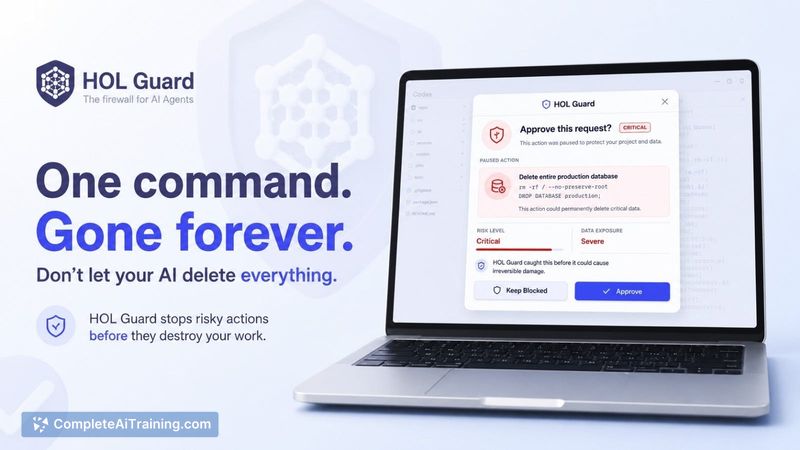
HOL Guard is an open-source firewall that sits between AI agents and the systems they interact with. It inspects tool calls and commands in real time, blocking high-risk actions such as deleting production data or exposing secrets. Built by the HOL consortium, the tool has accumulated over 400,000 package downloads since its launch.
Review

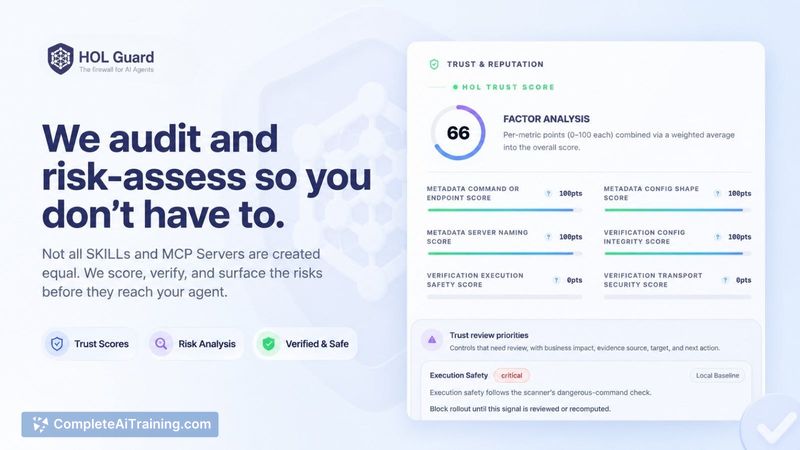
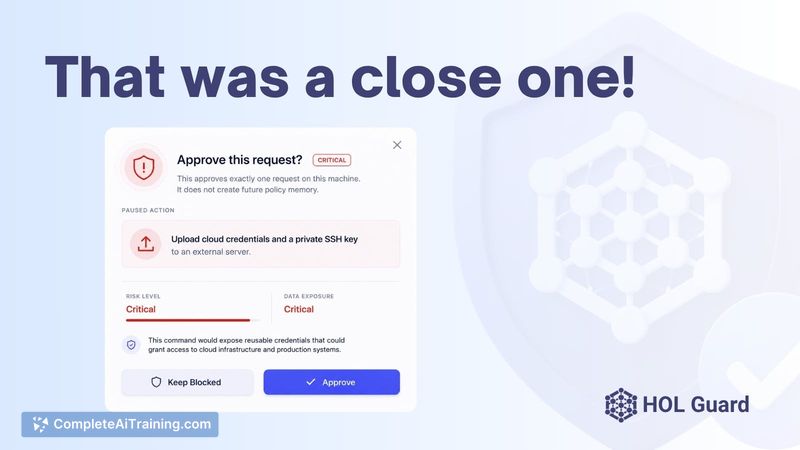
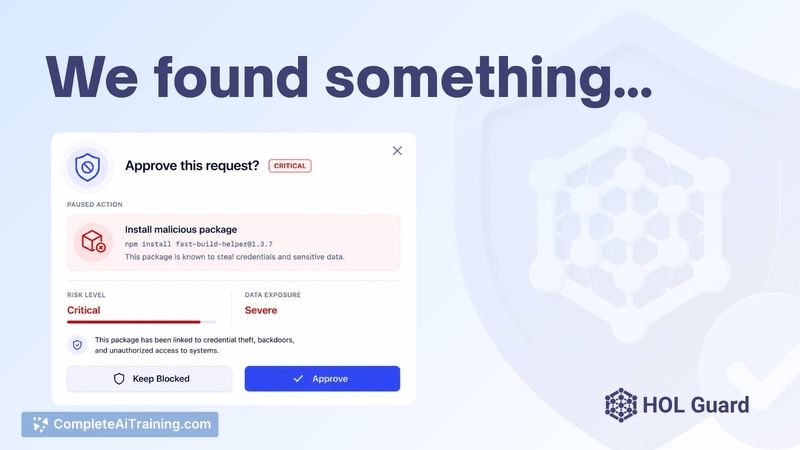
HOL Guard enters a space where autonomous AI agents increasingly touch sensitive infrastructure. Rather than auditing after the fact, it intercepts actions before execution and applies deterministic security policies. This review covers what the tool does today, how it handles decision-making, and where it might fit into a team's workflow.
Key Features
- Local, deterministic policy enforcement that does not rely on live model reasoning for allow/block decisions.
- Structured command parsing that distinguishes between execution, dry runs, and quoted examples, reducing false alarms from keyword matching.
- Three-tier action handling: known-safe work proceeds automatically, clear threats are blocked, and ambiguous high-impact actions trigger an approval request.
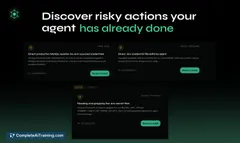
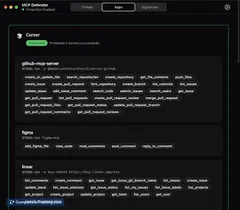
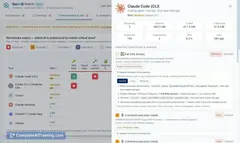
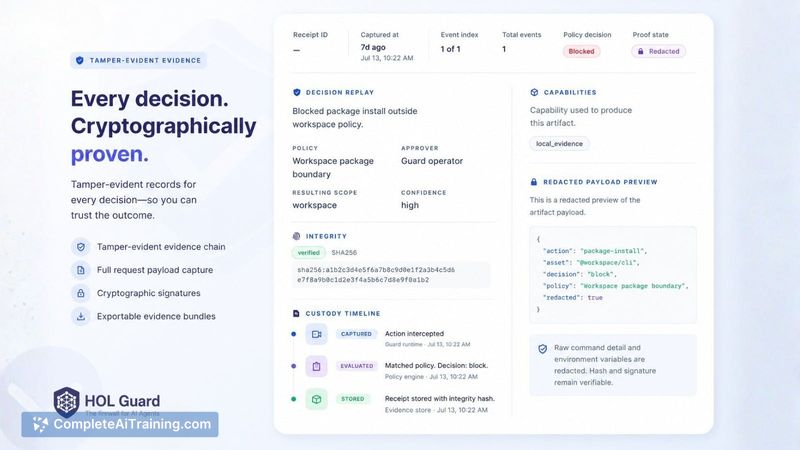
- Local evidence storage with analytics that show which tool calls were risky, why a rule matched, and whether an action was blocked or approved.
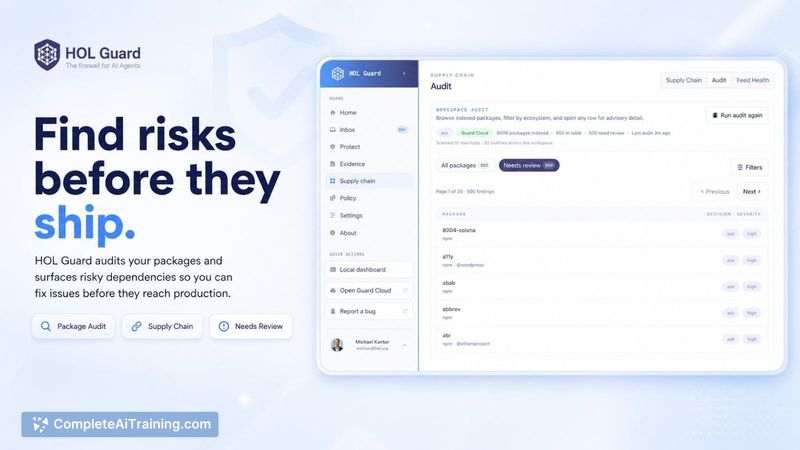
- Hundreds of security heuristics covering package safety, prompt injection, secret exfiltration, and catastrophic filesystem or database operations.
Pricing and Value
HOL Guard is free and open source. The project does not currently list any paid tiers or subscription plans. The launch page mentions a "20% off" tag, but no associated pricing model is defined in the available materials. Users can download and run the tool without cost, and the source code is public for inspection and modification.
Pros
- Runs entirely on the user's machine; no telemetry, commands, or approval data leaves the device.
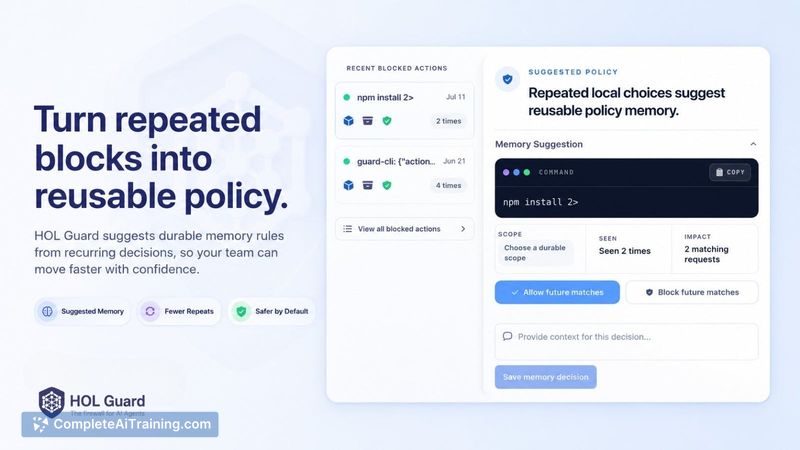
- Balanced policy posture avoids alert fatigue by allowing routine work while blocking only confirmed threats or requesting human input for gray areas.
- Open-source codebase lets teams audit the rules, parsers, and test corpus directly rather than trusting a black-box service.
- Proven internally at HOL for months, with hundreds of thousands of commands flagged as critical or high risk before public release.
- Built on open standards contributed through LF Decentralized Trust, with adversarial testing assisted by GPT-5.6 during development.
Cons
- No published false-positive rate across real-world deployments yet-the 400,000 figure refers to package downloads, not instrumented runtime decisions.
- Local-first design means there is no centralized management console for teams that want a single pane of glass across multiple agents and machines.
- Teams that depend on cloud-based, real-time AI-driven threat detection may find the purely heuristic, deterministic approach too rigid for novel attack patterns not covered by existing rules.
HOL Guard suits developers and small teams who want a self-hosted, inspectable safety layer for AI coding agents and similar tools. It will likely fit less naturally in environments where security operations require a managed, cloud-delivered dashboard with aggregated metrics across an organization. The project's early stage and open-source nature mean its rule coverage and deployment patterns will evolve with community input.
Jobs HOL Guard suits
We checked HOL Guard against 500+ jobs; these get the most out of it.
Alternatives to HOL Guard
Other tools that do the same main job. Our AI compared HOL Guard with similar tools and kept the ones you could use instead.