AI tool
Latch.ai
Latch.ai captures how you actually work by recording your screen, clicks, and narration to identify repeatable tasks. It creates sidekicks that run those steps automatically and ask for input when exceptions arise. Built for accounting teams and a...
About Latch.ai
Latch.ai is an AI workflow automation tool built for accounting teams dealing with repetitive, click-heavy close work. Instead of writing prompts, users perform a task on screen while narrating their process, and the tool captures the steps, exceptions, and judgment calls to build a deterministic "sidekick" that runs the task the same way each time. The sidekick operates within the user's existing tools and stops to ask for input when it encounters a gap or a decision it shouldn't make alone.
Review
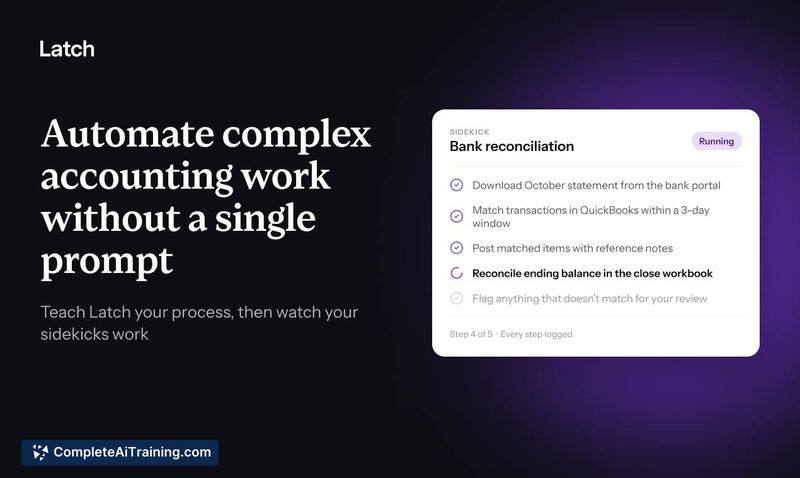
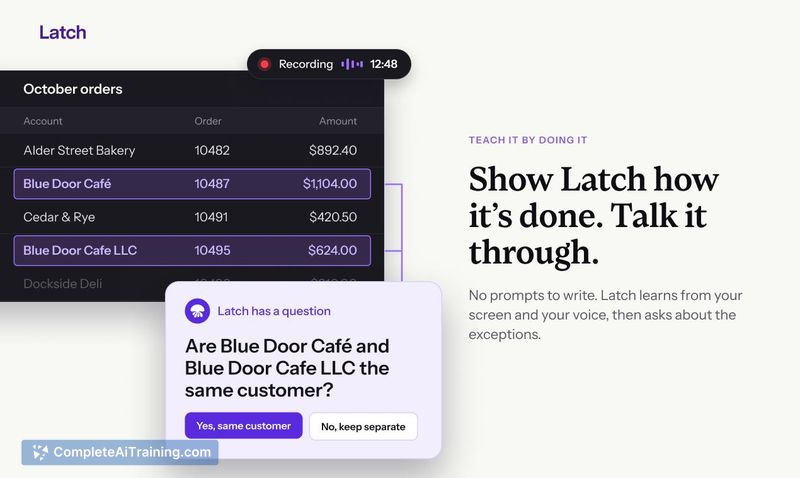

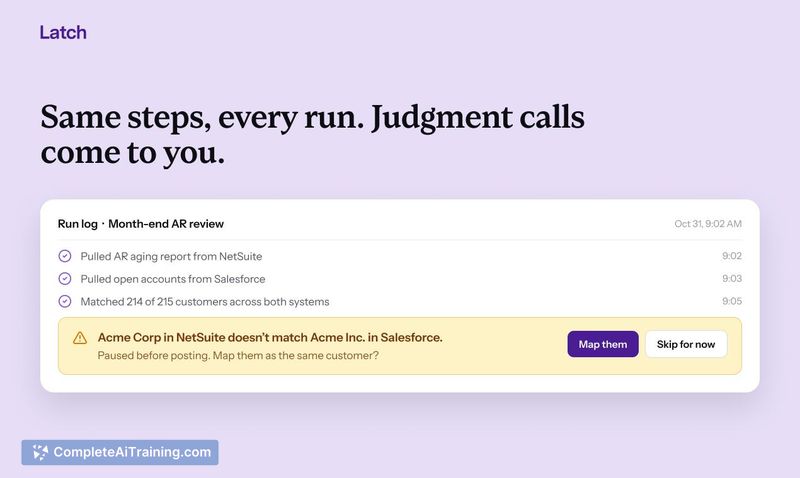
Latch.ai approaches accounting automation by recording user actions rather than requiring prompt engineering. The tool captures three streams during a session-narration, screen recording, and clicks and keystrokes-to construct a repeatable workflow that accounts for the edge cases and manual overrides typical in month-end close processes. Its focus on deterministic execution and logged, reviewable steps sets a specific scope for what it attempts to handle.
Key Features
- Multi-stream capture: Records narration, screen video, and click/keystroke data simultaneously to document the full context of a task, including unwritten rules like specific matching windows or rate overrides.
- Deterministic sidekicks: Builds automated workflows that run a task the same way every time, stopping to ask the user when something doesn't match learned patterns rather than making autonomous judgment calls.
- Step-by-step preview and approval: Lists every action a sidekick will take before execution, explains each permission request, and allows a test run before touching real data.
- Audit logging: Every run produces a step-by-step log that can be reviewed, with all actions visible and traceable.
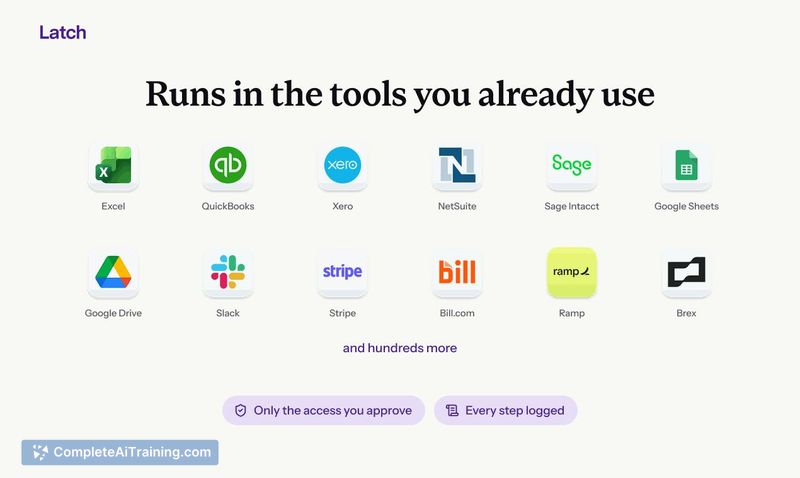
- Plugin-based integrations: Connects to accounting and general-purpose tools through plugins, with coverage for Xero, Google Sheets, Slack, GitHub, and Plaid for some bank connections. Stripe compatibility was confirmed during launch discussions.
Pricing and Value
Latch.ai launched with a free plan that does not require a credit card. A 50% discount on the Solo Plan was offered at launch, though the full pricing structure beyond these initial offers is not yet defined in the available reference content. The tool's approach to capturing nuanced tasks aims to reduce hours spent on manual close work, with the free tier allowing users to test the capture and sidekick functionality before committing.
Pros
- Captures the exceptions and judgment calls that standard operating procedures often miss, such as three-day matching windows or overridden rates.
- No prompt writing or coding agent configuration required-users demonstrate and narrate tasks instead.
- Sidekicks stop and ask for clarification when they encounter unfamiliar situations rather than proceeding silently.
- SOC 2 compliant, with data encrypted in transit and at rest, and users control which sessions get recorded.
- Plugin architecture supports tools beyond accounting, with new plugins reportedly standing up in less than a day for most tools.
Cons
- The tool is not well suited for teams whose workflows change frequently or lack enough repetition to justify the upfront recording and review process.
- Integration coverage for European accounting tools and localized bank APIs is still developing-users in regions like Norway would need new plugins built for platforms such as Tripletex, Visma, or Fiken.
- Because sidekicks are deterministic, they won't adapt to novel patterns on their own; every new exception type requires the user to step in and potentially update the workflow.
Latch.ai fits accounting teams and professionals who run the same multi-step close tasks month after month and want to offload the clicking and cross-referencing while retaining control over judgment calls. It may also work for repeatable tasks in other domains where the same tools and decision points recur, though the product's current testing and traction center on accounting workflows.