AI tool
Manufact
Manufact provides a publishing workflow for MCP servers and plugins. It lets teams check releases, monitor how agents use their tools, and run tests across different clients.
About Manufact
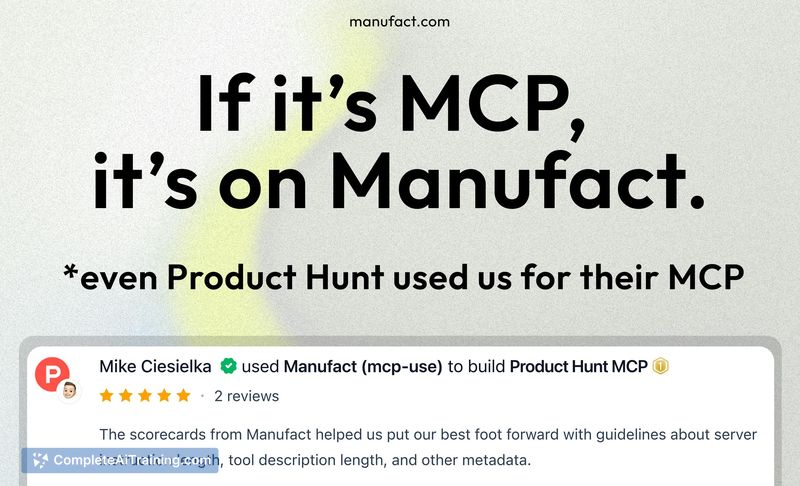
Manufact is an MCP Cloud platform built by the team behind mcp-use, the open-source MCP framework with 10k GitHub stars and roughly 10M+ downloads. It consolidates deployment, testing, publishing, and monitoring workflows for MCP servers and plugins. The tool helps teams prepare for marketplace submissions, run cross-client evals, and inspect how agents use their tools in production.
Review
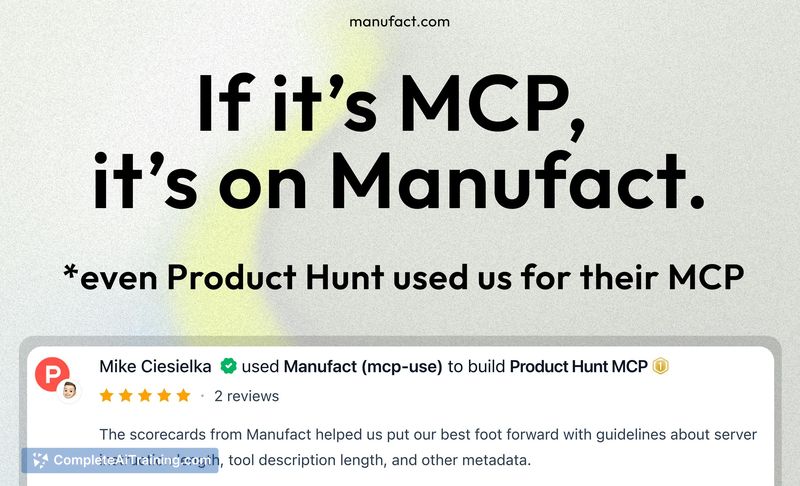
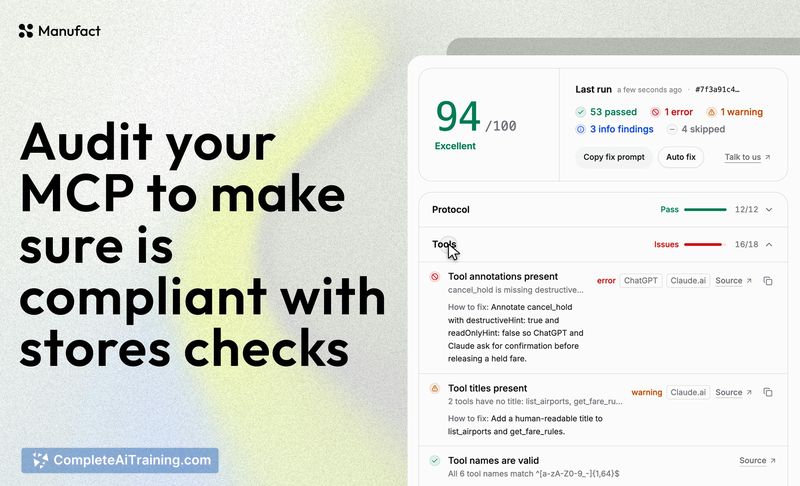
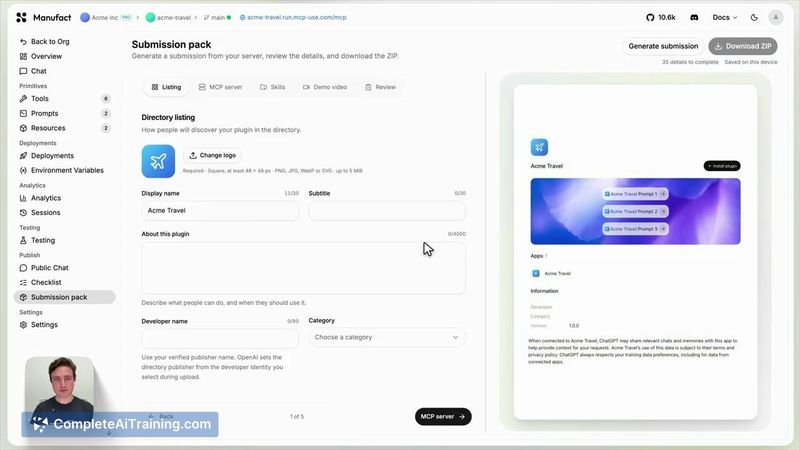
Manufact addresses the gap between a working MCP demo and a production-ready plugin that passes marketplace review. The platform wraps four distinct workflows-deploy, test, publish, monitor-into a single interface. It's built for teams that need to ship MCP servers across multiple clients like ChatGPT, Claude, and others without juggling separate tools for each stage.
Key Features
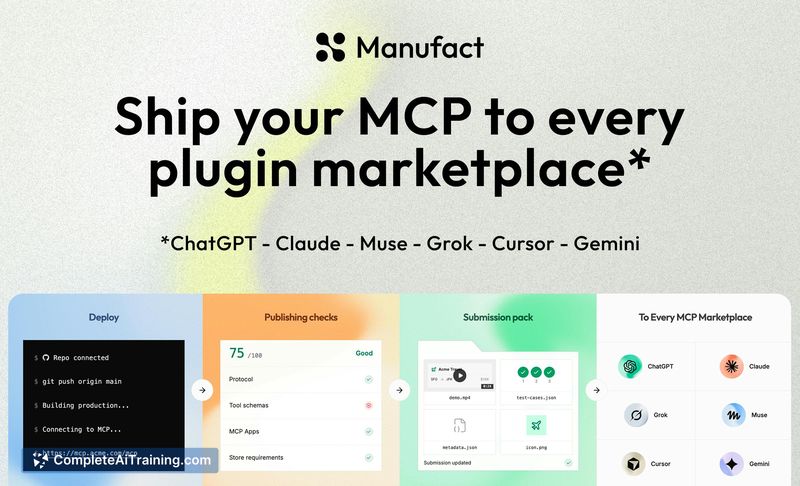
- Deploy with preview environments. Connect a GitHub repository and get a live MCP endpoint. Merges to main deploy automatically, and every pull request generates a preview deployment for testing changes before shipping.
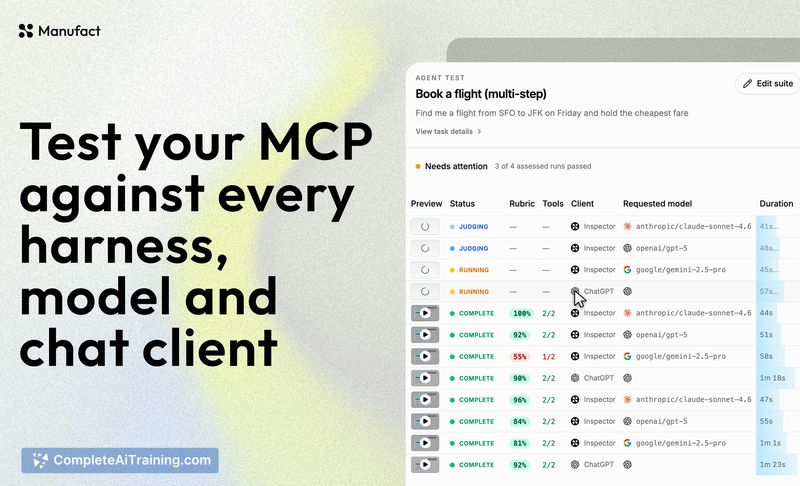
- Cross-client evals with LLM judging. Run evaluations across models, harnesses, and operating systems-including real ChatGPT and Claude clients. An LLM judge grades each run, and you can inspect every tool call to trace what happened during a task.
- Marketplace publishing checks. Run readiness checks for marketplace submissions, receive a score, and use Auto fix to address issues. The platform generates a submission pack with listing materials, reviewer test cases, and supporting assets in one ZIP file.
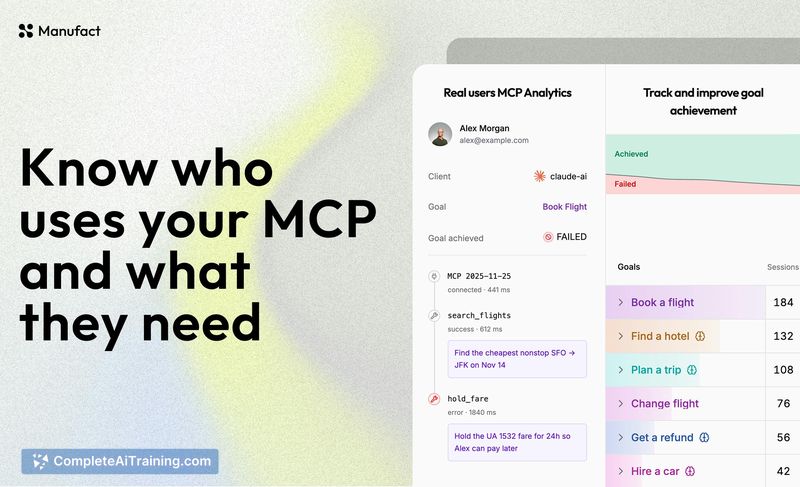
- MCP-first session monitoring. Track sessions from users and agents, see which tools get called, and monitor latency and errors. When a failure occurs, you can open the session and inspect the underlying calls.
Pricing and Value
Manufact offers a free tier with $100 in credits for the first 100 signups using the code PH100. The platform's enterprise plan includes the option to connect an external URL for teams that want to keep their existing hosting while still using Manufact's analytics and testing features. Pricing beyond the free credits is not yet defined on the current page.
Pros
- Combines deployment, testing, publishing prep, and monitoring in one workflow, reducing the number of separate tools a team needs.
- Preview deployments on PRs let teams verify MCP behavior before merging, which catches client-specific issues early.
- LLM-judged evals run against actual ChatGPT and Claude clients, not just simulated environments.
- Framework-agnostic design works with FastMCP, mcp-use, and other MCP implementations without requiring a rewrite.
- Submission pack generation automates the tedious parts of marketplace listing prep, including reviewer test cases.
Cons
- The platform is not well suited for solo developers building MCP tools as a side project who don't plan to publish to marketplaces or need production monitoring.
- Session monitoring and preview deployments are tied to Manufact's own hosting; teams on external hosting lose those features unless they're on the enterprise plan.
- Publishing checks and Auto fix target marketplace requirements that are still evolving-what passes today may need rework as client policies change.
Manufact fits teams that are actively preparing MCP servers for marketplace submission on ChatGPT, Claude, or similar platforms and need visibility into how agents actually use their tools. The eval system and session traces give developers concrete data for debugging agent failures, which is useful when a tool call succeeds technically but the user's task still fails. Teams still in early prototyping may find the publishing and monitoring features more than they need, but those approaching production and marketplace review will find the consolidated workflow practical.