AI tool
Memanto Cloud
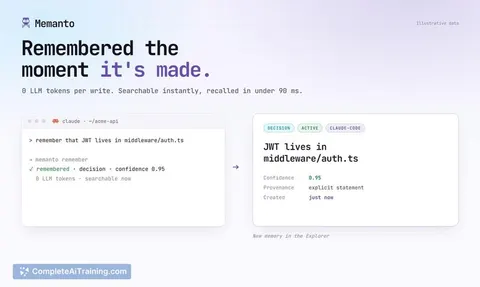
Memanto Cloud is a hosted memory agent that works alongside coding agents like Claude Code, Cursor, and Codex. It saves what your agents learn so you retain ownership of that knowledge without needing Docker or an API key.
About Memanto Cloud
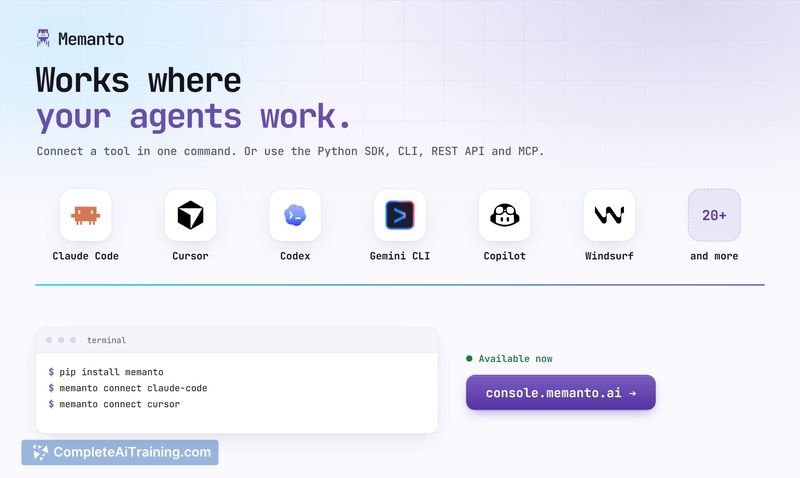
Memanto Cloud is a hosted memory agent that runs alongside AI coding tools like Claude Code, Cursor, and Codex. It stores what agents learn across sessions, flags conflicting information, and retires stale data based on user-defined policies. The tool requires no Docker setup or API key management-users sign in through a browser and connect their agents with a single command.
Review
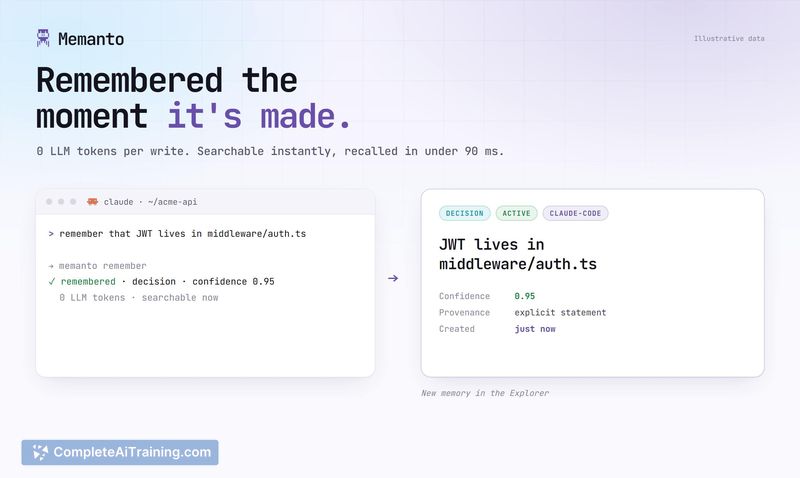
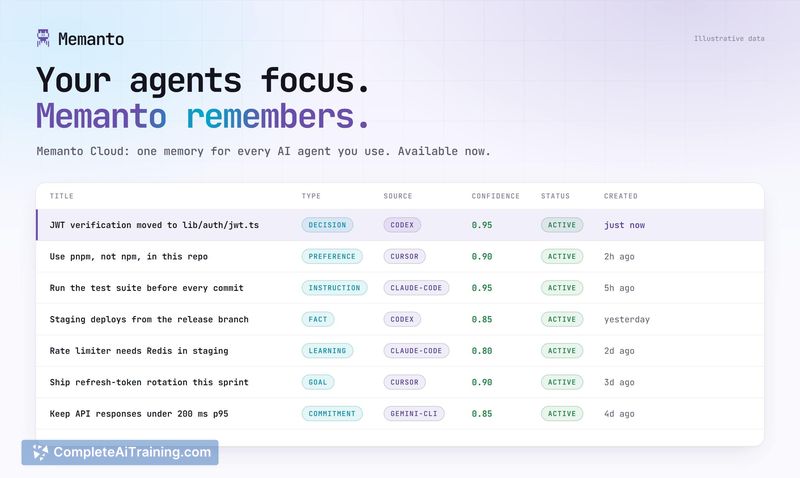
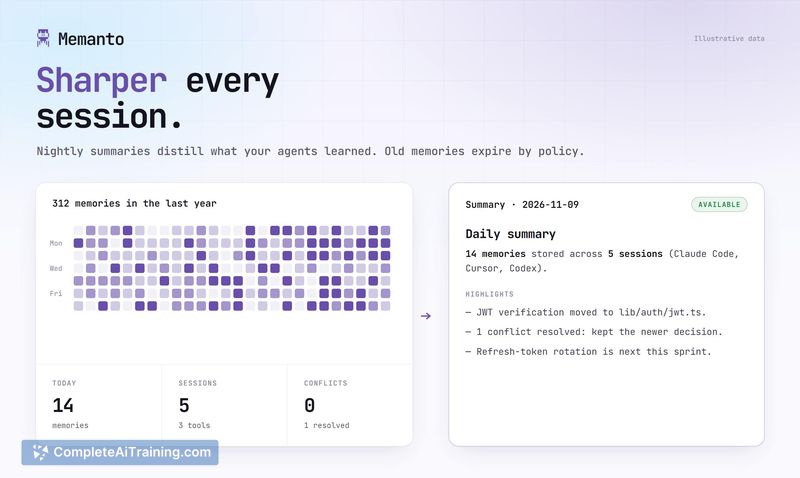
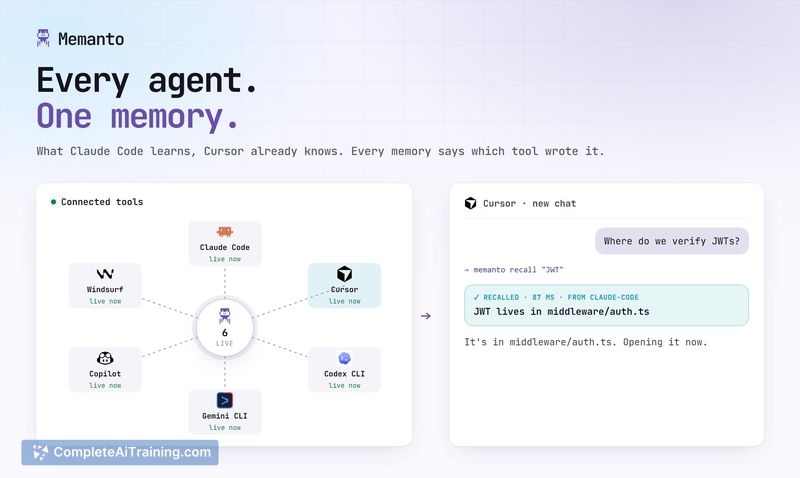
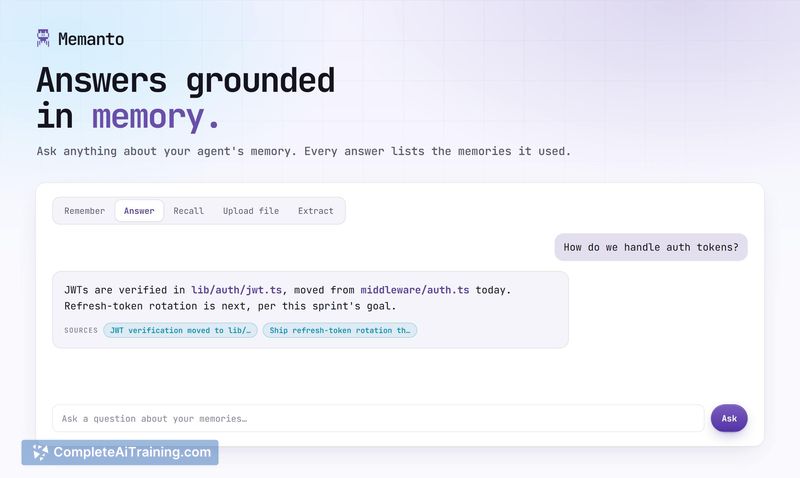
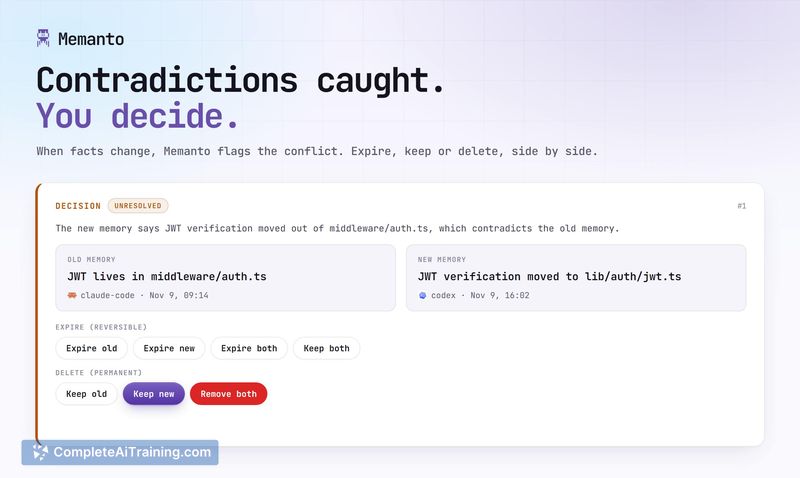
Memanto Cloud addresses a specific friction point in AI-assisted development: the need to re-explain project context every time a session resets. The Cloud version removes the self-hosting requirement that the earlier local release demanded, which lowers the setup barrier. The system's approach to memory management focuses on three concrete operations-remembering, conflict detection, and expiry-rather than passive storage.
Key Features
- Cross-session memory persistence. Agents retain project context, preferences, and decisions across sessions and machines without manual re-briefing.
- Conflict flagging. When two agents record contradictory information, the system surfaces the conflict instead of silently overwriting one entry with the other. Users decide which version to keep.
- Granular expiry policies. Users set per-memory-type rules for when information becomes stale. A preference like "use tabs" can persist longer than a transient fact like "the build is currently broken." Manual expiry and revival are also available.
- Pre-action briefing. At session start, prioritized memories-key decisions, preferences, flagged items-load automatically. The agent pulls remaining memories on demand when a task requires them.
- Markdown export. All stored memory can be exported as plain Markdown at any time. The core engine remains open-source.
Pricing and Value
Memanto Cloud launched with free options, though the exact pricing tiers or future paid plans are not yet defined in the available documentation. The open-source core can still be run locally at no cost. Payments on the cloud platform are processed through Stripe, and the backend infrastructure runs on Google Cloud Platform.
Pros
- No Docker, API keys, or vector database setup required for the cloud version.
- Conflict detection prevents silent overwrites when agents disagree.
- Connects to 31+ tools including Claude Code, Cursor, and Codex.
- Memory export as Markdown keeps data portable and user-owned.
- Expiry rules are configurable per memory type, not just a blanket time-to-live.
Cons
- The tool is not well suited for teams or projects that don't use AI coding agents regularly-it solves a problem that only emerges with frequent agent context resets.
- Pricing structure beyond the free tier remains unannounced, which limits cost planning for long-term adoption.
- Conflict resolution still requires manual user decisions; there is no automated arbitration logic for low-stakes disagreements.
Memanto Cloud fits developers who run AI coding agents daily and want persistent project memory without managing infrastructure. It's less relevant for occasional agent users or projects where context re-explanation doesn't create significant friction. Teams evaluating it should monitor the pricing details as they emerge and test whether the conflict flagging catches enough contradictions to justify adding another tool to their workflow.