AI tool
Memorias
Memorias turns spoken interviews with an AI biographer into a personal memoir, keeping only what you actually said. It is for people who want to preserve their life stories for family without invented details.
About Memorias
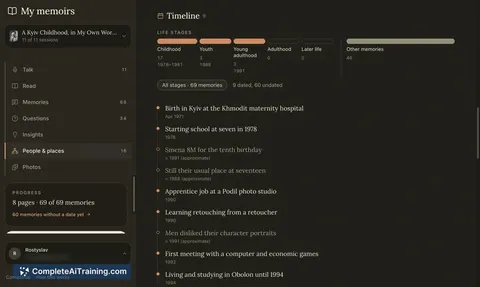
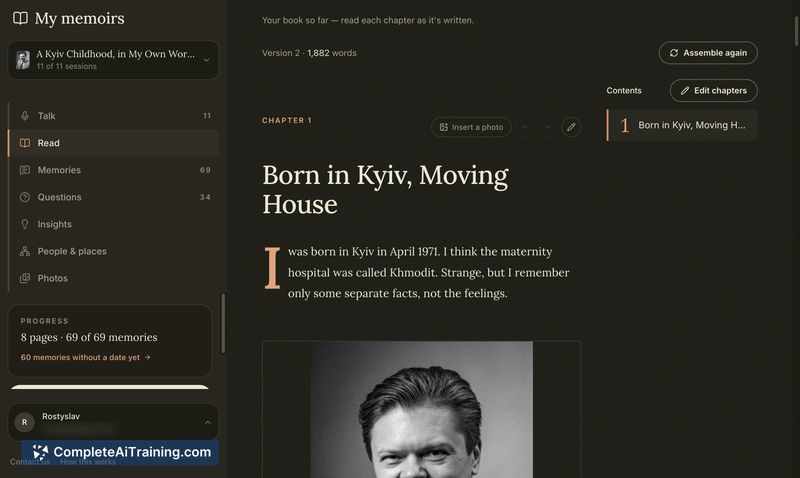
Memorias is an AI biographer that converts spoken life stories into a finished memoir book. A user talks through voice interviews while the AI asks follow-up questions, transcribes the sessions, and assembles chapters using only the narrator's own words. The tool maps people, places, and years into a life timeline, and exports the completed work as EPUB, PDF, or DOCX files.
Review
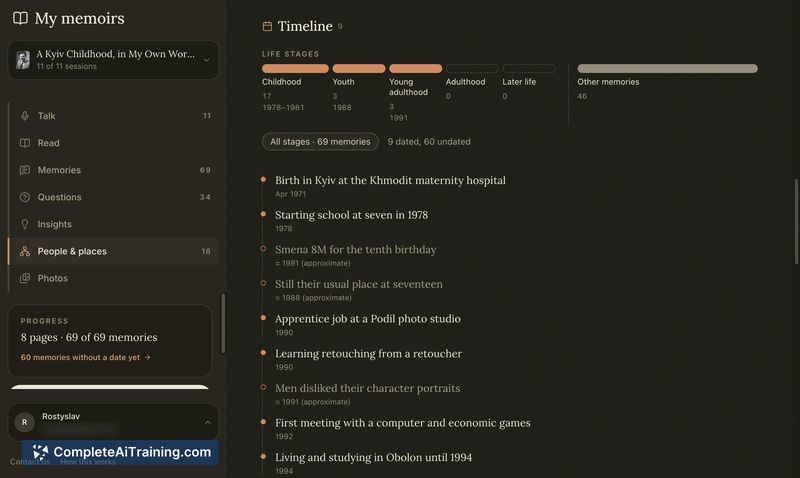
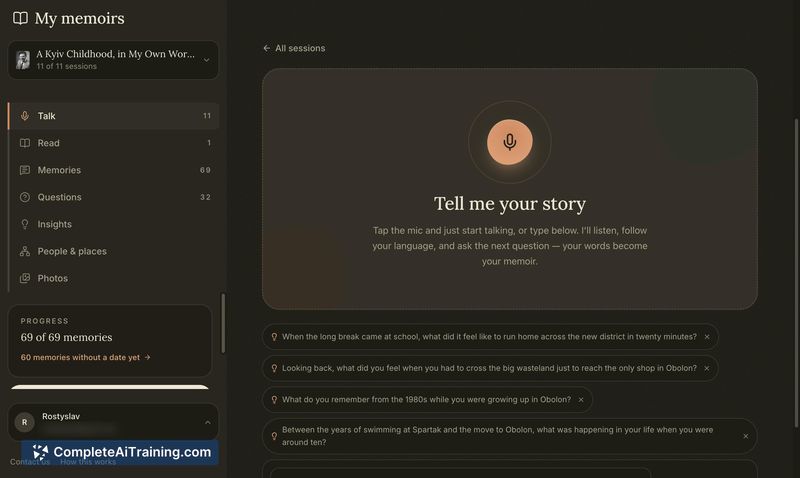
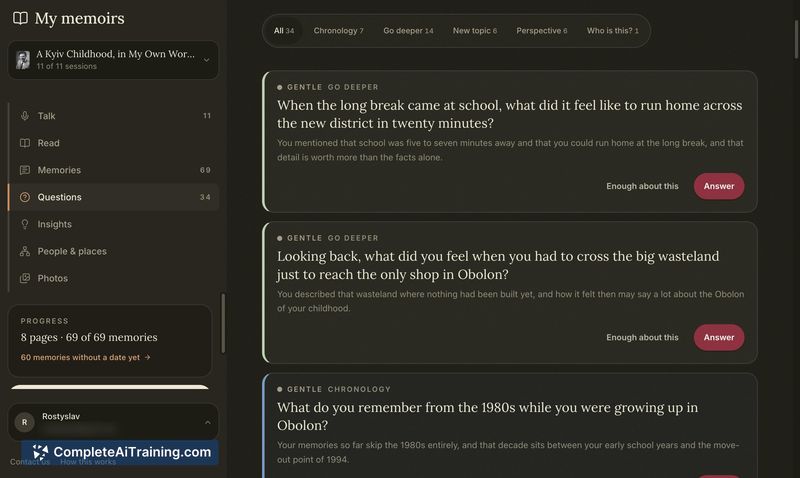
Memorias takes a specific stance on AI-assisted writing: it refuses to invent or embellish. That constraint shapes the entire experience, from the interview flow to the chapter drafts. For anyone who has considered a memoir but found the writing process too heavy, the talk-first approach lowers the barrier considerably.
Key Features
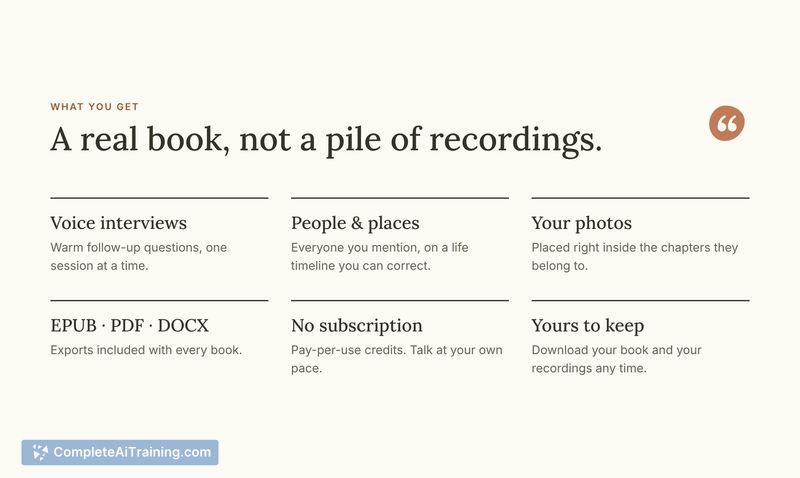
- Voice interviews with an AI biographer that asks follow-up questions session by session.
- Automatic transcription of spoken memories, which serves as the foundation for all chapters.
- A life timeline populated with people, places, and years - editable by the user before export.
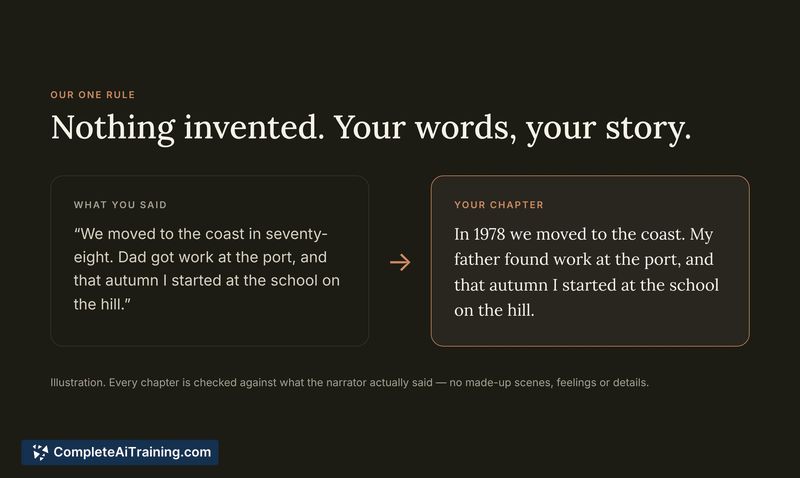
- Chapter assembly in the narrator's own words, with a verification step that checks content against the original transcripts.
- Export to EPUB, PDF, and DOCX formats, with the ability to add personal photos to chapters.
Pricing and Value
Memorias operates on a pay-per-use credit system with no subscription. Specific credit costs and what a single credit covers are not yet detailed on the product page. The free options tag on its launch listing suggests some no-cost access may exist, but the exact boundaries between free and paid usage remain undefined at this stage.
Pros
- Enforces a strict "nothing invented" rule - every chapter is checked against what the user actually said.
- Interview-style interaction mimics a human interviewer rather than a blank page, which can help users who freeze up when asked to write.
- Editable timeline gives users control over dates, names, and relationships before they're locked into chapters.
- Multiple export formats (EPUB, PDF, DOCX) make the output usable for self-publishing, printing, or sharing with family.
- Pay-per-use model means you aren't committed to a recurring charge if you only need one book.
Cons
- No mobile app is available yet; all sessions currently run through a desktop browser, which may limit when and where users can record.
- Printed book fulfillment is not yet built - users who want a physical copy must arrange printing themselves from the exported files.
- Not well suited for people who want a ghostwritten memoir with dramatic pacing or literary flair, since the tool intentionally avoids adding anything beyond the user's spoken words.
Memorias fits best for someone who wants a factual, first-person record of their life in their own voice - a grandparent documenting family history, or a professional capturing career stories without hiring a ghostwriter. It's less appropriate for those seeking a polished, novelistic narrative where a writer fills in gaps. The roadmap includes a mobile app and printed book option, but for now the core loop of talking, reviewing, and exporting works in the browser with the features described above.