AI tool
Resum
Resum connects live audio to named AI agents, producing a real-time transcript and agent-specific files when the session ends. It is for developers who want to integrate conversational AI into their own applications via a simple SDK.
About Resum
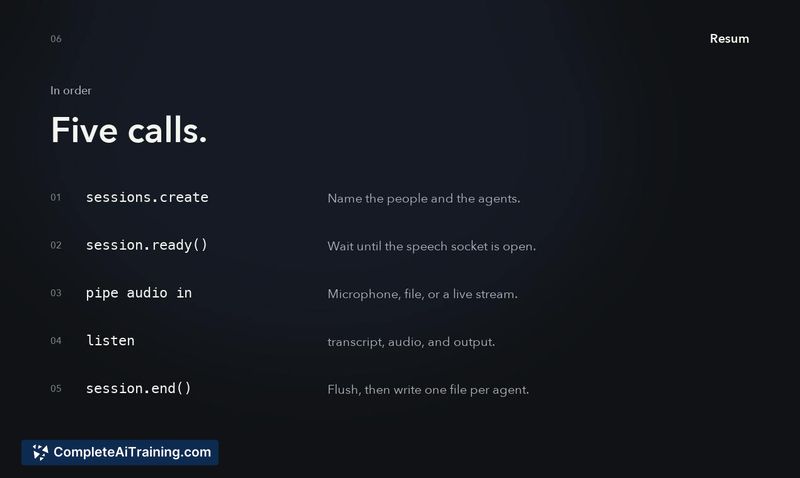
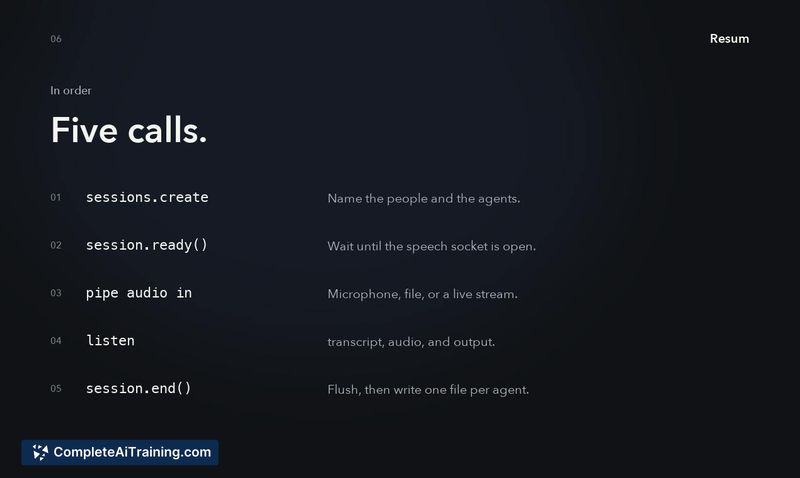
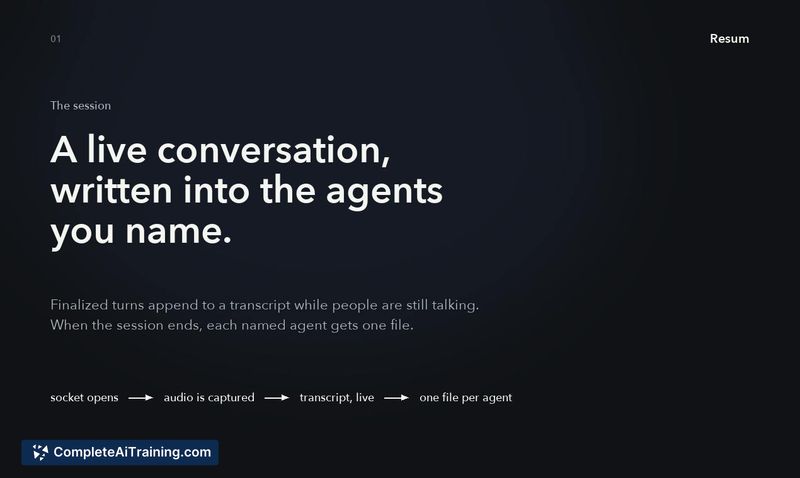
Resum is an API and SDK for live conversations, launched as an enterprise voice agent infrastructure tool. It connects a live conversation to named AI agents you define, producing a transcript during the session and one file per agent when the session ends. The SDK wraps the session lifecycle into five calls: create, wait until ready, pipe audio in, listen while live, and end.
Review
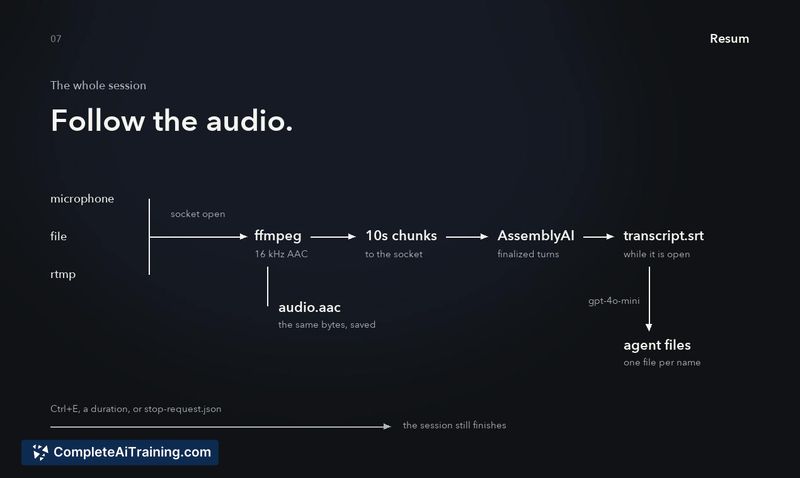
Resum approaches live voice processing with a narrow, agent-oriented structure. Instead of a general-purpose transcription pipeline, it routes a single audio stream to multiple named agents and gives each one its own output file. The tool is brand new-launched this week-so documentation and community patterns are still forming.
Key Features
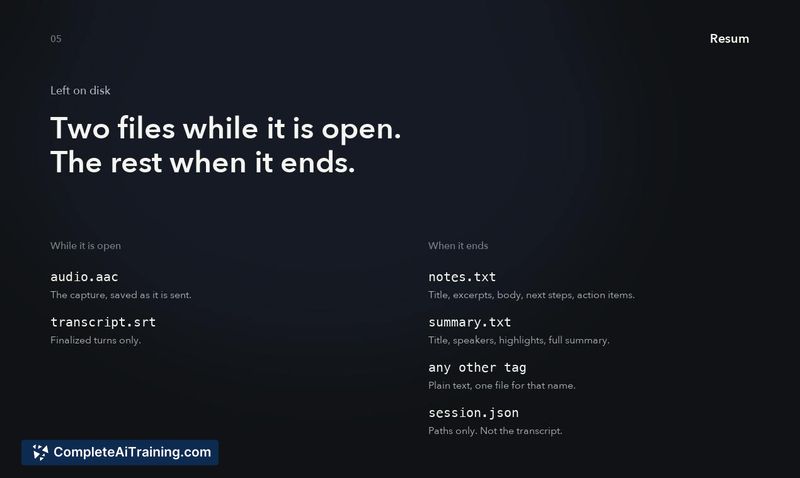
- Named agent routing-each agent you name (e.g., "notes", "summary", or any custom name) receives its own output file when the session ends
- Fixed-shape outputs for built-in agent names: "notes" and "summary" produce structured results, while any other name you pass returns plain text
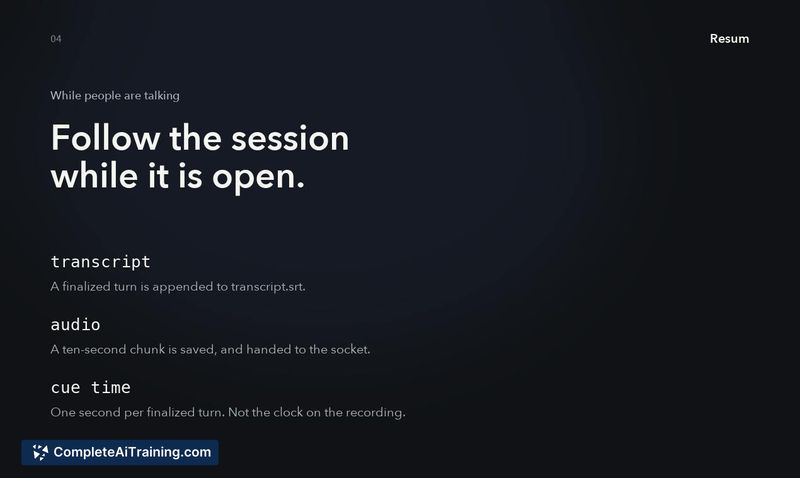
- Live transcript building-finalized turns append to a transcript while the session is still open
- Session-end flush-stopping the session finishes all pending work, flushes remaining audio, and writes agent files before closing
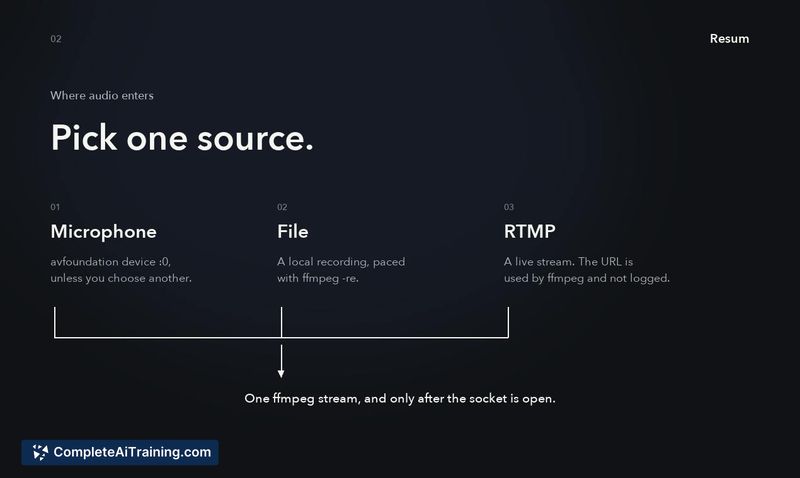
- Five-call SDK sequence: create a session, wait for the speech socket to be ready, pipe audio from a microphone/file/live stream, listen during the session, and end it
Pricing and Value
Pricing is not yet defined on the product page. The tool is described as an enterprise API and SDK, and the maker invites direct contact at williams@viroke.com for those who want to run it with their own conversations. No free tier, trial, or usage-based pricing details have been published.
Pros
- Single audio stream feeds multiple agents simultaneously, reducing the need for parallel processing setups
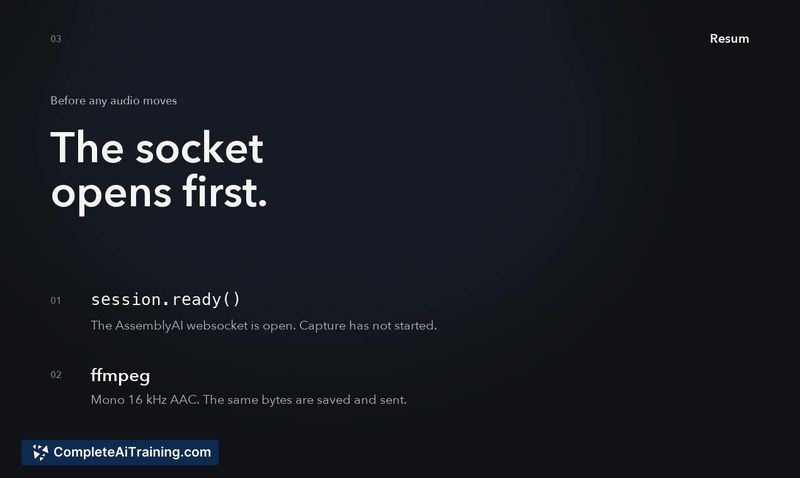
- Audio stays local until the speech socket opens, which gives you control over when transmission begins
- The same recording is saved exactly as sent-no pre-processing alters the input before agent distribution
- End-session flush guarantees agent files are complete before the session terminates, a detail noted by early commenters as useful for downstream automation
Cons
- No pricing information is available, making cost evaluation impossible without contacting the maker directly
- Documentation is minimal-the launch announcement covers the core flow, but error handling, retry logic, and edge cases aren't detailed yet
- The tool is not well suited for teams that need a managed, browser-based transcription service with a GUI; it's an API/SDK aimed at developers comfortable integrating at the code level
Resum fits scenarios where a single conversation needs to feed multiple downstream processes with different output formats-interview platforms generating separate candidate notes and interviewer summaries, for example. Developers who want programmatic control over when audio transmission starts and stops will find the socket-ready gating useful. Teams looking for a turnkey, UI-driven transcription product should look elsewhere, as this is a developer API with no graphical interface.