AI tool
Revix AI
Revix AI reviews pull requests by learning your repository's architecture and coding patterns, then flags violations with labeled intent and severity. It is for development teams who want code review comments that reflect how their codebase actual...
About Revix AI
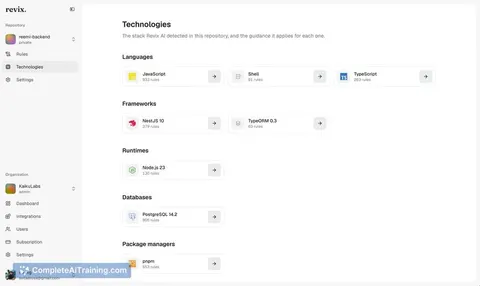
Revix AI is an AI code review tool that scans a repository, generates its own pattern and architecture rules, and reviews every pull request against those rules. It continues learning as the codebase changes, adding, deleting, or modifying rules after each merge. Each review comment names the rule behind it and is labeled by intent and severity.
Review
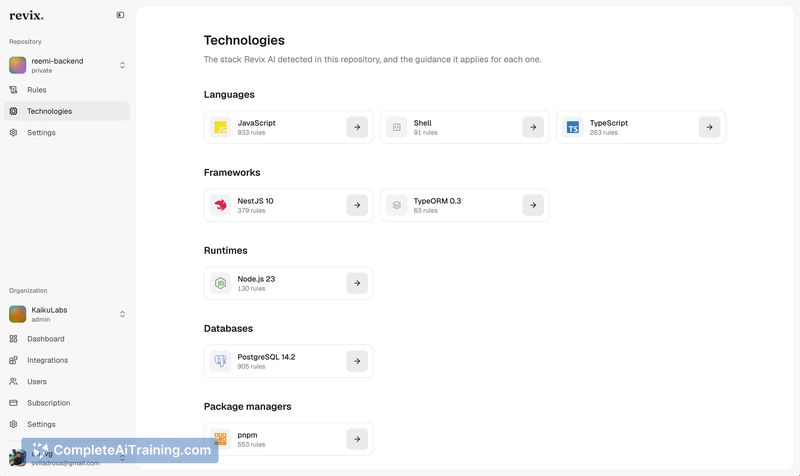
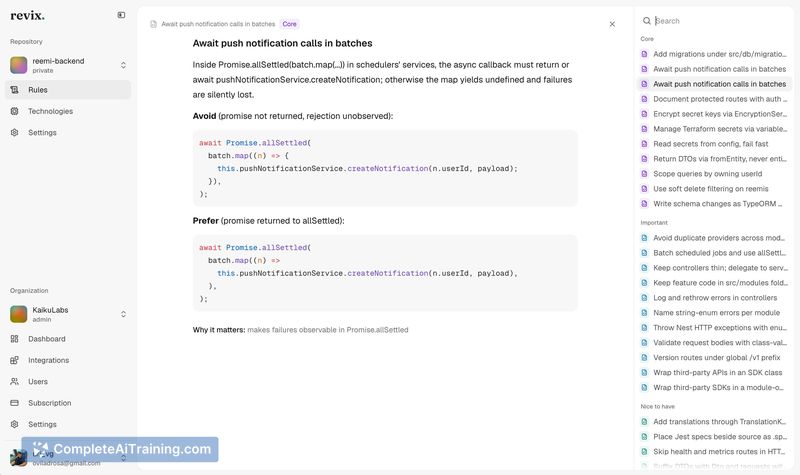
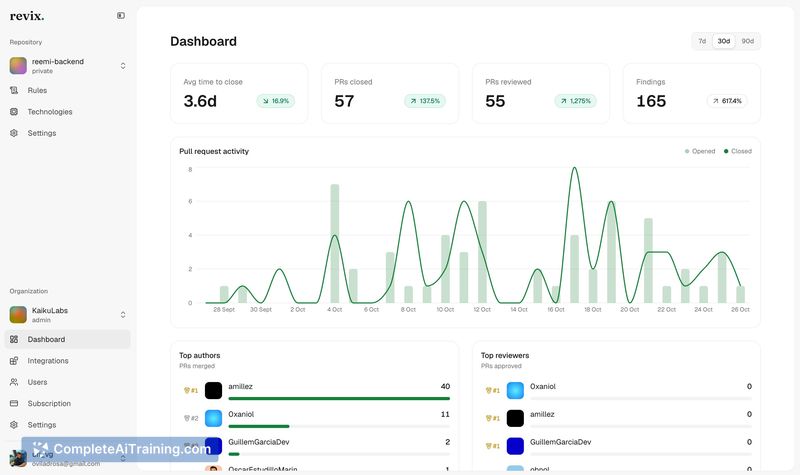
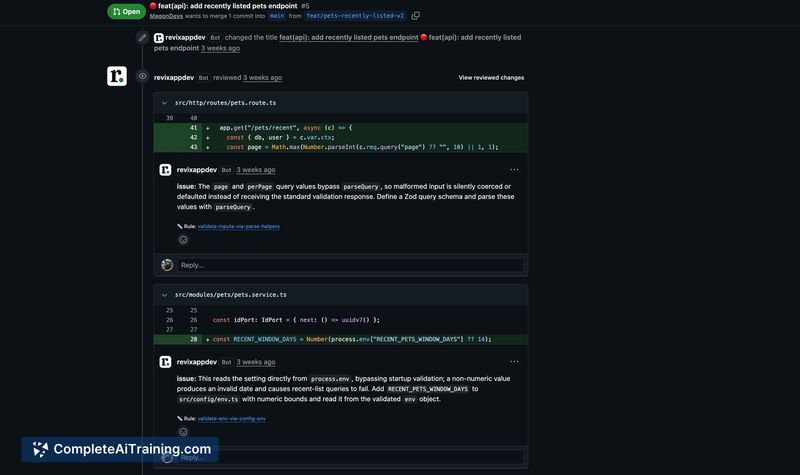
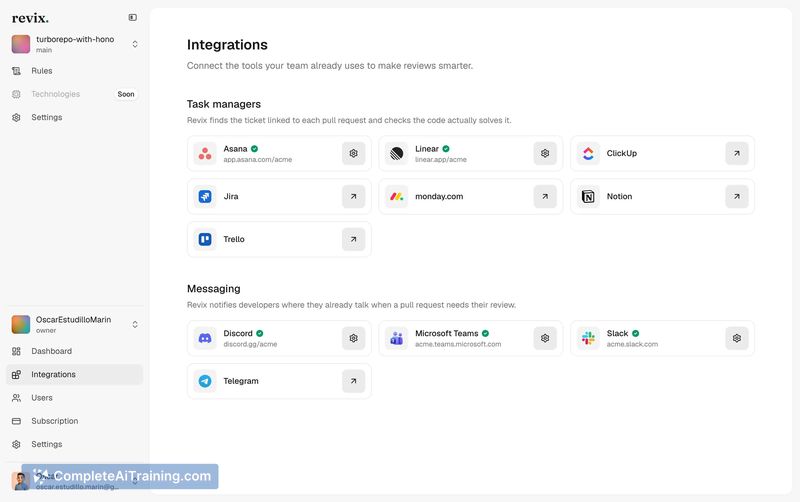
Revix AI approaches code review by deriving standards directly from the repository itself, rather than applying a fixed, generic ruleset. The tool starts with a full repo scan to extract structural rules, then uses those rules to flag pull request changes. Comments are tagged with a named rule, an intent label, and a severity level, so a developer sees not just what was flagged but why.
Key Features
- Automatic rule extraction from the repository's own code patterns and architecture during an initial scan.
- Self-updating rule set that adds, deletes, or modifies rules as pull requests are merged and the codebase evolves.
- Review comments that include the specific rule name, an intent label, and a severity marker.
- GitHub, GitLab, and Bitbucket Cloud integration.
- Free tier for public repositories; private repos get a 14-day trial with no credit card required.
Pricing and Value
Revix AI is free for public repositories. For private repositories, the makers offer a 14-day trial that does not require a credit card. Pricing beyond the trial period for private repos has not yet been defined publicly. The tool's stated metric of success is how many comments developers act on, not the total number of comments left.
Pros
- Rules originate from the repo's actual code, not from a preset list, which can reduce irrelevant noise.
- Comments cite a named rule and severity, making it easier to decide what to address first.
- No manual configuration or rule-writing is required to start a review.
- Works across three major Git platforms without changing the review workflow.
Cons
- The tool is in an early stage, and some review comments will miss the mark, as noted by the makers themselves.
- Rule retirement depends on automated analysis of merges and human comments; an obsolete pattern could persist as a rule until the system detects the shift.
- Revix AI is not well suited for teams that need full control over every review rule or prefer to write and maintain their own rule files manually.
Revix AI fits teams that want code review feedback grounded in their own codebase conventions without spending time writing or updating rule documentation. It may also work for open-source maintainers who want a free, low-config reviewer on public repos. Teams that require deterministic, hand-authored rule sets or operate in highly regulated environments with strict review policies might find the automated rule learning too opaque.