AI tool
WeatherNext 3
WeatherNext 3 provides weather forecasts that include solar irradiance and wind speed variables. It is built for grid operators and energy traders who need to predict renewable generation output based on weather conditions.
About WeatherNext 3
WeatherNext 3 is Google's flagship AI weather forecasting model, launched this week. It processes real-time satellite data and refreshes hourly, producing higher-resolution predictions that include precipitation and clean energy variables. The model is integrated across Search, Gemini, Maps, Google Maps Platform, and Cloud.
Review
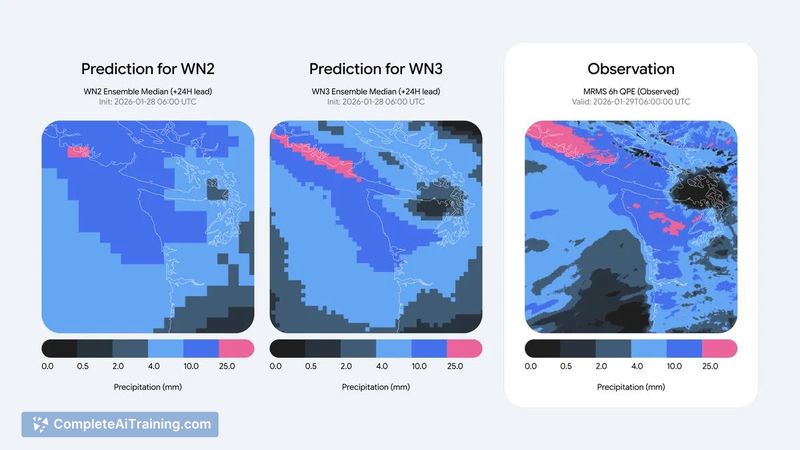
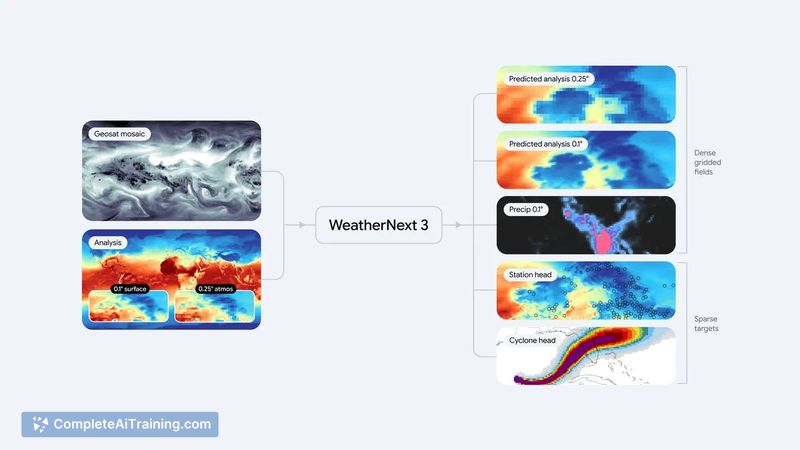
WeatherNext 3 represents an update to Google's weather modeling stack, adding satellite data ingestion and hourly refresh cycles that were absent from prior versions. The model outputs now cover precipitation forecasting and solar and wind generation estimates, which puts it in competition with specialized meteorological tools. Its distribution across Google's ecosystem means the forecasts appear in consumer-facing apps as well as enterprise APIs.
Key Features
- Hourly model refreshes using real-time satellite data
- Higher-resolution output compared to previous versions
- Precipitation forecasting built into the core model
- Clean energy variables that estimate solar and wind output for grid operators
- Integration across Search, Gemini, Maps, Google Maps Platform, and Cloud
Pricing and Value
WeatherNext 3 appears within free consumer products like Search and Maps at no direct cost. Pricing for access through Google Cloud and Google Maps Platform is not yet defined on the launch page. Enterprise users who consume weather data via API should check their existing Google Cloud agreements for specifics, as usage-based billing is common for these services but hasn't been confirmed for this model.
Pros
- Hourly refresh cadence keeps forecasts current with developing weather systems
- Satellite data integration adds observational constraints that ground-based networks alone can't provide
- Clean energy variables give grid operators solar and wind generation forecasts without needing separate models
- Wide distribution across Google products means the same model output reaches both consumers and enterprise users
- Precipitation forecasting is handled natively rather than as a post-processing step
Cons
- Pricing for API and Cloud access is not yet defined, which delays procurement decisions for enterprise teams
- The model's accuracy metrics and validation against established benchmarks aren't published on the launch page
- Users who need offline or on-premise weather modeling won't find a self-hosted option here - the tool is entirely cloud-dependent
WeatherNext 3 fits teams that already operate within Google's ecosystem and need frequent, satellite-informed forecasts without managing their own modeling pipeline. Grid operators and renewable energy traders may find the clean energy variables useful if the outputs align with their existing load and generation models. Organizations that require on-premise deployment or transparent accuracy benchmarks will need to wait for more documentation before evaluating it against established meteorological tools.
Jobs WeatherNext 3 suits
We checked WeatherNext 3 against 500+ jobs; these get the most out of it.