AI tool
Zetik
Zetik is an AI tool that scans early-stage companies and projects to identify the few developments most relevant to a user's specified interests. It is designed for professionals who need to monitor large volumes of emerging information, sorting f...
About Zetik
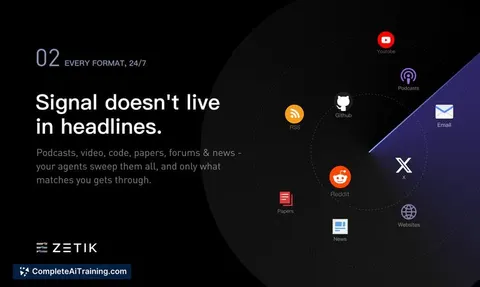
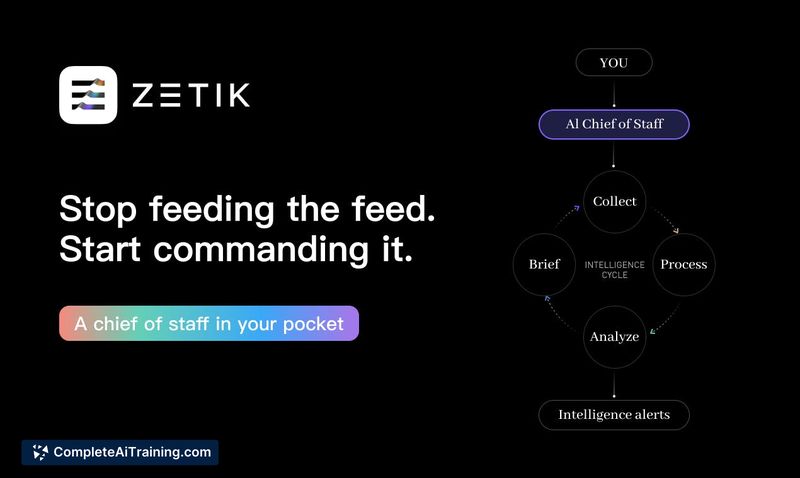
Zetik is an AI agent team that runs an intelligence cycle across podcasts, papers, code, tweets, and news. It launched this week and positions itself as a "chief of staff in your pocket" for information gathering. The system continuously collects, filters, analyzes, and briefs users on topics they declare, rather than requiring them to scroll manually.
Review
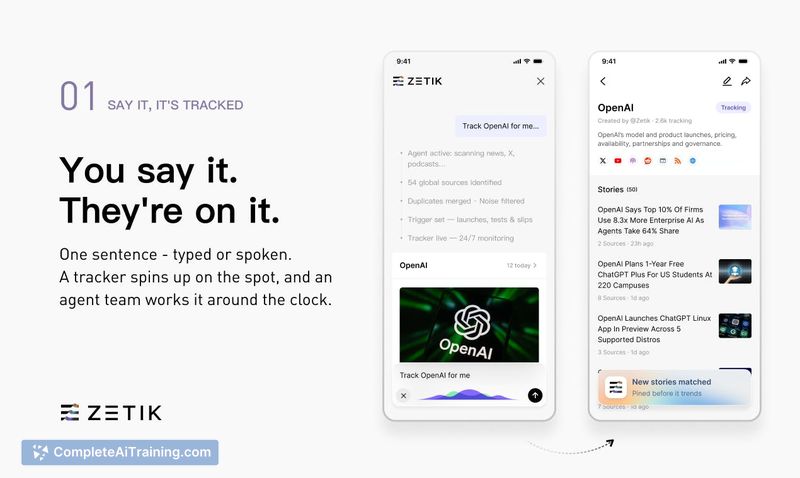
Zetik competes in the crowded space of AI information tools, but it takes a different structural approach than feed-based aggregators. The maker describes it as a response to the cost of maintaining awareness across multiple formats and sources. I tested the tool's logic through its public documentation and launch materials since it just shipped this week.
Key Features
- Trackers - Users tell Zetik what matters via voice or text input; the system creates a tracking agent that continuously monitors the web for related developments.
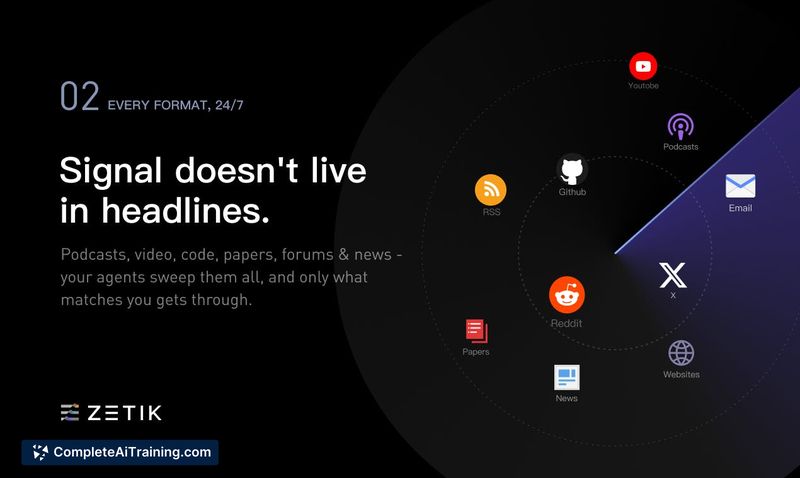
- Cross-format connections - The engine scans X, Reddit, YouTube, podcasts, GitHub, arXiv, blogs, and financial research, linking information across mediums rather than isolating sources.
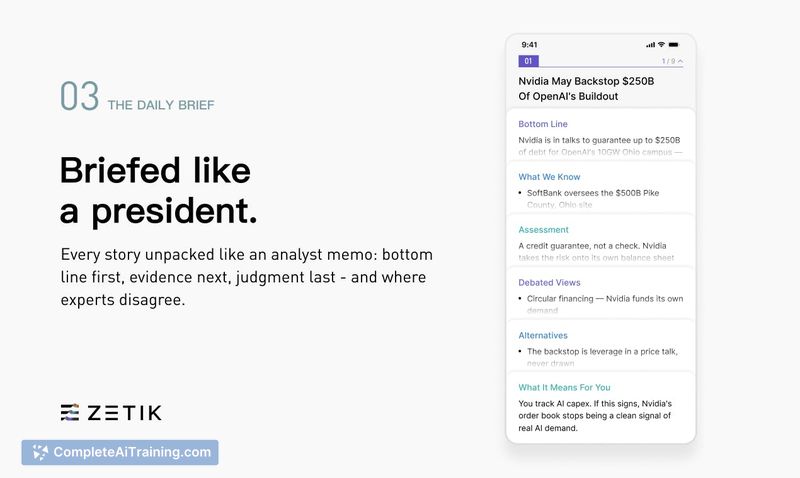
- Briefs, not links - When a tracked topic changes, Zetik generates contextual explanations: the story, asking background, what changed, and why it matters.
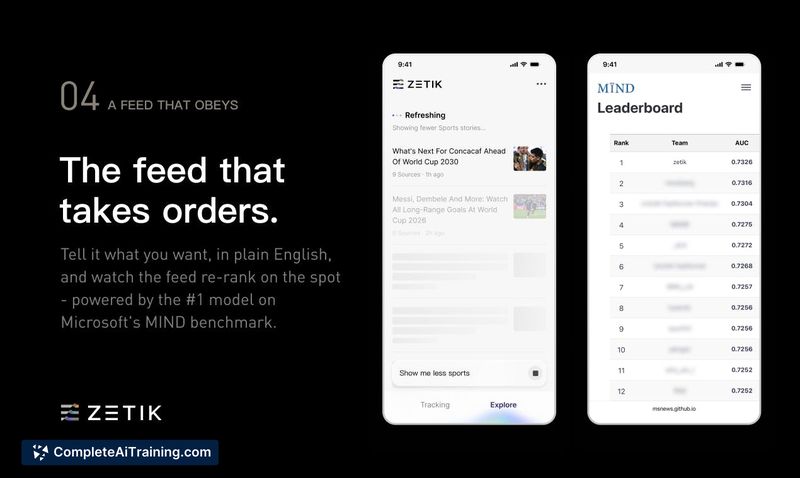
- Explore lane - A separate discovery surface that matches broad directions of interest rather than exact tracked topics, designed to surface emerging categories outside declared interests.
- Preferences memory - The system retains user interests and prior briefs to improve future outputs, without letting dismissed items re-enter the core feed.
Pricing and Value
Zetik lists "Free Options" among its launch tags at the time of writing. No specific pricing tiers or limitations are published yet. The core value claim is that users with declared topics receive guaranteed coverage of those areas, the other 98 percent of irrelevant content gets filtered out without requiring constant manual review.
Pros
- Speaks naturally across audio sources like podcasts and video, which are commonly ignored by standard RSS aggregators.
- Separates the recall layer (confirmed trackers) from a discovery layer (Explore), making serendipity a distinct area users can promote or dismiss.
- The brief format compresses the 1-2 items worth knowing from noise consumption, addressing the time poverty of manual scanning.
- Works with near real-time monitoring across a range of topics from academic papers to sports transfers.
- Runs in the background after initial setup, reducing persistent manual searches.
Cons
- Currently only available for prospective web access; the product infrastructure doesn't support fine-grained control over which specific sources a tracker pulls from, so some power users may see noise in their declared feeds.
- The information filtering has no visible audit trail that shows why a specific item was promoted or dismissed from the Explore lane, making it difficult for users to diagnose what they miss.
- The tool is not well suited for those wanting a simple daily newsletter-style digest rather than managing explicit trackers and separate discovery lanes; those users would do better with conventional RSS or email newsletters.
Zetik's ideal user is someone who treats information acquisition as part of their workflow and wants a personal brief, not a feed. It fits professionals with clear, specific topics they monitor across many formats, and fall-time users who don't want to switch between sources. Given its current stage of development at launch week, those wanting a well-known product with a proven path may wait for broader usage feedback before adopting it as a primary tool.
Jobs Zetik suits
We checked Zetik against 500+ jobs; these get the most out of it.
Alternatives to Zetik
Other tools that do the same main job. Our AI compared Zetik with similar tools and kept the ones you could use instead.