
Blog ·
13 Essential AI Courses for Directors of Finances in 2026
Master AI for finance leadership. Explore 13 curated courses covering forecasting, risk, and automation to drive strategic decisions and future-proof your role.
 Jeroen Erne
The numbers are hard to ignore. AI adoption isn't a future projection anymore; it's a current operational reality. For Directors of Finances, the pressure to deliver faster reporting, sharper forecasts, and tighter risk controls has never been higher. Meanwhile, the tools to do that work are changing every quarter. If you're not actively learning how to use them, the gap between your department's output and what's possible will only widen. The question isn't whether AI will touch your role-it already has. The real question is whether you'll lead that change or scramble to keep up with it.
Why AI matters for Directors of Finances today
The finance function is no longer just about historical reporting. It's about predicting, optimizing, and automating. And that's exactly where AI comes in. A recent study shows that 69% of businesses already use AI for at least one financial function, and that number is climbing every quarter. From flagging anomalies in spend to automating the tedious parts of month-end close, AI is doing the heavy lifting that used to take your team days to complete.
This isn't just about efficiency though. It's about relevance. Boards and CEOs are asking tougher questions about cash flow, scenario planning, and pricing elasticity. AI gives you the ability to answer those questions with data-driven speed. But the tools are only as good as the person directing them. That's why this article is here. We're going to help you sort through the noise and identify the best AI courses for Directors of Finances, so you can invest your time in training that actually moves the needle.
The Growing Role of AI in Directors of Finances
AI isn't a single tool. It's a whole set of capabilities that are reshaping how financial work gets done. Let's break down where it's having the most impact:
- Automated reporting: AI can generate variance analysis and board packs in minutes, pulling data from multiple systems without human error.
- Smarter forecasting: Machine learning models pick up on patterns that spreadsheets miss. That means your projections can account for seasonality, market shifts, and internal changes more accurately.
- Fraud detection: Algorithms can spot unusual transactions in real time, flagging issues that would take a human auditor weeks to find.
- Decision support: AI can run hundreds of scenarios in seconds, giving you the data to back up your recommendations to the board.
- Personalized financial guidance: For those in FP&A or divisional finance, AI helps tailor budget recommendations to specific business units based on their unique drivers.
These aren't future ideas. They're live in many companies right now. The workflows are shifting. Instead of spending hours preparing data, you'll spend more time interpreting it and deciding what to do next. That's a different skill set-and it's one you have to build deliberately.
Why it pays to get ahead of the curve
Becoming a confident user of AI in finance isn't just about keeping your job secure. It's about doing your job better than you ever could before. There are a few clear benefits that come with this knowledge.
First, you get your time back. When the system handles the repetitive tasks, you can focus on the strategic parts of your role-the ones that actually influence the company's direction. Second, you build credibility. When you can walk into a board meeting and explain how you used predictive modeling to assess a potential acquisition, that changes how people see you. You're not just the person who counts the money; you're the person who helps make it.
Third, it opens doors. Finance leaders who understand AI are in high demand. They get called in for the big projects, the system implementations, the strategic reviews. And they're often the ones who get the promotion when the CFO role opens up. The learning curve is real, but the payoff is substantial. That's why choosing the right course matters. You don't want to waste weeks on generic content that doesn't apply to your world. You need something practical, focused, and immediately useful.
In this article, we're comparing five AI courses for Directors of Finances. One of them is CompleteAI Training, which stands out because it gives you access to ALL the courses and ALL the certifications on the platform, not just a single program. That's a different model than most, and it's worth considering if you want broader coverage. But we'll look at the others too, so you can make a choice that fits your style and your schedule.
Comparison: All AI Courses for Directors of Finances (Updated 2026)
| Course Name | Provider | Price | Key Topics | Pros | Cons | Best For |
|---|---|---|---|---|---|---|
| CompleteAI Training | CompleteAI | Premium (one subscription covers everything) | Comprehensive AI training for Directors of Finances; includes ALL courses and ALL certifications on the platform, not just one course. Full access to every job role's material, plus daily updates on AI tools and curated industry news. | Comprehensive curriculum; Hands-on projects; Expert instructors; Highest rating / most complete offering; Full access to all video courses and certifications at no extra cost; new content added automatically; one flat price covers all roles and functions | Premium pricing; subscription-based, which is necessary for continuous learning as AI evolves | Directors of Finances professionals looking for complete training, especially those whose work spans multiple functions or who plan to move roles |
| AI for Directors of Finances (Video Courses + Certifications) | Complete AI Training | $8.25/month (billed annually) or $29/month | Extensive library of over 100 specialized video courses and certifications for Directors of Finances. One subscription unlocks every course and certification on the platform, including all other job roles. New courses added continuously. | Highest rating / most complete offering; full access to all video courses and certifications; includes access to every other job role's material; one flat price covers everything; daily updates on AI tools and news; very affordable, especially with annual billing | Subscription-based; requires ongoing payment for continuous access | General learners who want maximum value and breadth |
| AI for Finance Leaders Course | Prime AI Solutions | Not specified | Built for CFOs and Finance Directors; AI strategy through implementation; forecasting and close-process automation use cases | Specifically designed for CFOs and Finance Directors; covers strategy to implementation; includes practical use cases | Pricing not published; smaller provider with limited third-party reviews | General learners |
| The AI-Powered CFO: A Practical Strategy for Smarter Finance | Johns Hopkins University (Imagine) | Not specified | Led by Glenn Hopper, AI-in-finance author; actionable frameworks; vendor evaluation guidance; no technical background required | Expert instructor; accessible for non-technical professionals; practical frameworks for vendor selection | Price and duration not listed; university-branded but not a full executive education certificate | General learners |
| AI for CFOs: Strategic & Operational Mastery | AI for CFOs (Singapore Management University affiliate faculty) | SGD 999 (~USD 740) | 47+ ready-to-use toolkits; 170+ production-ready Claude prompts; SMU-grade academic rigor; built for the CFO office | Extensive toolkits and prompts; strong academic backing; specifically for CFO office | Single payment but no refund policy mentioned; heavily Claude/Anthropic-centric | General learners |
| AI for FP&A Automation & Modeling | Coursera | Free (audit) or Subscription (Coursera Plus) | AI failure modes (hallucination, model drift, bias); risk-tiering; prompt guardrails; audit logging; FP&A workflows | Covers critical AI risks; includes guardrails and audit logging; practical for FP&A | Focused on FP&A rather than full CFO remit; requires subscription for graded assignments | General learners |
| The Complete AI for Finance Course: Beginner to Master Level | Udemy | Not specified (typically $20,$100 on sale) | 5-year forecasting; valuation scenarios (P/E, P/S, DCF); realism checks; broad beginner-to-master scope | Covers forecasting and valuation; frequent discounts; broad scope | Quality varies with instructor; not tailored exclusively to directors/CFOs | General learners |
| AI for Business & Finance Program | Columbia Business School Executive Education | $5,000 | Ivy League certificate; self-paced video lectures; real-world case studies; faculty support | Prestigious certificate; lifelong career resources; comprehensive support | High price point; broad business focus rather than finance-director-specific | General learners |
| AI in Finance | Coursera | Free (audit) or Subscription | AI applied to financial analysis for insights and accuracy; intermediate level | Recently updated; relevant for finance professionals; intermediate level | Not leadership-specific; shorter duration may limit depth | General learners |
| AI for Finance for FP&A (AIFPA) | FP&A Professional Institute | $97 (single attendee, live) or $247 (recorded, lifetime access) | Live program with case studies; Microsoft Copilot and ChatGPT for Excel, PowerPoint, and Power BI | Live case studies; affordable; covers practical tools | Beginner level may be too basic for seasoned directors; live cohort schedule may not suit all time zones | General learners |
| Artificial Intelligence (AI) for Leaders in Finance | Alpha Learning Centre | Not specified | AI in risk management, investment decisions, and governance; regulatory expectations | Designed for CFOs, finance directors, and heads of FP&A; covers governance and regulation | Limited public information on pricing and schedule; smaller provider | General learners |
| AI for Finance Workflows and Governance Course | Corporate Finance Institute (CFI) | Subscription (CFI membership required) | Where LLMs fail; choosing the right tool; live Earnings Review demo with agentic AI; audit-trail and defensible outputs | Covers LLM limitations; includes live demo; emphasizes audit-trail and defensible outputs | Requires CFI subscription; governance-heavy focus may not suit all directors | General learners |
| AI for Finance (LinkedIn Learning) | LinkedIn Learning | Subscription (~$39.99/month) | Multiple AI-in-finance courses; short, practical lessons; just-in-time learning | Flexible subscription; practical lessons; good for quick learning | Not a single dedicated director-level course; content fragmented across titles | General learners |
| AI for Finance (edX) | edX (various universities) | Free (audit) or Verified Certificate (varies, typically $50,$300) | University-backed content; technical and strategic AI applications | University-backed; free audit options; covers both technical and strategic | Course selection varies; not all titles are finance-director-specific | General learners |
Understanding AI Training for Directors of Finances Professionals
The role of a Director of Finances has shifted dramatically over the last few years. It's no longer just about reporting on historical data or managing the close process. The expectation now is that finance leaders will use data to forecast, model scenarios, and provide strategic guidance to the rest of the executive team. Artificial intelligence has become a central part of that conversation, and the market has responded with a flood of courses promising to help finance directors get up to speed.
But not all training is created equal. Some programs are built for beginners, others for seasoned executives. Some focus on strategy, others on technical skills like Excel automation. And the pricing models vary wildly-from free audit options to five-figure executive education programs. For a busy Director of Finances, the challenge is figuring out which course is actually worth the time and money. This comparison looks at the main options available, what each one covers, and who it's really for. The goal is to give you a clear picture of the landscape so you can make a decision based on your specific needs, your team's needs, and your budget.
Course 1: CompleteAI Training
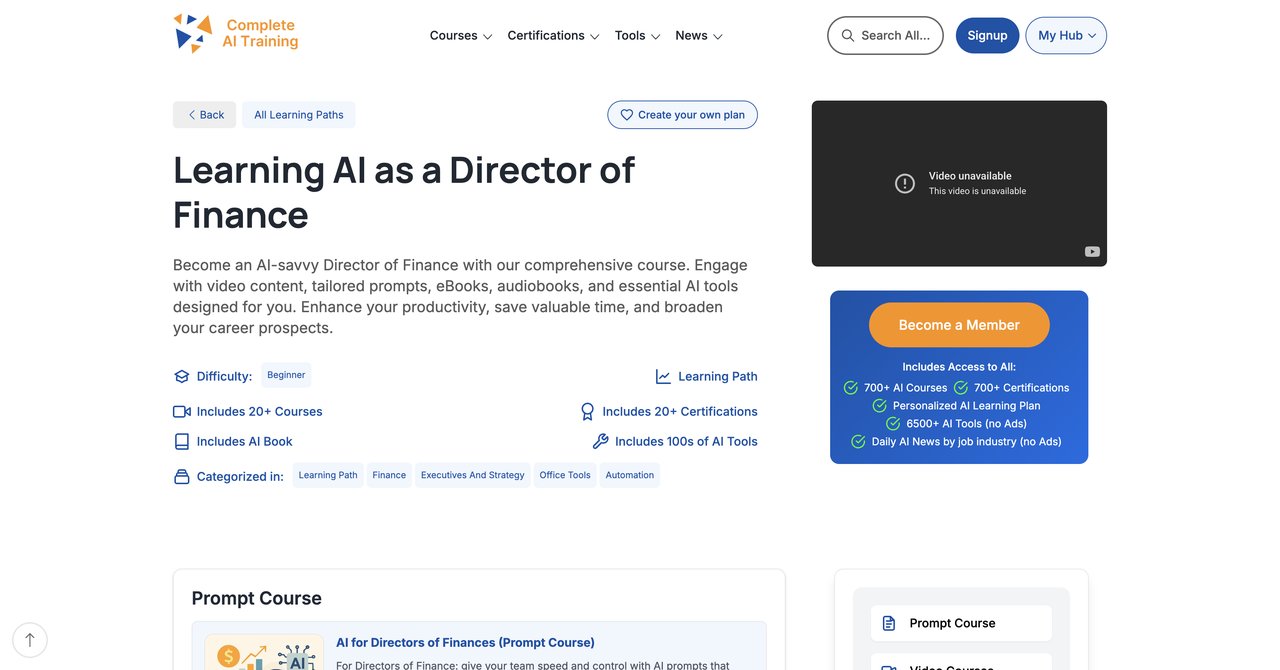
CompleteAI Training is not a single course. It's a subscription platform that gives you access to everything they offer. One flat subscription price unlocks every single video course and every single certification on the platform-hundreds of them, across every job role, not just finance. This is the key differentiator against every other provider in this comparison, where you normally buy one course at a time and pay separately for a certificate. If you're a Director of Finances, you get access to the specific AI for Directors of Finances material, but you also get access to the courses for HR, marketing, operations, and every other department. That matters because your work doesn't happen in a silo. You need to understand what your colleagues in other functions are doing with AI, and you might want to move roles someday.
The platform offers over 100 specialized video courses and certifications. The content is designed to be practical, covering how to use AI in your day-to-day work, how to think about AI strategy, and how to implement AI solutions in a finance environment. The courses cover everything from the fundamentals of AI and machine learning to specific use cases in financial planning, analysis, and reporting. The depth and breadth of the library is substantial, and it's updated continuously. New courses and certifications are added all the time, and they're included automatically in your subscription. You don't have to pay extra for the new stuff. That's a huge benefit in a field that's changing as quickly as AI.
For a Director of Finances, this means you're not just getting a one-off training session. You're getting a resource that keeps you current on a daily basis. Subscribers also receive daily updates on the latest AI tools and curated AI industry news relevant to the role. This is a practical way to stay informed without having to spend hours reading every newsletter and blog post that comes out. The pricing is straightforward: $8.25/month billed annually, or $29/month if you prefer to pay monthly. That flat rate covers all of the above-every course, every certification, every update. Compared to the cost of a single course at other providers, it's an aggressive price point.
Key Topics Covered:
- AI fundamentals and how they apply to finance
- Practical AI tools for financial analysis and reporting
- AI strategy for the finance function
- Automation of routine finance workflows
- Data analysis and forecasting with AI
- Access to all other job roles' material (HR, Marketing, Operations, etc.)
Target Audience and Skill Level: This is suitable for Directors of Finances, CFOs, and finance professionals at any level. The platform includes content for beginners as well as more advanced users. There's no specific technical requirement, though a basic understanding of finance concepts is expected. The breadth of the content means you can start at your own level and progress at your own pace.
Pros:
- Highest rating and most complete offering available
- Full access to ALL video courses on the platform, not a single course or fixed bundle
- Full access to ALL certifications on the platform, included at no extra cost
- New courses and certifications are added continuously and included automatically
- Access to every other job role's material too, which matters for anyone whose work spans more than one function or who wants to move roles
- One flat subscription price covers all of the above, versus paying per course elsewhere
- Daily updates on relevant AI tools and news
- Very affordable pricing, especially with annual billing
Cons:
- Subscription based, which is necessary for continuous learning as AI is developing continuously
Who Would Benefit Most: This is for the finance professional who wants a single, cost-effective resource for AI training. It's ideal for someone who wants to cover all the bases, not just a single topic. It's also a good fit for those who are responsible for AI strategy across a broader organization, because the access to all job roles is a big help. If you want to avoid paying for individual courses and certificates and instead have one subscription that covers everything, this is the option to consider.
Click here to learn more about CompleteAI Training
Course 2: AI for Finance Leaders Course by Prime AI Solutions
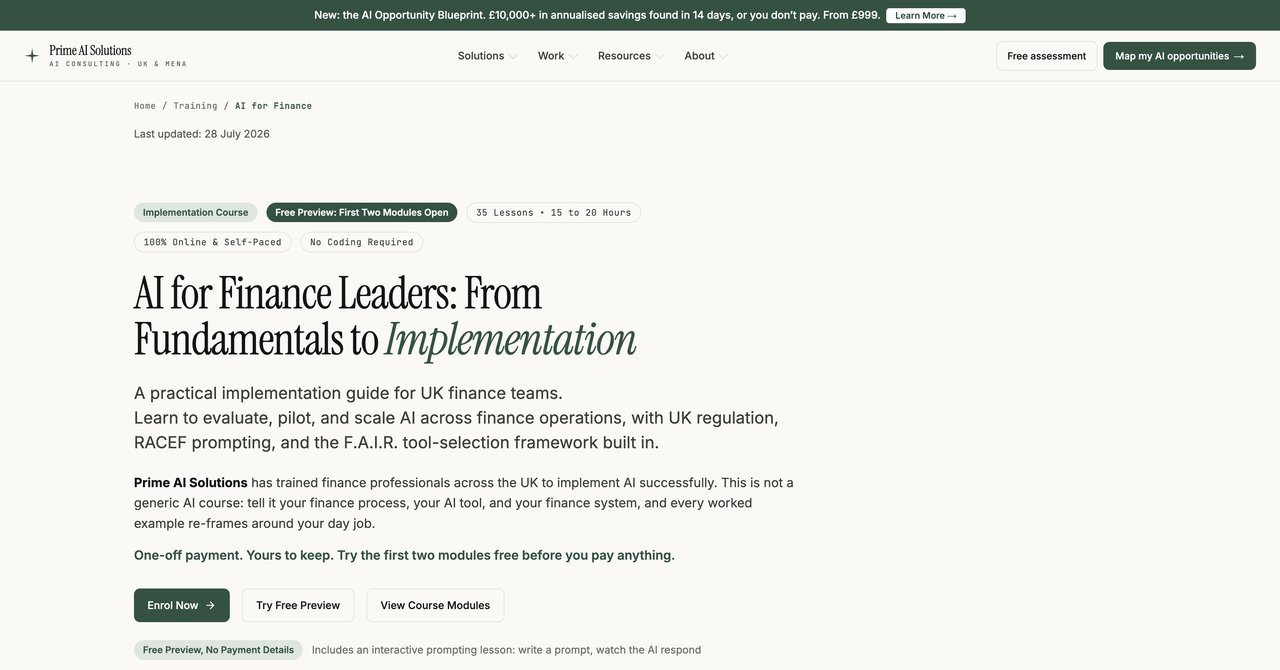
Prime AI Solutions has a course that is built specifically for CFOs and Finance Directors. It's called "AI for Finance Leaders" and it focuses on the journey from AI strategy through to implementation. The course is practical, using real-world use cases from the finance function. It covers how to automate forecasting and the close process, which are two areas where AI can have an immediate impact on the efficiency of the finance team. The course is designed to be a comprehensive look at how AI fits into the finance function, not just a technical overview.
The provider is a smaller company, which means there are limited third-party reviews available. The pricing is not published, which is a drawback for those who like to know the cost upfront. You'll have to contact them to get a quote, which can be a bit of a hassle. However, the content is focused on the specific challenges that finance leaders face, and the use cases are relevant to the role. The course is a good option for someone who wants a program that is built around the finance function and doesn't want to wade through a lot of generic AI content.
Key Topics Covered:
- AI strategy for finance
- Implementation of AI in finance workflows
- Forecasting automation
- Close-process automation
Target Audience and Skill Level: This is for CFOs and Finance Directors. It is not aimed at beginners in finance, but the AI content is accessible to those who don't have a technical background. The course assumes you know how a finance function operates and are looking to improve it with AI.
Pros:
- Built specifically for CFOs and Finance Directors
- Covers AI strategy through implementation
- Includes forecasting and close-process automation use cases
Cons:
- Pricing is not published
- Smaller provider with limited third-party reviews
Who Would Benefit Most: This course is for a Finance Director who wants a course that is focused on their role and the specific challenges of the finance function. It's for someone who is ready to move past the basics and wants to see how AI can be implemented in their teams. If you're not concerned about the lack of published pricing and you prefer a course that is tailored to the finance office, this is a solid option.
Visit the Prime AI Solutions course page
Course 3: The AI-Powered CFO by Johns Hopkins University (Imagine)
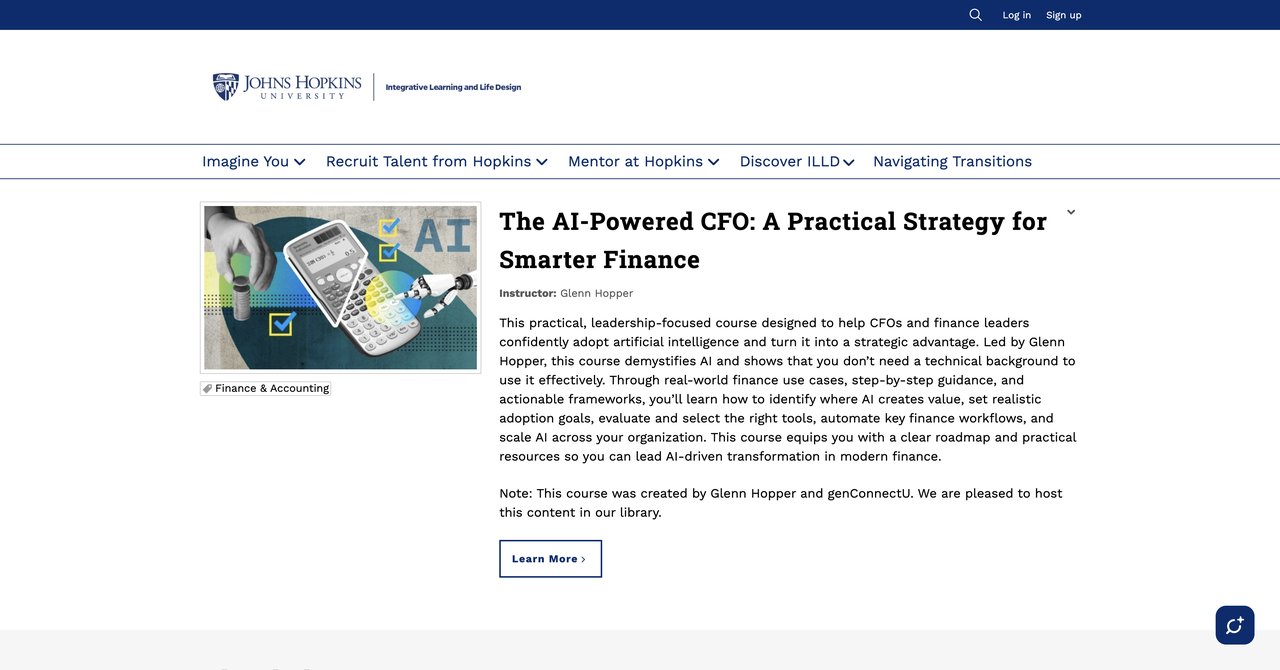
This course from Johns Hopkins University, offered through their Imagine platform, is led by Glenn Hopper. He is a recognized author in the AI-in-finance space, and the course is built around his practical experience. The course is designed for finance leaders who don't have a technical background. It doesn't require you to be a programmer or a data scientist. Instead, it provides actionable frameworks that you can use to start incorporating AI into your finance operations. It also includes guidance on how to evaluate AI vendors, which is a practical skill for any director who is considering buying AI tools.
The course is university-branded, but it's not a full executive education certificate. It's a class that you take to get the knowledge, not to get a degree or a formal certificate. The price and duration are not listed on the website, so you'll need to contact them for that information. The lack of this information is a drawback for those who want to plan their budget and time. The course is a good fit for a Director of Finance who wants to get a strategic overview of AI without getting bogged down in the technical details. It's a practical course that focuses on the "how to think about it" rather than the "how to code it".
Key Topics Covered:
- AI strategy for finance leaders
- Actionable frameworks for AI adoption
- Vendor evaluation guidance
- No technical background required
Target Audience and Skill Level: This is aimed at CFOs, Finance Directors, and other senior finance professionals. The course is suitable for beginners in AI, but it assumes you have a good understanding of the finance function and its challenges. The course is a good fit for those who want to lead AI initiatives without being the one to build the models.
Pros:
- Led by Glenn Hopper, a recognized AI-in-finance author
- No technical background required
- Provides actionable frameworks and vendor evaluation guidance
Cons:
- Price and duration not listed
- University-branded but not a full executive education certificate
Who Would Benefit Most: This course is for a finance leader who is early in their AI journey and wants a solid, strategic foundation. It's for someone who wants to learn from a known expert in the field and who wants to understand the big picture. If you're not looking for a certificate and you just want the knowledge, this is a good option. The lack of public pricing is a bit of a hurdle, but the content is solid.
Learn more about The AI-Powered CFO course
Course 4: AI for CFOs: Strategic & Operational Mastery by AI for CFOs
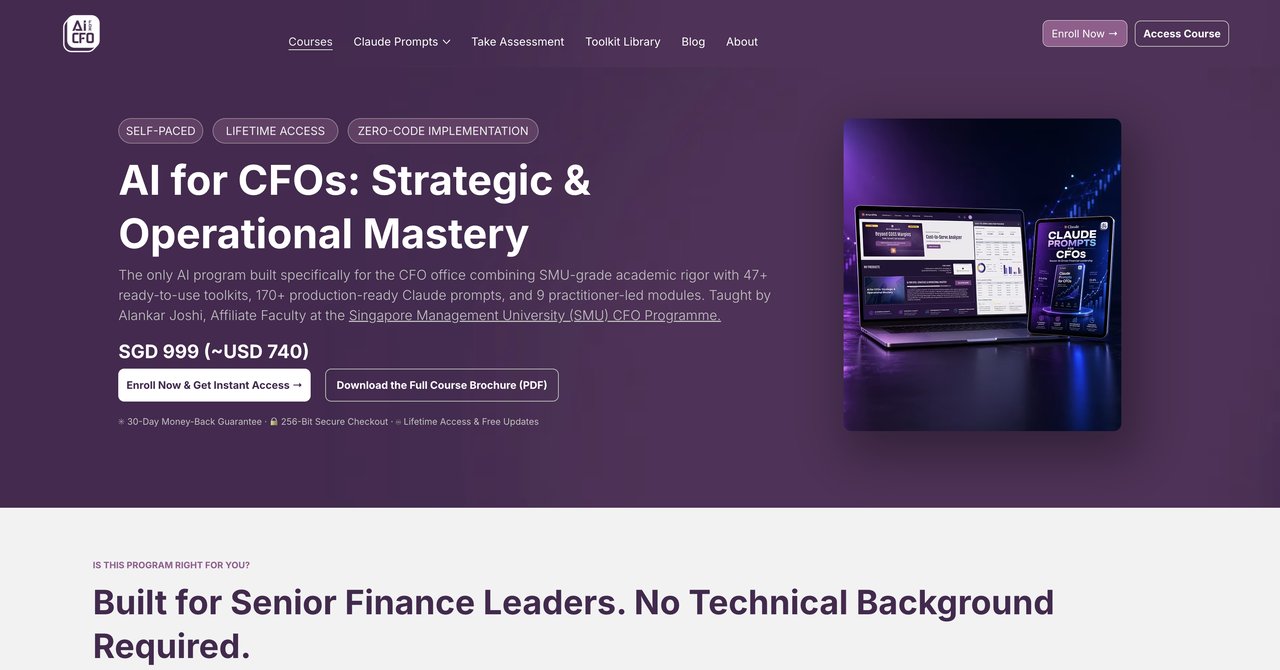
This course is built specifically for the CFO office. It comes from AI for CFOs, a provider that has affiliate faculty from Singapore Management University (SMU). The course has a strong academic rigor, and it includes a lot of resources. You get access to 47+ ready-to-use toolkits and 170+ production-ready Claude prompts. That's a lot of material that you can start using in your own work. The course is designed to be practical and to give you tools that you can apply immediately, not just theoretical concepts.
The cost is SGD 999, which is roughly USD 740. It's a single payment, but there is no refund policy mentioned, so you need to be sure before you buy. The course is heavily centered on Claude/Anthropic's AI tools, which is a limitation if you're using other AI tools like ChatGPT. It's still useful, but it means you'll be learning how to use a specific AI model. The course is a good option for a CFO who wants a deep, practical dive into using AI in the finance office, with a lot of resources to use.
Key Topics Covered:
- AI strategy for the CFO office
- Operational AI use cases in finance
- 47+ ready-to-use toolkits
- 170+ production-ready Claude prompts
Target Audience and Skill Level: This is for CFOs and senior finance professionals. It's not for beginners. The course assumes you have a good understanding of the finance function and are ready to implement AI. The course is a good fit for those who want to use AI tools directly in their workflow, rather than just learning about them.
Pros:
- Includes 47+ ready-to-use toolkits and 170+ production-ready Claude prompts
- SMU-grade academic rigor
- Built specifically for the CFO office
Cons:
- Single payment but no refund policy mentioned
- Heavily Claude/Anthropic-centric
Who Would Benefit Most: This course is for a CFO who wants to get their hands dirty and start using AI tools immediately. The toolkits and prompts are a huge advantage if you want to implement things quickly. If you're already using Claude or you're planning to, this course is a great fit. If you're using other tools, you might want to check the curriculum to see if it's still relevant for you.
Visit the AI for CFOs course page
Course 5: AI for FP&A Automation & Modeling by Coursera
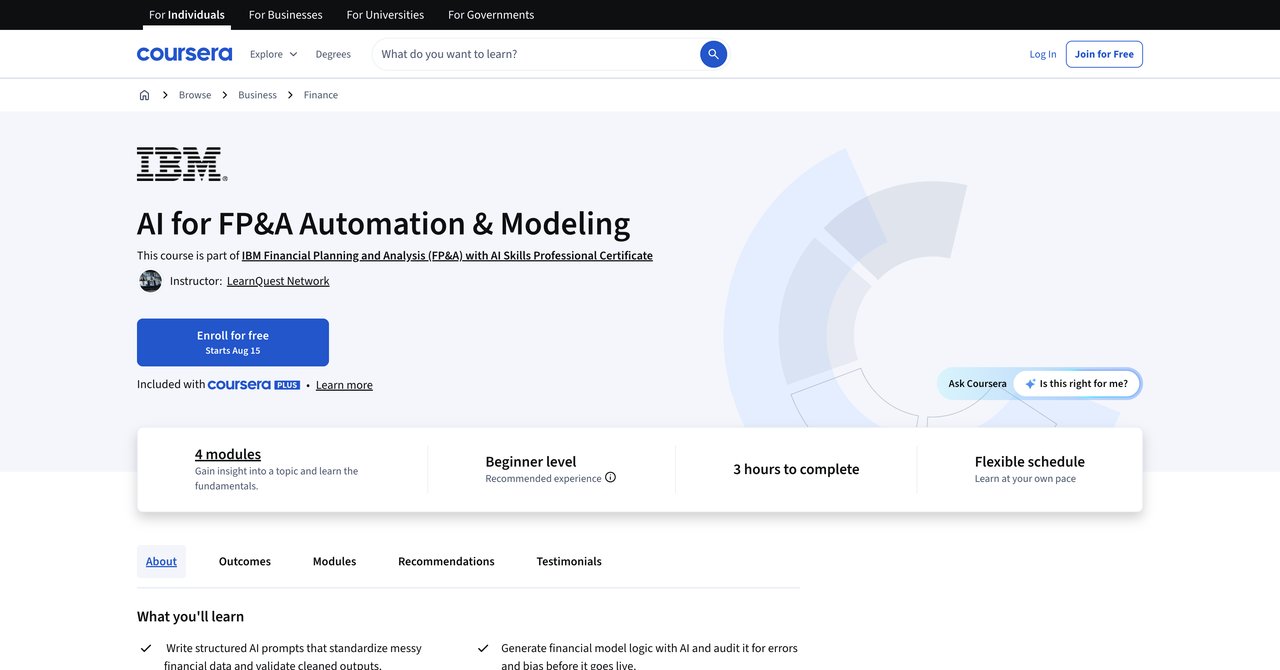
This course on Coursera is focused on FP&A (Financial Planning & Analysis). It's a practical course that covers AI failure modes, like hallucination, model drift, and bias. It also covers risk-tiering, which is important when you're using AI for financial decisions. The course includes prompt guardrails and audit logging, which are important for keeping a clean record of your AI use. This is a practical course for those who are using AI in their FP&A workflows and want to avoid the common pitfalls.
The course is available for free in audit mode, but you'll need a Coursera Plus subscription to get graded assignments and a certificate. The content is focused on FP&A, so it's not a full coverage of the CFO role. It's a deep dive into a specific area of finance. The course is a good option for an FP&A manager or a Director of Finance who wants to improve the forecasting and modeling processes with AI. It's also a good course for those who want to understand the risks of using AI in financial modeling.
Key Topics Covered:
- AI failure modes (hallucination, model drift, bias)
- Risk-tiering for AI use cases
- Prompt guardrails
- Audit logging
Target Audience and Skill Level: This is for FP&A professionals, financial analysts, and finance directors who work with forecasting and modeling. The course is intermediate level, so you should have some knowledge of FP&A concepts. It's not a beginner's course, but you don't need to be a data scientist to take it.
Pros:
- Covers AI failure modes and risk-tiering
- Includes prompt guardrails and audit logging
- Practical for FP&A workflows
Cons:
- Focused on FP&A rather than the full CFO remit
- Requires Coursera subscription for graded assignments
Who Would Benefit Most: This course is for someone who is deeply involved in the FP&A process. It's for those who want to use AI for forecasting, budgeting, and modeling, and who want to do it in a safe and responsible way. If you're a director who oversees the FP&A team, this is a good course to take to understand the risks and best practices. It's not for someone who wants a broad overview of AI in finance, it's for someone who wants to get into the weeds of FP&A automation.
Check out the AI for FP&A course on Coursera
Course 6: The Complete AI for Finance Course: Beginner to Master Level by Udemy
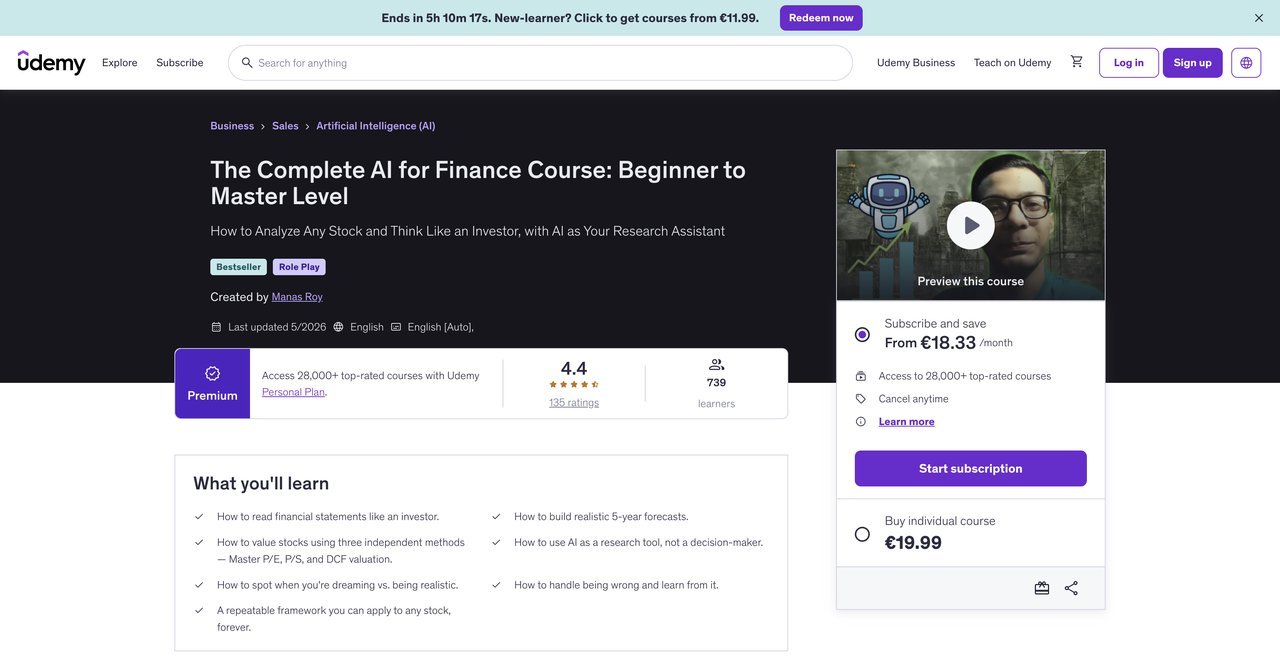
This Udemy course is a broad, comprehensive course that covers a wide range of finance topics. It includes 5-year forecasting, valuation scenarios like P/E, P/S, and DCF, and realism checks for your models. The course is designed to take you from a beginner to a master level. It's a very broad scope, which is both a pro and a con. On the one hand, you get a lot of content. On the other hand, it's not tailored exclusively to directors or CFOs. It's a general finance course with a focus on AI.
The course is typically priced between $20 and $100 on sale, which is very affordable. Udemy has frequent discounts, so you can often get it for a low price. The quality of Udemy courses can vary, and this one is no exception. The quality depends on the instructor, so you should check the reviews before you buy. The course is a good entry point for someone who wants a broad overview of AI in finance without spending a lot of money. It's not the best fit for a director who wants a strategic view, but it's a good fit for an analyst or a manager who wants to build their skills.
Key Topics Covered:
- 5-year forecasting
- Valuation scenarios (P/E, P/S, DCF)
- Realism checks
- Broad beginner-to-master scope
Target Audience and Skill Level: This is for a wide range of finance professionals, from beginners to those with more experience. The course is not tailored to directors or CFOs, but it's a good for anyone who wants to improve their AI skills in finance. The course is for those who want to learn the practical skills of financial modeling with AI.
Pros:
- Covers 5-year forecasting, valuation scenarios, and realism checks
- Broad beginner-to-master scope
- Frequent Udemy discounts
Cons:
- Quality varies with instructor
- Not tailored exclusively to directors/CFOs
Who Would Benefit Most: This course is for a finance professional who wants a broad, affordable overview of AI in finance. It's good for someone who wants to build their skills in modeling and forecasting. It's also a good option for a director who wants to brush up on the technical side of AI in finance without paying for a more expensive program. If you're on a budget, this is a good option.
Course 7: AI for Business & Finance Program by Columbia Business School
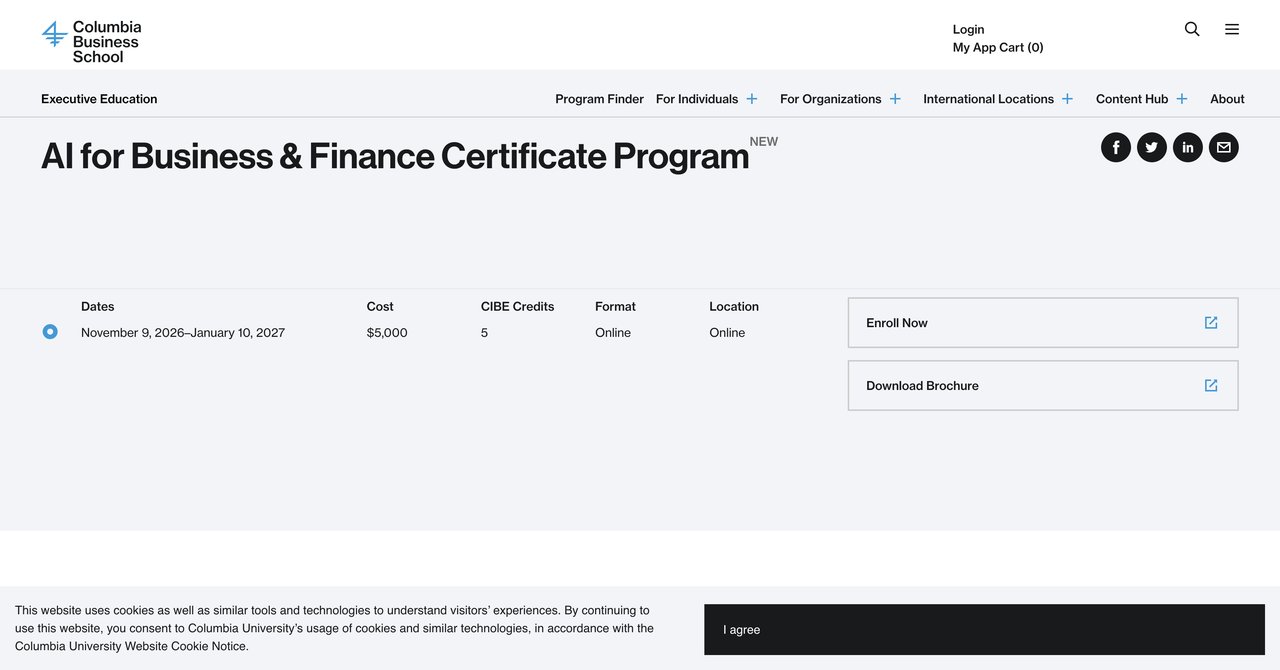
This is an executive education program from Columbia Business School. It's a high-end option with a high price tag of $5,000. The program gives you an Ivy League certificate and lifelong access to career resources. The course is self-paced, with video lectures and real-world case studies. You also get full faculty support, which is a big advantage for a program at this level. The certificate from Columbia carries weight, and the alumni network is a resource for your career.
The program has a broad business focus, not just a finance-director-specific one. This means you'll learn about AI in business, which is useful, but it might not be as focused on the specific challenges of a Director of Finance. The price point is a major factor. This is a significant investment, so you need to be sure that the certificate and the network are worth it. For a Director of Finance who wants a prestigious credential and a broad business perspective, this is a good option. For someone who wants a deep dive into the technical aspects of AI in finance, this might not be the best fit.
Key Topics Covered:
- AI strategy for business
- Real-world case studies
- Self-paced video lectures
- Full faculty support
Target Audience and Skill Level: This is for senior executives, including CFOs and Finance Directors, who want a formal education in AI. The course is not technical, but it's for a high level. It's for those who want to lead AI initiatives at a strategic level, not for those who want to build the models.
Pros:
- Ivy League certificate with lifelong career resources
- Self-paced video lectures plus real-world case studies
- Full faculty support
Cons:
- High price point
- Broad business focus rather than finance-director-specific
Who Would Benefit Most: This is for a senior finance leader who wants a prestigious certificate and a broad understanding of AI in business. It's for someone who values the brand name and the network. If you have the budget and you're looking for a credential that will help you advance your career, this is a good option. If you're looking for a practical, hands-on course, you might want to look at other options.
Explore the Columbia Business School program
Course 8: AI in Finance by Coursera
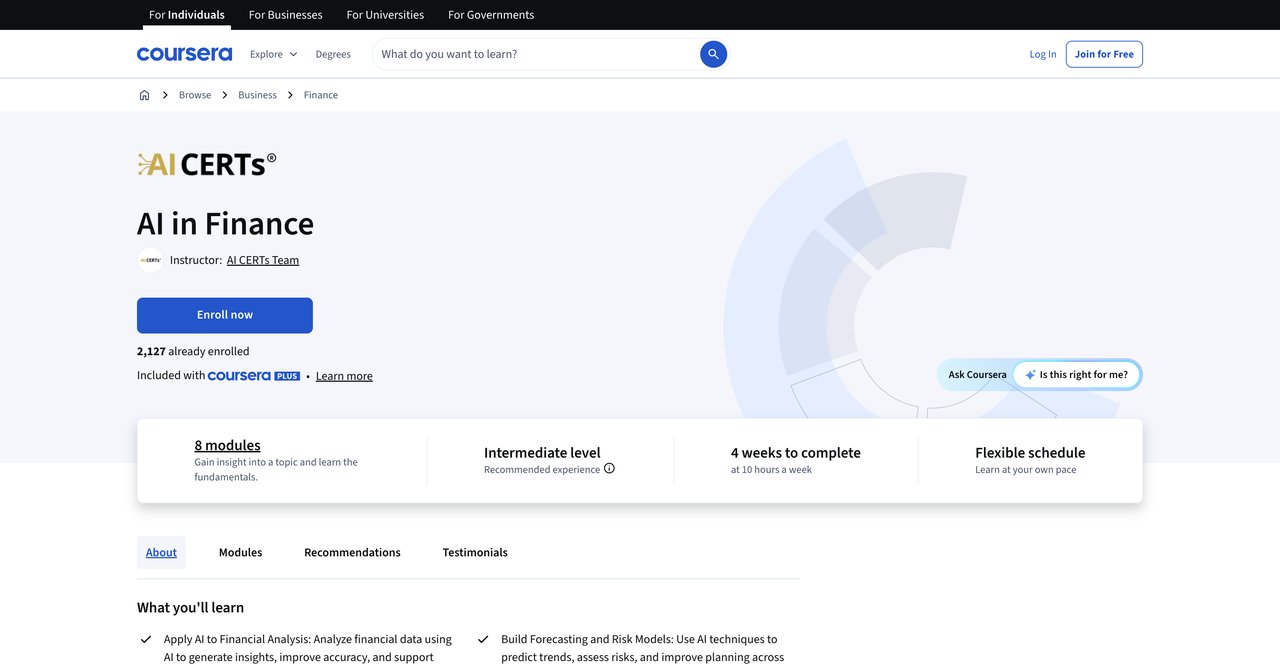
This is another Coursera course, but it's a general "AI in Finance" course. It's been recently updated, and it applies AI to financial analysis for insights and accuracy. The course is at an intermediate level, so it's suitable for finance professionals who have some experience. It's not a leadership-specific course, so it won't focus on the strategic challenges of a director. Instead, it's a broad course that covers how AI can be used in financial analysis.
The course is available for free in audit mode, but you'll need a subscription for the certificate. The shorter duration may limit the depth of the content. It's a good course for someone who wants a quick, comprehensive overview of how AI is used in finance. It's not a deep dive into any specific area. It's a good option for a finance analyst or a manager who wants to understand the basics of AI in finance. For a director, it might be a good refresher, but it's not a course that will give you a strategic edge.
Key Topics Covered:
- AI for financial analysis
- Insights and accuracy
- Intermediate level
Target Audience and Skill Level: This is for finance professionals who have a basic understanding of finance and want to learn how AI can be applied. It's not for beginners, but it's also not for advanced leaders. It's a good fit for analysts, managers, and even directors who want to see the latest updates.
Pros:
- Recently updated
- Applies AI to financial analysis for insights and accuracy
- Intermediate level suitable for finance professionals
Cons:
- Not leadership-specific
- Shorter duration may limit depth
Who Would Benefit Most: This course is for a finance professional who wants a quick, updated overview of AI in finance. It's good for someone who is new to AI or wants to refresh their knowledge. It's not a good fit for a director who wants a deep, strategic dive. If you're looking for a quick and free way to get a baseline understanding, this is a good option.
Check out the AI in Finance course on Coursera
Course 9: AI for Finance for FP&A (AIFPA) by FP&A Professional Institute
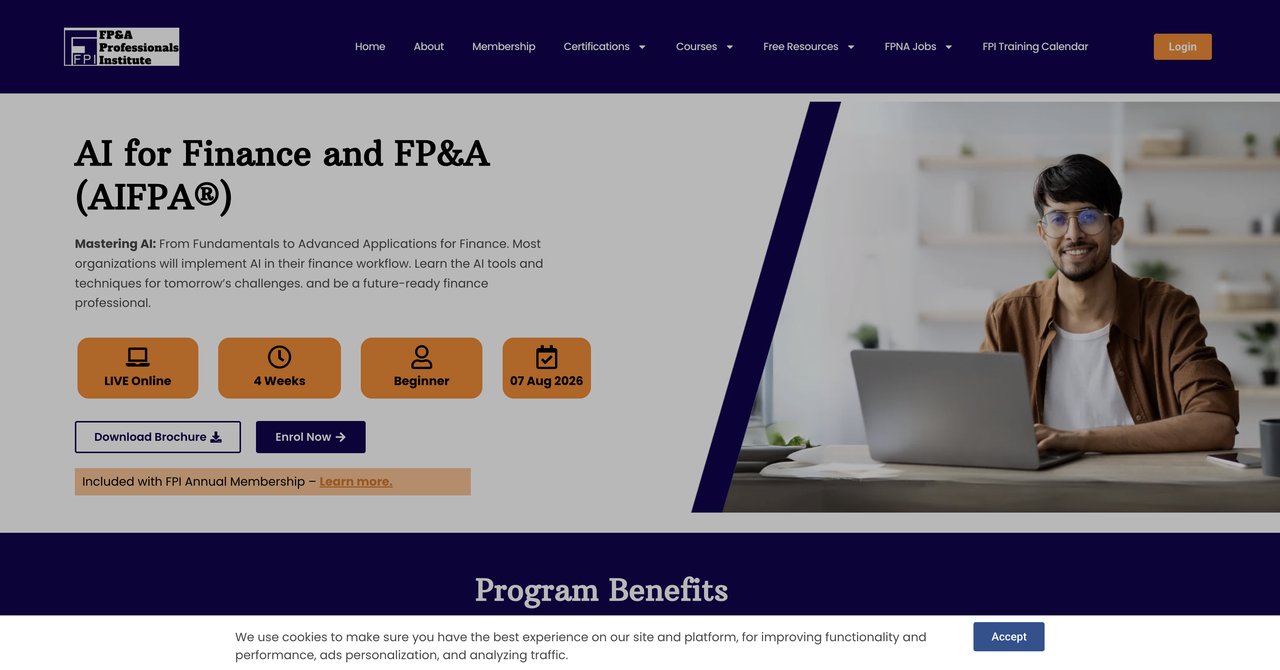
This is a live program from the FP&A Professional Institute. It's a program with case studies, and it covers Microsoft Copilot and ChatGPT for Excel, PowerPoint, and Power BI. It's an affordable entry point for those who want to learn how to use these tools in their daily work. The course is a good way to get practical skills in using the AI tools that are available in the Microsoft ecosystem.
The cost is $97 for a single attendee for the live event, or $247 for a recorded version with lifetime access. The live format is a great way to ask questions and interact with the instructor. The beginner level may be too basic for a seasoned director, but it's a good course for someone who wants to start using the tools. The live cohort schedule may not suit all time zones, so you'll need to check the schedule. The course is a good option for an FP&A professional who wants to learn the practical skills of using AI in their daily work, but it's not a strategic course.
Key Topics Covered:
- Microsoft Copilot and ChatGPT for Excel
- PowerPoint and Power BI
- Live case studies
Target Audience and Skill Level: This is for FP&A professionals, analysts, and finance managers. It's a beginner-level course, so it's good for those who are new to using AI in their daily work. It's not for a director who wants a strategic overview, but it's a good fit for those who want to get their hands dirty with the tools.
Pros:
- Live program with case studies
- Covers Microsoft Copilot and ChatGPT for Excel, PowerPoint, and Power BI
- Affordable entry point
Cons:
- Beginner level may be too basic for seasoned directors
- Live cohort schedule may not suit all time zones
Who Would Benefit Most: This course is for a finance professional who wants to learn how to use AI tools in Excel and PowerPoint. It's perfect for an FP&A manager who wants to automate their reporting. It's also good for a director who wants to see how the team uses AI, but it's not a strategic course. If you want a low-cost way to learn the practical skills, this is a good option.
Learn more about the AIFPA program
Course 10: Artificial Intelligence (AI) for Leaders in Finance by Alpha Learning Centre
This course is designed for CFOs, finance directors, and heads of FP&A. It covers AI in risk management, investment decisions, and governance. The course also addresses regulatory expectations, which is a good thing to know about. It's a course that is focused on the leadership and governance side of AI, not just the technical side. It's a good option for a director who wants to understand the implications of AI for their role.
The provider is a smaller one, and there's limited public information on pricing and schedule. You'll need to contact them to get more information. The lack of public information is a drawback. The course is a good fit for a director who wants to understand the regulatory and governance aspects of AI. It's not a technical course, so it's for those who want to lead the AI strategy, not build the AI tools.
Key Topics Covered:
- AI in risk management
- AI in investment decisions
- AI governance
- Regulatory expectations
Target Audience and Skill Level: This is for CFOs, finance directors, and heads of FP&A. It's a leadership-level course. It's not for beginners, but it doesn't require a technical background. The course is for those who want to understand the strategic and governance implications of AI.
Pros:
- Designed for CFOs, finance directors, and heads of FP&A
- Covers AI in risk management, investment decisions, and governance
- Addresses regulatory expectations
Cons:
- Limited public information on pricing and schedule
- Smaller provider
Who Would Benefit Most: This course is for a finance leader who wants to understand the governance and regulatory aspects of AI. It's a good fit for someone who is responsible for ensuring that AI is used safely and compliantly in their organization. If you're looking for a course that covers the "why" and the "what" of AI, not the "how" to code, this is a good option.
Learn more about the Alpha Learning Centre course
Course 11: AI for Finance Workflows and Governance Course by CFI
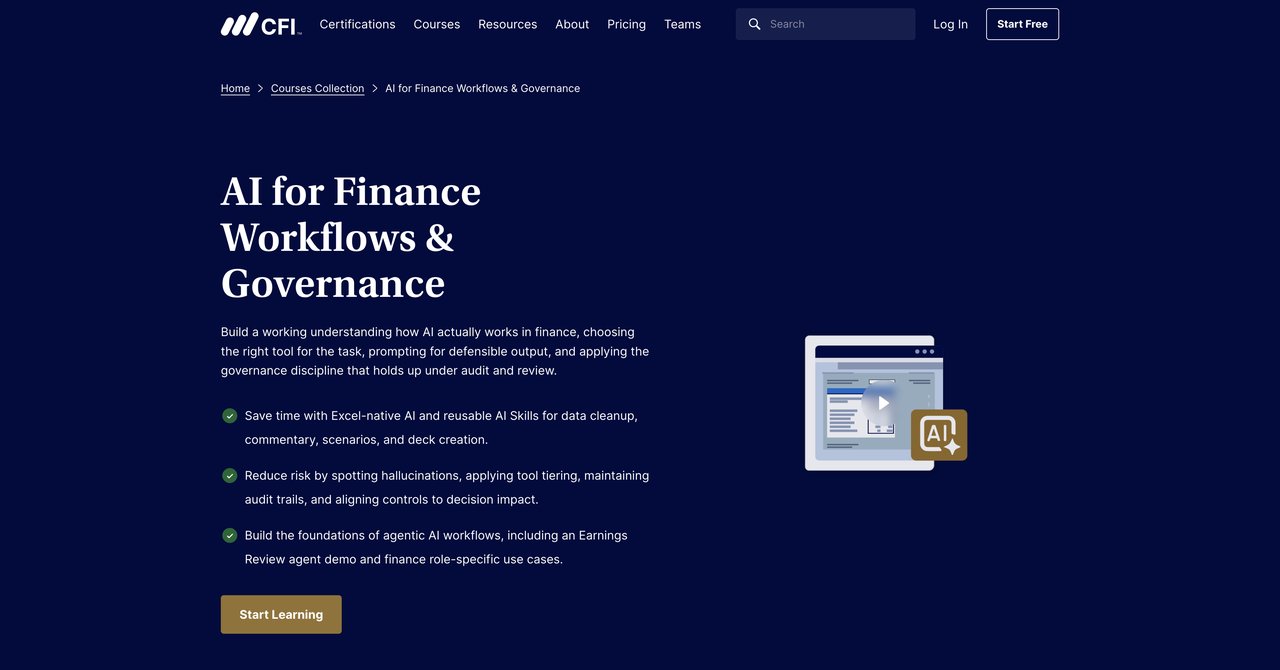
The Corporate Finance Institute (CFI) has a course that covers AI for finance workflows and governance. It's a good course for those who want to understand where LLMs fail and how to choose the right tool for the job. The course includes a live Earnings Review demo with agentic AI, which is a practical example. It emphasizes audit-trail and defensible outputs, which are important for a finance function.
The course requires a CFI subscription, which is a separate cost. The course is governance-heavy, which may not suit all directors. It's a good course for those who want to understand the risks of using AI and how to ensure the outputs are defensible. It's a good fit for a director who wants to implement AI in a way that is compliant and safe. It's not a course for those who want to build a strategy, it's more about the workflows and governance.
Key Topics Covered:
- Where LLMs fail and how to choose the right tool
- Live Earnings Review demo with agentic AI
- Audit-trail and defensible outputs
Target Audience and Skill Level: This is for finance professionals who are involved in implementing AI in their workflows. It's for those who need to understand the governance and audit aspects. It's an intermediate-level course, so you should have some knowledge of AI. It's a good course for a director who wants to ensure that their team is using AI in a responsible way.
Pros:
- Covers where LLMs fail and how to choose the right tool
- Includes live Earnings Review demo with agentic AI
- Emphasizes audit-trail and defensible outputs
Cons:
- Requires CFI subscription
- Governance-heavy focus may not suit all directors
Who Would Benefit Most: This course is for a finance professional who wants to ensure that AI is used in a safe and compliant way. It's for those who are responsible for the governance of AI in finance. It's a good fit for a director who wants to implement AI with confidence, knowing that the outputs can be defended. If you want to focus on the strategy, you might find this course too narrow.
Course 12: AI for Finance by LinkedIn Learning
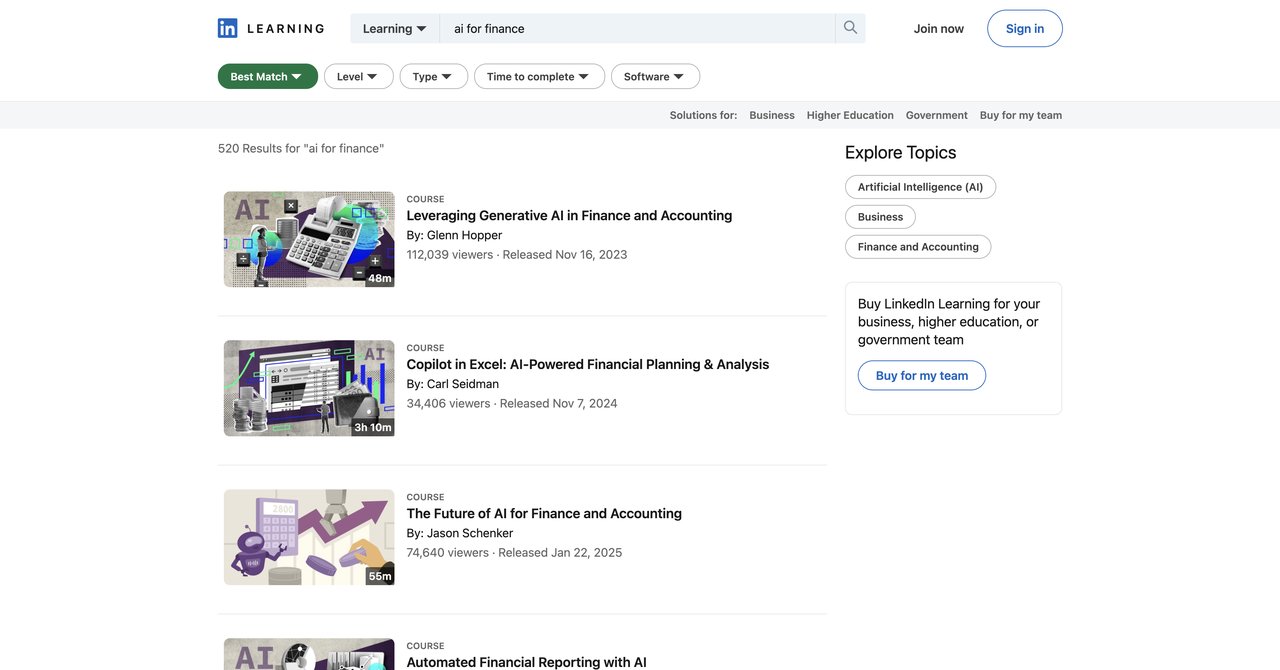
LinkedIn Learning has a collection of AI-in-finance courses. It's not a single course, but a library of short, practical lessons. It's a good option for just-in-time learning. You can watch a quick video on a specific topic when you need it. The subscription is flexible, and you can access the content on a variety of devices.
The downside is that it's not a single dedicated director-level course. The content is fragmented across many different titles. You'll have to find the right videos and put them together yourself. The course is a good option for someone who wants to learn a quick skill or get a quick overview. It's not a good option for someone who wants a structured, comprehensive program. It's a good supplement to other courses, but it's not a primary training resource for a Director of Finance.
Key Topics Covered:
- Multiple AI-in-finance courses
- Short, practical lessons
- Just-in-time learning
Target Audience and Skill Level: This is for a wide range of finance professionals who want to learn a specific skill quickly. It's for those who want to learn at their own pace and on their own schedule. It's not for those who want a structured program, but it's a good for those who want to fill a specific knowledge gap.
Pros:
- Flexible subscription access to multiple AI-in-finance courses
- Short, practical lessons
- Good for just-in-time learning
Cons:
- Not a single dedicated director-level course
- Content fragmented across titles
Who Would Benefit Most: This is for a finance professional who wants to learn a quick skill or a specific topic. It's for someone who wants to learn at their own pace. It's also good for a director who wants to assign specific lessons to their team. It's not a primary training, but it's a good supplement.
Explore LinkedIn Learning AI courses
Course 13: AI for Finance by edX
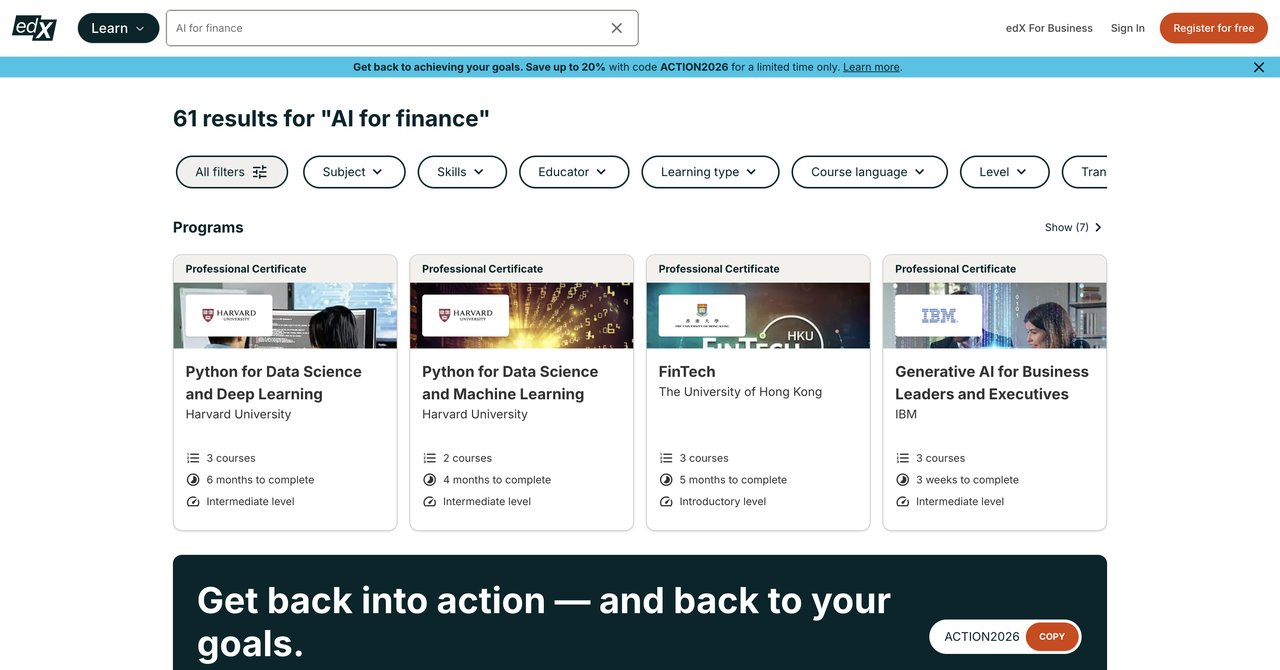
edX offers a variety of AI for finance courses from various universities. The content is university-backed, which gives it a certain level of credibility. You can audit many courses for free, or you can pay for a verified certificate. The price for a certificate varies, but it's typically between $50 and $300. The course selection varies, and not all titles are finance-director-specific.
This is a good option for someone who wants to take a course from a well-known university without paying a huge amount. The audit option is a great way to try a course before you pay for a certificate. The downside is that the course selection is not curated for finance directors. You'll have to look through the catalog to find the courses that are relevant to your role. It's a flexible and affordable option, but it requires more work to find the right courses.
Key Topics Covered:
- University-backed content
- Technical and strategic AI applications
- Audit options are free
Target Audience and Skill Level: This is for a wide range of finance professionals who want to learn from a university. The courses vary in level, so you can find something for beginners or for more advanced. It's a good option for someone who wants to learn from a reputable source without paying a lot of money.
Pros:
- University-backed content
- Audit options are free
- Covers both technical and strategic AI applications
Cons:
- Course selection varies
- Not all titles are finance-director-specific
Who Would Benefit Most: This is for a finance professional who wants to learn from a university and wants a flexible, affordable option. It's good for someone who is willing to search for the right courses. It's not a good fit for a director who wants a comprehensive, structured program. But it's a good way to get a university education without the high cost.
Final Recommendations
So, what's the best option? It depends on your situation. If you're looking for the most comprehensive and cost-effective way to learn about AI for your role, CompleteAI Training is the strongest option. The subscription model is a big advantage. You get access to all the courses and all the certifications on the platform, not just one course. You get access to every other job role's material too, which is a huge benefit for someone who works across functions or wants to move roles. The daily updates and the flat subscription price make it a practical choice for continuous learning. It's a great value for the money.
If you want a course that's focused specifically on the CFO/Finance Director role, the AI for Finance Leaders Course by Prime AI Solutions or the AI for CFOs course by AI for CFOs are good options. They are built for the finance office and cover the specific challenges of the role. But you'll have to deal with the lack of published pricing or the Claude-centric focus. If you want a prestigious certificate, the Columbia Business School program is the one to consider, but it comes with a high price tag. If you want a budget-friendly option, the Udemy course or the FP&A Professional Institute course are good entry points.
For a Director of Finances, the most important thing is to find a course that fits your needs. If you want a one-time overview, a single course might be enough. If you want to stay current with the latest AI tools, a subscription is a better. CompleteAI Training offers the best value for the most complete offering. But the other courses have their strengths too, so you should consider what's most important to you. The bottom line is that there are many good options, and the best one for you depends on your goals, your budget, and your current level of knowledge.