
 Jeroen Erne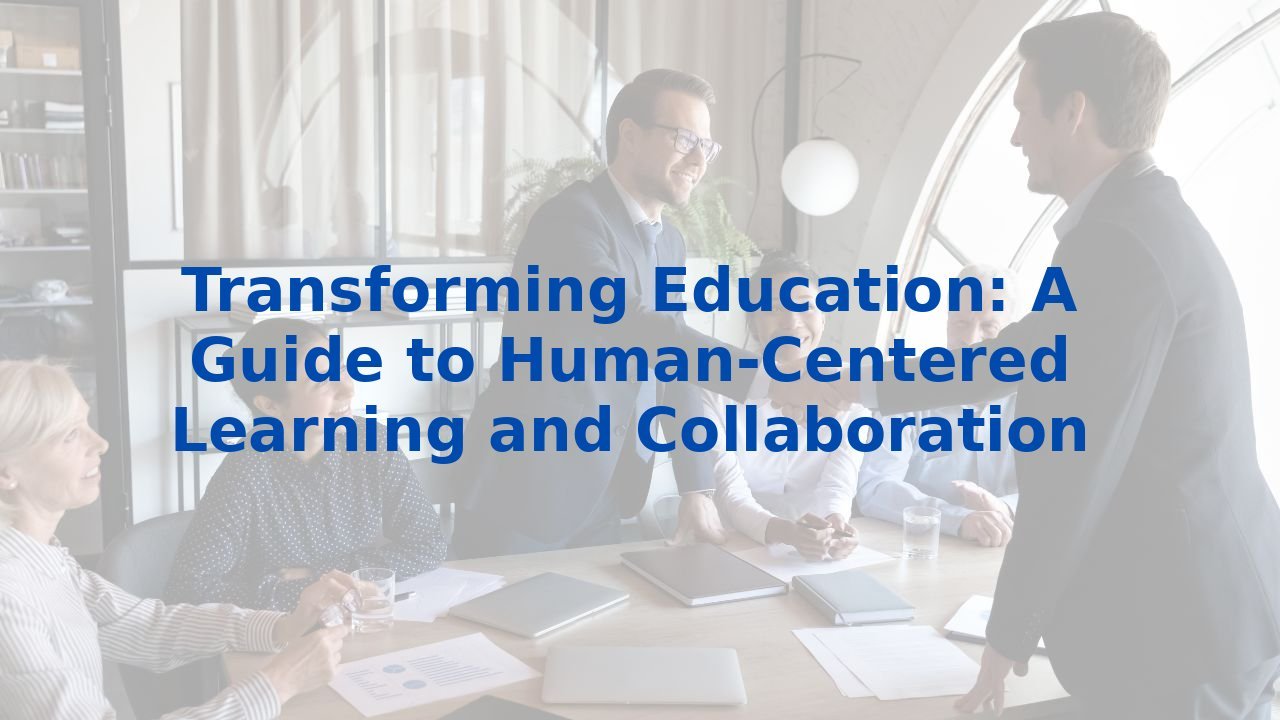
Transforming Education: A Guide to Human-Centered Learning and Collaboration
In the ever-evolving landscape of education, the traditional models are being challenged and reshaped to foster a more human-centered approach. At the heart of this transformation lies an opportunity for collaboration, where technology, particularly artificial intelligence, plays a pivotal role. This guide delves into how AI can enhance educational processes and contribute significantly to efficiency within organizations.
Understanding Human-Centered Learning
Human-centered learning emphasizes the learner's experience, prioritizing individual needs and fostering engagement. It thrives on collaboration, interactivity, and personalized approaches, paving the way for deeper understanding and retention of knowledge. The shift towards this model is not merely theoretical; it’s a necessary evolution in understanding how people learn best.
“True learning occurs when education is tailored to the individual, encouraging collaboration over competition.”
The Role of AI in Education
Artificial intelligence stands at the forefront of transforming education. It can streamline processes, augment teaching methods, and foster collaboration among all stakeholders—students, educators, and administrators alike. Here are a few ways AI can enhance the educational experience:
1. Personalization of Learning
One of AI’s most remarkable capabilities is its ability to analyze vast amounts of data quickly, allowing for personalized learning experiences. AI systems can assess individual student progress, learning styles, and areas needing improvement, adjusting materials accordingly. This facet not only aids students but reduces the burden on educators, enabling them to focus on creating enriched learning environments.
2. Collaboration Enhancement
Collaboration among students is crucial in a human-centered learning framework. AI tools can facilitate group projects and discussions, making coordination seamless. Platforms powered by AI can recommend resources, suggest task assignments based on strengths, and even mediate conflict resolution, enriching the collaborative process.
3. Administrative Efficiency
Administrative tasks often bog down educational institutions, impeding the focus on learning. AI can automate scheduling, grading, and even responses to common inquiries, allowing educators to devote more time to teaching. For organizations, this translates to a more efficient allocation of resources, optimizing operational flow dramatically.
Benefits of Training Employees for AI Integration
While AI can profoundly change educational landscapes, its successful implementation relies on well-trained employees. Investing in AI training not only prepares staff to harness these technologies effectively but also is crucial for fostering a culture adaptive to change.
1. Empowering Educators
Training educators in AI enables them to integrate these tools seamlessly into their teaching methods. Equipped with knowledge on how to utilize AI resources, educators can create more engaging and interactive classrooms, ultimately benefiting student learning experiences.
2. Cultivating a Forward-Thinking Workforce
Incorporating AI training into professional development indicates an organization’s commitment to innovation. Employees trained in AI are more likely to propose creative solutions, engage in collaborative problem-solving, and adapt to future advancements, positioning the institution as a leader in educational effectiveness.
Future Possibilities
As we embrace AI in education, the potential for further transformation is boundless. Imagine personalized learning plans developed in real-time, instructional methods adapted to global trends and student needs, and administrative functions managed entirely by AI-driven systems.
This is not merely speculation; it’s a call to action. Transitioning towards this future requires investment in training, collaboration among stakeholders, and openness to change. For organizations ready to equip their workforce with AI skills, a comprehensive training program can be the difference-maker.
Explore the options of training your team in AI and consider how these advancements can revolutionize your educational approach. Embrace the journey of transformation, and commit to fostering an environment that prioritizes human-centered learning while leveraging AI’s vast capabilities.
“By prioritizing humanity in education and leveraging AI effectively, we have the opportunity to create an empowered future generation.”
Conclusion
The future of education is bright, illuminated by the potential of human-centered learning powered by AI. This is your invitation to join the conversation, invest in training, and transform your organization. Rethink what is possible—in education and beyond—and prepare for a thriving, collaborative future.