
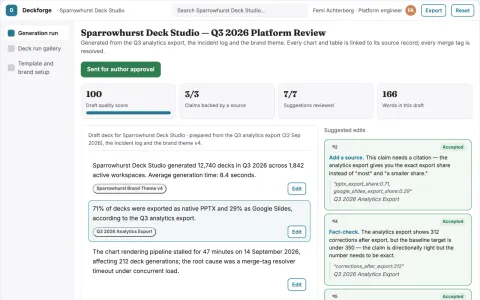
Programmatic deck generation delivery workspace
Generate branded decks from app data and automated workflows without manual rebuilding.
Build your own version · 2,418 apps
Generate branded decks from app data and automated workflows without manual rebuilding.
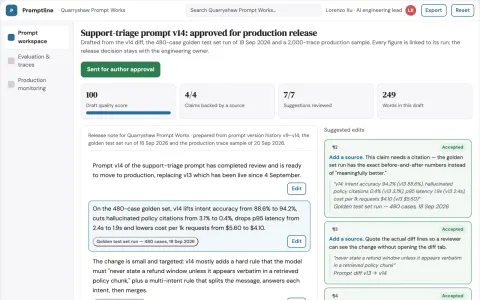
Reduce prompt release risk while keeping evaluation evidence and production traces in one owned workspace.
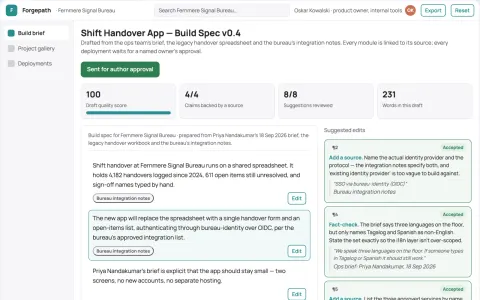
Reduce toolchain assembly while keeping the generated code and deployment under the buyer's control.
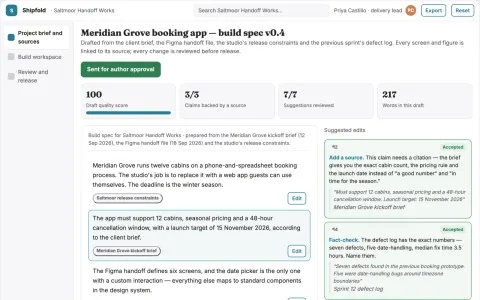
Reduce manual coding and handoffs while keeping the team in control of the shipped app.
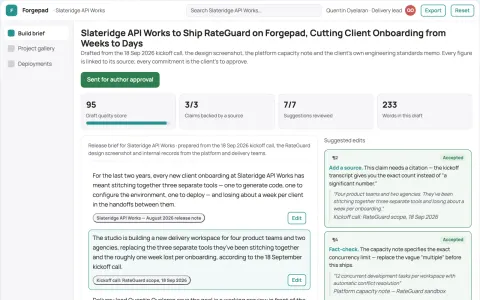
Reduce tool sprawl and manual setup while keeping one owned delivery workspace.
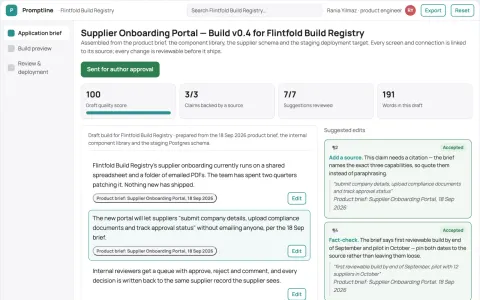
Reduce the number of tools and manual steps needed to turn a described application into a deployed, reviewable build.
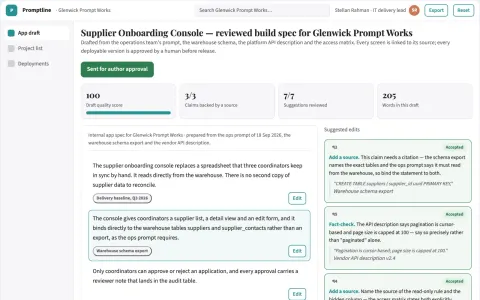
Reduce the time from a described workflow to a working, owned web application.
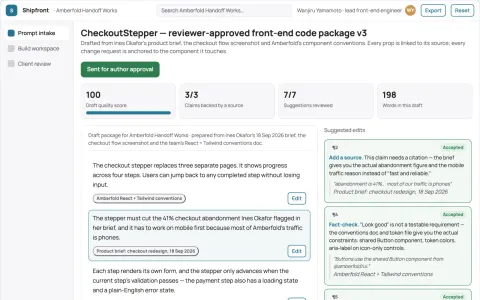
Reduce tool sprawl and manual reconciliation while keeping generated front-end code reviewable and deployable.
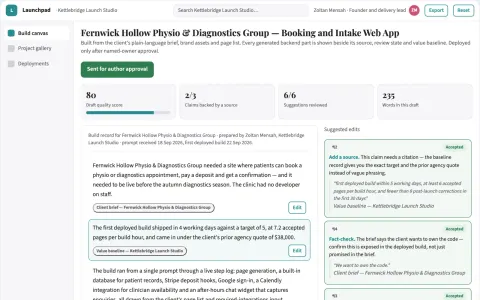
Reduce the time and handoffs between a written prompt and a deployed, editable web app the client owns.
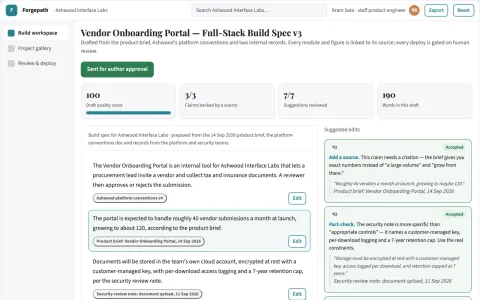
Reduce tool sprawl and handoff time while keeping the generated codebase inspectable and owned.
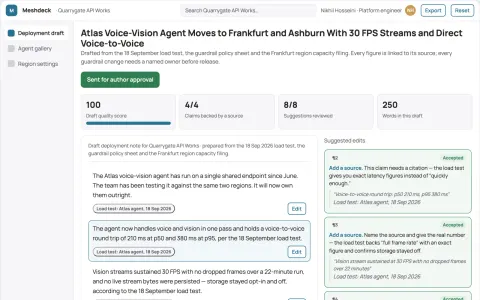
Run real-time voice, vision and data agents on one owned deployment surface instead of renting separate services.
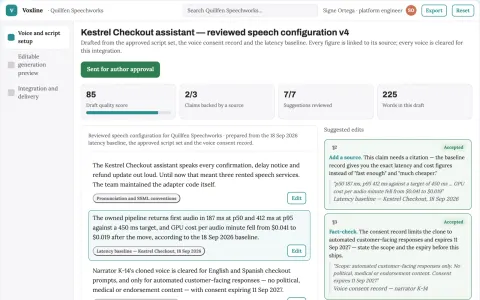
Reduce the number of rented speech subscriptions while keeping one owned pipeline for real-time spoken audio.
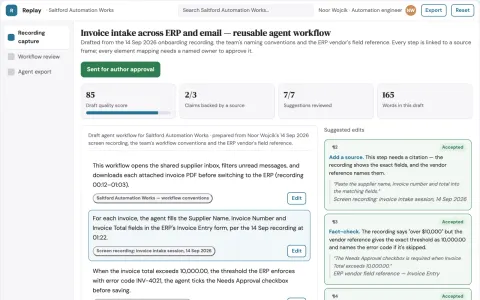
Reduce manual repetition while keeping the workflow under team control.
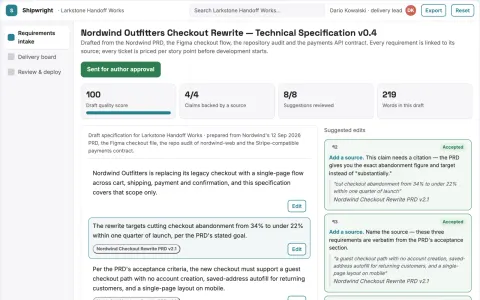
Reduce handoff loss between requirements, code and deployment while keeping senior review and client approval.
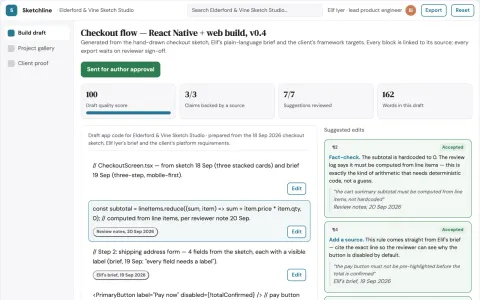
Reduce manual coding effort while keeping generated code reviewable and owned.
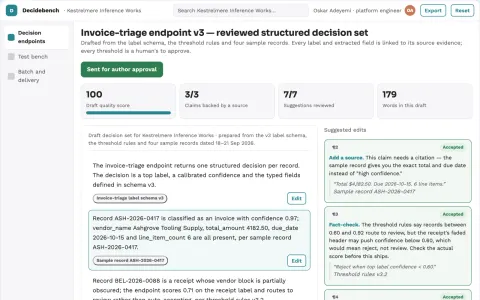
Return fast, structured decisions like labels, categories and extracted fields from text or images without generating long text.
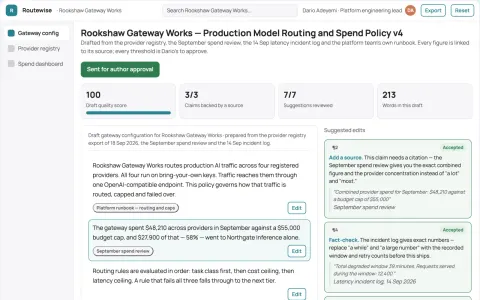
Reduce integration and provider-management effort while keeping model traffic, keys and spend under the buyer's control.
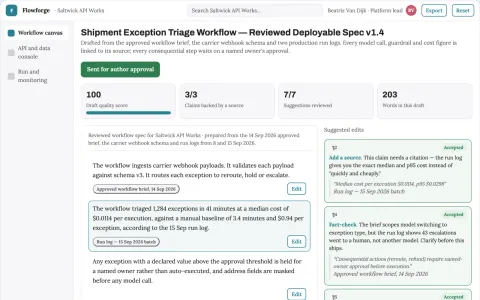
Reduce tool sprawl while keeping backend logic, data and AI calls in one owned workspace.
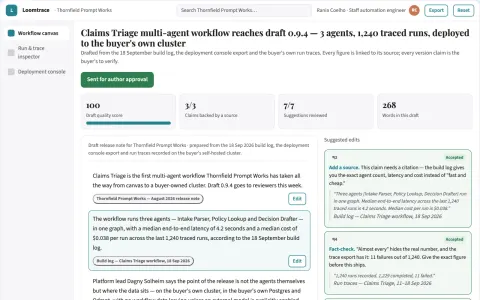
Reduce tool sprawl and keep workflow data, versions and traces inside the buyer's own environment.
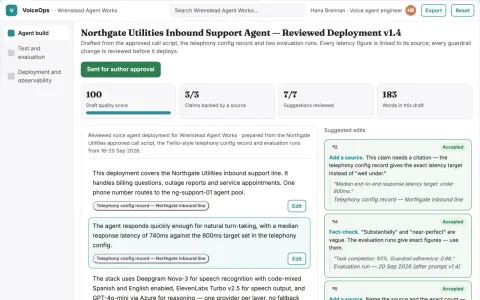
Reduce integration and review effort while keeping one owned deployment path.
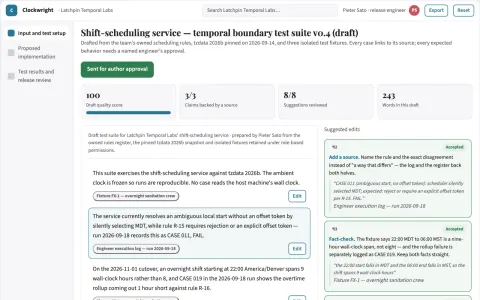
Catch date-related workflow failures before affected calendar boundaries.
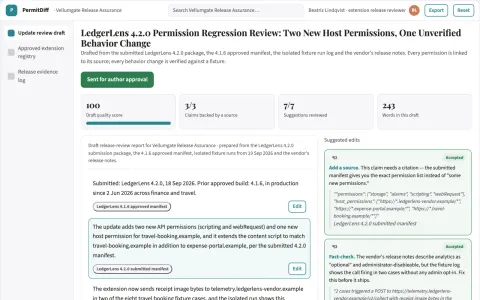
Make extension update review more reproducible.
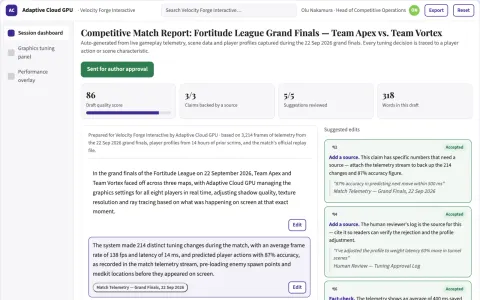
A cloud GPU that learns your play style and tunes every scene in real time, so you never buy hardware again.
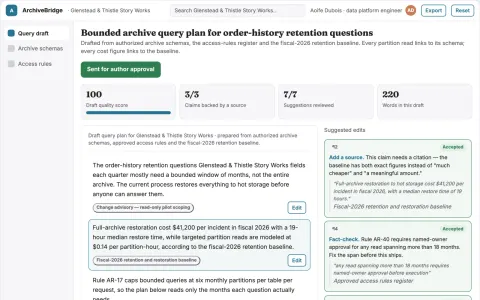
Make infrequent historical questions cheaper to answer.