
AI news ·
32% of managers rehired roles they cut for AI
32% of hiring managers who cut jobs for AI later rehired for the same role, with finance leading reversals at 44%. The data from a Robert Half survey of over 2,000 managers marks a correction from the rapid headcount cuts of 2024 and 2025.
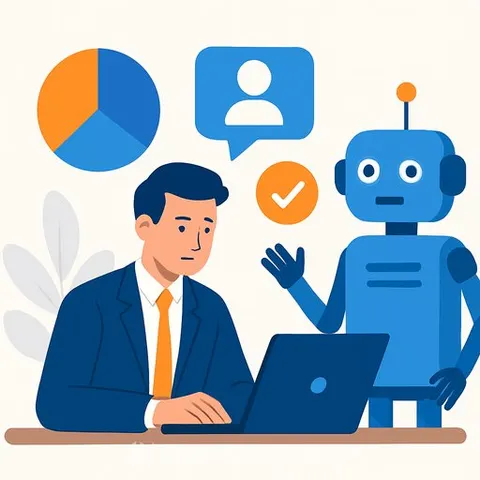
A Robert Half survey of more than 2,000 hiring managers found that 32% of those who eliminated a role due to artificial intelligence later rehired for the same or similar position. The automation fell short of replacing the human judgment those workers provided, a reality now showing up on balance sheets across industries.
The April 2026 survey, reported by Kelly Services, found that finance led AI-related rehiring reversals at 44%, followed by human resources at 35% and technology at 32%. The data marks a sharp correction from the rapid headcount cuts many organizations made in 2024 and 2025.
Automation reversals spread across industries
Ford rehired 350 veteran engineers over three years after automated systems failed to handle quality issues. Commonwealth Bank of Australia reversed 45 AI-driven customer service redundancies within months after an AI voice bot drove call volume higher rather than reducing it.
"Artificial intelligence is a fantastic tool, but it's only as good as the information you use to train it," said Charles Poon, vice president of vehicle hardware engineering at Ford.
Separately, Orgvue research found that 39% of business leaders made workers redundant due to AI, and 55% of that group later said the decision had been wrong. The automation reversal is not a failure of AI, the data suggests, but a correction of overconfidence in what current AI can replace.
Workforce pipeline risk emerges
"If we don't continue to invest in entry-level hires, what happens in three to five years? There's no pipeline. The well simply dries up," said Nickle LaMoreaux, IBM's chief human resources officer.
IBM's own AskHR system handles 94% of routine HR queries. The remaining 6% - involving judgment, emotional sensitivity, and novel situations - still requires human expertise that only sustained workforce investment can develop. The company announced plans to triple its U.S. entry-level hiring in 2026, choosing human investment over further AI-driven cuts.
Careerminds data reinforces the pattern: 35.6% of employers had already rehired more than half of their previously eliminated AI-related roles, with 52% of those rehires occurring within six months of the original workforce reductions.
Why this matters for HR professionals
The gap between automation expectations and operational reality is closing on employers' balance sheets. For HR leaders, the data is a practical warning: the rapid pace of AI-driven cuts is not sustainable, and the institutional knowledge lost in those reductions is taking months - not years - to require replacement. Companies that maintained AI for Human Resources hybrid structures rather than cutting entirely are better positioned. For AI for HR Managers, the lesson is that workforce planning cannot outrun the judgment gap AI leaves behind - and that the cost of rebuilding a pipeline of experienced workers will only increase the longer those cuts stand.