
AI news ·
72% of Finance Leaders Embrace AI: Transforming Retail Banking Amid Challenges and Consumer Skepticism
72% of finance leaders use AI, boosting efficiency and personalization in banking. Despite challenges like trust and data privacy, AI is key to banking's future.
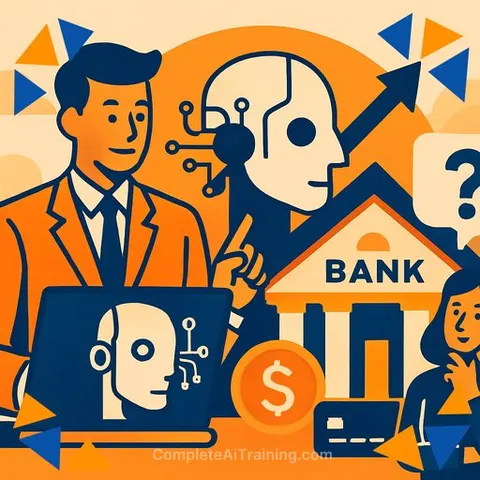
72% of Finance Leaders Use AI in Their Operations
As artificial intelligence (AI) becomes more embedded in banking, the financial sector is facing a significant transformation. AI adoption is reshaping operational methods and redefining how customers interact with their banks. With growing dissatisfaction among consumers towards traditional banking, the question is clear: can AI improve the retail banking experience?
A recent PYMNTS Intelligence report, “Is AI the Master Key to Banking’s Next Era?”, created in collaboration with NCR Voyix, examines how AI could influence the future of banking.
The Promise of AI in Banking
AI’s potential to transform finance is already visible across multiple applications. According to the report, 72% of finance leaders use AI in their daily operations. Its uses vary, with fraud detection employed by 64% and customer onboarding automation by 42% of these leaders.
Nearly every banking board has signed off on generative AI initiatives, signaling a strategic commitment to this technology. AI is seen as a means to boost efficiency and deliver highly personalized customer experiences—an urgent need since half of retail banking customers are dissatisfied with their current options.
This rising dependence on AI highlights a critical juncture for banks: adapt and innovate or risk losing ground to agile technology companies.
Challenges on the Path to Integration
Despite AI’s promise, banks face hurdles when integrating it into their systems. Consumer trust remains a key concern. About 20% of U.S. consumers view AI tools as a security risk, and 14% avoid AI-based financial services altogether.
Internal concerns add to the challenge. Over one-third of banks worry AI might increase their exposure to cyberattacks. Other significant barriers include data privacy and regulatory compliance.
Data management stands out as the biggest obstacle, with 38% of institutions citing it as a major challenge. This creates a gap between what AI can offer and the confidence consumers place in banks’ capabilities.
A Roadmap to Success
To fully benefit from AI, banks need a clear strategy. Building hyper-personalized financial health platforms can increase consumer trust. Employing AI-powered authentication methods addresses security concerns head-on.
Predictive risk management is another crucial tool, helping banks identify and mitigate threats early. Partnerships with FinTech firms can accelerate innovation and ease AI adoption. Given that 39% of banks admit underinvestment in AI infrastructure, these collaborations are vital for deploying effective AI solutions that satisfy both customers and regulators.
While integrating AI presents challenges, the potential gains in efficiency and customer satisfaction are significant. Banks that plan carefully and collaborate effectively will better position themselves to thrive in a digital future.
For finance professionals looking to deepen their AI skills, exploring targeted courses can be valuable. Resources like Complete AI Training’s finance-focused programs offer practical knowledge designed for the industry’s evolving needs.