
AI news ·
Agencies face legal risks as Trump pushes AI integration in federal rulemaking
CDC uses AI to sort public comments on 2024 rules, but former officials warn errors could get regulations overturned in court. The Administrative Procedure Act requires agencies to address significant comments or risk vacated rulings.
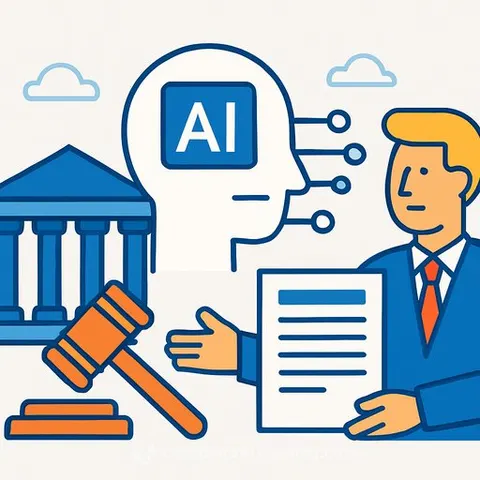
Federal agencies are experimenting with AI to help manage the public comment process for new regulations, but former officials warn that errors in AI-generated summaries could get rules overturned in court.
The Centers for Disease Control and Prevention has been using AI to analyze public comments on two proposed rules from 2024, according to documents obtained through a public records request. The Federal Communications Commission and the Consumer Financial Protection Bureau have also issued requests for information on how AI might assist their rulemaking processes.
These efforts align with President Donald Trump's 2025 AI Action Plan, which calls for faster AI adoption across the government to "serve the public with far greater efficiency and effectiveness."
The legal risk lies in the Administrative Procedure Act, which requires agencies to respond to "significant" public comments. If AI mischaracterizes or misses a key comment, the agency could face a court challenge.
"There's a real risk that a court will find the agency didn't properly consider the record," said a former senior official at the Office of Information and Regulatory Affairs, who spoke on condition of anonymity. "If the AI misses a key comment or mischaracterizes it, the agency's final rule could be vacated."
Courts have already struck down several Trump-era rules for inadequate consideration of comments. Adding AI creates new vulnerabilities, experts said, because errors in machine-generated summaries could undermine the agency's duty to address "significant" comments.
Cautious beginnings
The CDC's current use of AI appears limited. According to the documents, the agency uses AI to categorize comments into themes, but human reviewers still conduct the final analysis. As AI tools become more capable, however, agencies are likely to rely more heavily on them, raising the stakes for getting the technology right.
"The key is transparency and verification," said another former official. "If agencies can show they reviewed AI outputs and corrected mistakes, they'll be in a stronger position. But if they treat AI as a black box, they're inviting litigation."
The Office of Management and Budget has encouraged agencies to "use AI to improve the efficiency and quality of rulemaking" while emphasizing that "human oversight remains essential." Whether that balance will satisfy courts remains an open question. For more on how government agencies are adopting AI tools, see AI for Government coverage.
Why this matters for legal professionals
If you advise agencies on rulemaking or represent clients challenging federal regulations, the shift toward AI-assisted comment analysis creates new angles for procedural challenges. Courts may vacate rules where AI misstates or omits significant comments, giving you a clear path to argue that the agency failed its duty under the Administrative Procedure Act. For legal professionals focused on the intersection of AI and policy governance, AI Learning Path for Policy Makers offers structured guidance on the regulatory compliance risks that accompany agency adoption of these tools.