
AI news ·
AI accelerates product design and manufacturing across industries
AI-powered software now cuts weeks of manual work by automating design generation, data analysis, and virtual simulation. Companies across electronics, automotive, and furniture manufacturing use AI to reduce prototyping costs, material waste, and production delays.
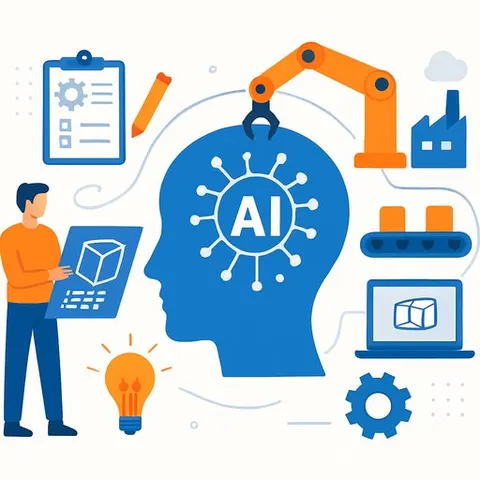
Artificial intelligence is helping product development teams move from concept to production faster by automating tasks that previously took weeks of manual work. AI-powered software now analyzes large datasets, generates design alternatives, and identifies manufacturing issues before physical prototypes are built, shortening development cycles and reducing costs across industries including consumer electronics, automotive, and furniture manufacturing.
The technology works alongside human designers and engineers, not in place of them. AI enhances creativity by reducing repetitive work, allowing professionals to focus on higher-level problem solving.
AI expands design exploration at the earliest stages
Engineers define objectives such as weight, durability, material limitations, or manufacturing costs, and AI produces multiple optimized solutions that traditional methods might miss. This capability dramatically expands the range of possible designs available early in development, while designers remain responsible for evaluating and selecting the final concepts.
AI also analyzes consumer trends from large datasets to inform product strategy. Product teams in consumer markets often use this information to understand purchasing behavior before committing to production. The technology provides valuable insights that support smarter development decisions.
Virtual simulation reduces trial and error in manufacturing
Manufacturing has historically depended on building multiple physical prototypes before finalizing a design. AI reduces this process by simulating how products perform under real-world conditions, enabling engineers to evaluate structural strength, heat distribution, wear patterns, and tolerances digitally. Production issues get corrected much earlier, cutting material waste and lowering costs.
Factories also use AI to identify production bottlenecks, estimate timelines, and optimize workflows before machines begin running. AI-powered quality control systems detect defects that human inspectors might miss, resulting in more reliable products and fewer manufacturing delays.
Better collaboration across design and production teams
AI platforms increasingly allow design and manufacturing teams to work from shared digital models that update automatically as changes happen. Instead of passing files between departments, both groups review the same information in real time, reducing misunderstandings that stall production. Design changes get evaluated for feasibility, material availability, and cost almost immediately. Suppliers benefit from earlier visibility into component requirements, helping avoid sourcing delays.
Automotive companies use AI to optimize vehicle components for strength and efficiency. Medical device manufacturers analyze performance data to improve patient outcomes. Electronics companies apply machine learning to circuit layout and thermal management. Furniture makers use AI to balance product aesthetics, structural integrity, and production efficiency.
Why this matters for product development professionals
AI is becoming a standard tool across the product development lifecycle, from trend analysis and concept generation through virtual simulation and quality control. Professionals who understand how to integrate these tools into their existing design and manufacturing workflows will spend less time on repetitive technical tasks and more time solving creative problems that require human judgment. AI for Product Development skills are becoming as essential as engineering fundamentals for staying competitive as companies accelerate their production cycles and respond to shifting customer demands.