
AI news ·
AI and Africa’s Creative Revolution: How Artists Can Embrace Disruption to Shape Their Future
AI is reshaping Africa’s creative industries, urging creators to adapt or risk irrelevance. Embrace AI tools to tell authentic, groundbreaking stories.
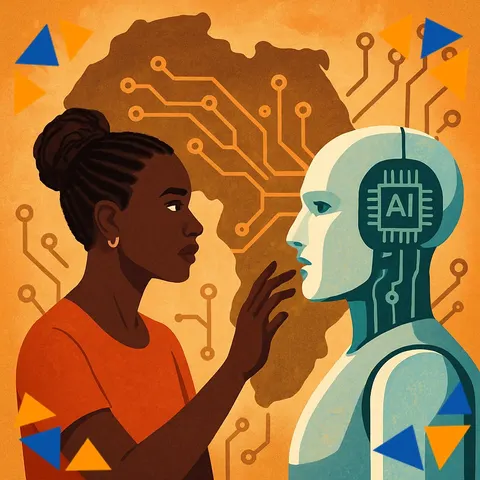
How AI is Disrupting Africa’s Creative Industries and What Creators Can Do About It
OPINION
"I'm sorry, but I think you're aware your voice talent job is going to disappear."
This blunt message from African creative industries expert Marie Lora-Mungai hit hard during a recent conversation on the African Tech Roundup Podcast. It’s the kind of reality many creatives sense but hesitate to face.
Her warning came shortly after a viral LinkedIn post urging African filmmakers to confront AI’s rapid changes. While creatives spend long hours editing, applying for grants, or attending festivals, AI has already rewritten the industry's playbook.
Senegalese filmmaker Hussein Dembel Sow captured the dilemma clearly: across Africa, content industries like film, advertising, and design are still being built, yet AI is disrupting them before the foundations solidify. This isn’t just disruption—it’s a fundamental shift happening as we’re still laying the groundwork.
Facing the Reality
Like many creatives, especially voiceover artists, there’s a natural resistance to change. When European startups approached about representing my voice digitally, I initially declined. The idea of a digital clone replacing the need for a real studio session felt like losing something personal.
But Lora-Mungai was direct: your voice, captured across countless public recordings, can be replicated without your consent. This means anyone could create content with your voice without you being involved.
Time to Adapt
The question isn’t whether AI will disrupt creative work—it already is. The question is how creatives respond. Many still treat AI as a distant Silicon Valley concept, occasionally using tools like ChatGPT for casual conversations rather than serious creative work.
Protecting old workflows and business models won’t stop AI’s momentum. Instead, embracing AI can multiply creative output exponentially and elevate quality. AI can turn one creator into a powerhouse of content generation—if used wisely.
Practical Steps for Creatives
- Stop chasing funding: With AI lowering production costs dramatically, many projects no longer require huge budgets. Start creating now.
- Build in public: Share your work as it develops. This strategy attracts audiences and collaborators early on.
- Use AI for development: Let conversational AI help refine ideas, develop characters, or polish scripts. For example, you can ask ChatGPT to act as an experienced filmmaker to get fresh perspectives.
- Focus on vision, not just skills: Technical execution is less important than knowing what story you want to tell and using tools to bring it to life.
Looking Ahead
While pushing for laws that protect creative rights is important—blockchain could one day track and secure the use of voices and images—waiting for perfect regulation is a luxury creatives can’t afford now.
Sow highlights a crucial point: this moment is about authorship and power. The old creative roles are fading, replaced by new possibilities defined by AI tools. African creatives must decide whether to build stories rooted in local languages, textures, and aesthetics—or simply consume content shaped by others.
For those who’ve honed craft over decades, this shift will be challenging. But clinging to familiar methods won’t work. The new currency is creative discernment—knowing how to use AI tools to bring your unique ideas to life.
Many creatives started without formal training, relying on persistence and experimentation. This openness to disruption can be a strength now. The key question is not if we’ll adapt, but whether we will take control of the tools to tell authentic African stories or remain passive observers.
To quote Sow: "We’re not being replaced. We have the tools. The question is whether we’ll use them to build stories the world hasn’t seen yet—or keep trying to fit into ones it already has."
In the end, the knife is already in. The choice now is what to create with it.
For more on AI and copyright protections, see resources like the World Intellectual Property Organization’s AI and IP page.