
AI news ·
AI and Culture in the Arab Region: Innovations in Heritage, Education, and Creative Industries
AI is transforming cultural heritage, education, and creative industries across the Arab region. A UNESCO workshop in Cairo fostered regional dialogue on ethical AI innovation rooted in cultural values.
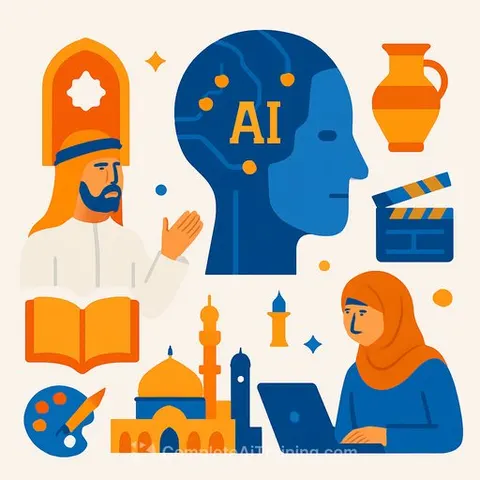
AI and Culture in the Arab Region: Innovations in Heritage, Education, and Creative Industries
Artificial Intelligence is playing an increasingly important role in transforming cultural practices across the Arab region. It opens up new ways to preserve heritage, enhance education, and support creative industries with innovative approaches. Recognizing this shift, the UNESCO Regional Office for Egypt and Sudan hosted a one-day workshop titled “AI and Culture in the Arab Region: Regional Vision from Cairo.” The event gathered academic experts, heritage professionals, and cultural practitioners from across the Arab world to exchange insights, case studies, and policy ideas.
Held on 25 June 2025 in a hybrid format in Cairo, the workshop created a platform for regional dialogue. Speakers from Egypt, Sudan, Tunisia, the UAE, and Saudi Arabia focused on how AI is influencing three main areas: tangible and intangible cultural heritage, arts and cultural education, and the cultural and creative industries.
Preserving and Documenting Cultural Heritage with AI
The first session highlighted AI’s role in preserving and documenting cultural heritage. Dr. AbdelRahman Medhat discussed AI-driven conservation methods designed to withstand climate challenges. Prof. Fekri Hassan shared heritage management techniques adapted for the digital era. Dr. Nabil Bachagha from Tunisia presented how machine learning helps identify and analyze Roman fortified sites, showing AI’s potential for archaeological research.
These examples reflect how the Arab region is advancing the integration of AI in heritage science and improving public access to cultural resources.
Enhancing Creative Industries and Arts Education
The second session shifted to creative industries and arts education. Arab academics and artists shared their experiences using AI to improve teaching, media, and artistic practice. Dr. Noha Abou-Khatwa and Dr. Haytham Nawar from the American University in Cairo introduced curriculum innovations combining Islamic art and digital media. UAE-based Dr. Noha Mellor explored AI’s influence on journalism education. Sudanese writer Emad Blake discussed how generative technologies are reshaping authorship. Dr. Riham Arram stressed the importance of policies that encourage ethical and inclusive AI use in cultural programming.
Aligning Regional Strategies with Global Standards
Throughout the workshop, participants emphasized the need to align national strategies with international frameworks. These include the 2003 Convention for the Safeguarding of the Intangible Cultural Heritage, the 2005 Convention on the Protection and Promotion of the Diversity of Cultural Expressions, and the 2021 Recommendation on the Ethics of Artificial Intelligence.
The event also highlighted Egypt’s national initiatives like its Artificial Intelligence Strategy and the Egypt Charter for Responsible AI, which focus on cross-sector digital transformation.
Building a Collective Knowledge Base and Ethical Innovation
By sharing regional experiences, the workshop helped build a collective Arab knowledge base on AI and culture. It strengthened cooperation between institutions and encouraged innovation grounded in cultural values and ethics. UNESCO’s role in promoting responsible technological progress that supports diversity, creativity, and heritage was reaffirmed.
As AI continues to develop, efforts like this ensure cultural identity, education, and heritage stay central to the Arab region’s digital future.
Supporting a Regional Vision for Culturally Grounded AI
This workshop was part of a series leading up to the 2025 MONDIACULT conference in Barcelona (29 September – 1 October 2025). It advanced a regional vision for AI that respects cultural roots and ethical standards. The event underscored the importance of aligning national digital strategies with international cultural frameworks such as the 2022 MONDIACULT Declaration, which recognizes culture as a global public good and calls for inclusive cultural governance.
The dialogue fostered at this workshop strengthens the Arab region’s commitment to placing culture at the core of digital transformation, consistent with UNESCO’s global priorities.
For those interested in exploring AI applications in creative and educational fields, resources and courses are available at Complete AI Training.