
AI news ·
AI Clinical Notes Are Giving Clinicians Their Evenings Back
Paperwork fuels burnout; many spend two admin hours per patient hour. AI note tools draft structured, compliant notes fast, easing anxiety and giving evenings back.
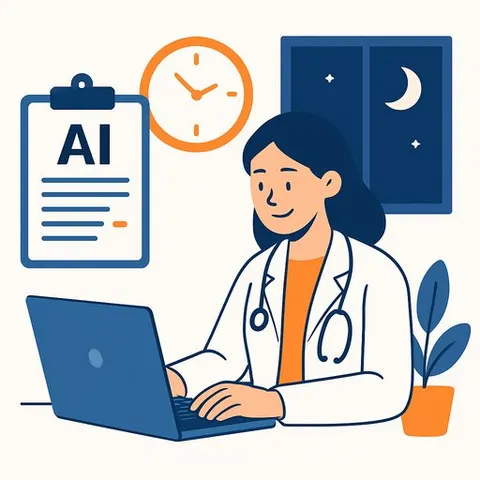
How AI Clinical Tools Are Supporting Healthcare Provider Mental Health
Ask a therapist what they dread most. It's rarely the clients. It's the paperwork that piles up after the last session and steals evenings, weekends, and headspace.
Burnout is still a real threat. The American Medical Association recently reported that roughly four in ten physicians showed at least one burnout symptom in 2024. Better than 2021, sure-but still far from healthy.
Here's what's driving the fatigue, how AI clinical notes tools are reducing the load, and what early adopters are actually seeing on the ground.
Why Paperwork Is Breaking Healthcare Providers
The documentation burden runs deeper than most outside healthcare realize. It's not just busywork. It affects revenue, risk, and clinical quality. And it never stops.
The Two-to-One Problem
For every hour with a patient, about two hours go to admin. Charting. Billing prep. Compliance. Two to one. See six patients and you've got twelve hours of documentation waiting for you. That's the general medicine version. Behavioral health often takes longer.
What Makes Behavioral Health Notes So Exhausting
Therapy notes are narrative-heavy. You're documenting observations, interventions, client response, treatment plan progress, and risk. It takes focus and clinical judgment-right after holding space for difficult content all day.
The constant switch from "fully present" to "write a defensible note now" drains people. By Friday, many are running on fumes. By month six, some are scrolling job boards.
The Systemic Squeeze Nobody's Fixing
Caseloads keep climbing. Payers keep adding hoops. Regulators keep expanding "adequate." Time does not expand with them.
Miss notes and you risk delayed payments, denials, and audit flags. This isn't about convenience. It's about survival for practices and clinicians.
How AI Documentation Tools Actually Work
Beyond Old-School Dictation
Forget clunky speech-to-text. Modern AI tools don't just transcribe. They interpret clinical context and draft structured notes in your format-SOAP, DAP, BIRP-while standardizing language and flagging compliance gaps before you sign.
Why Therapists Are Adopting These Tools
A thoughtful therapy note takes 15-20 minutes when done manually. Multiply that by a full day of sessions. It adds up fast.
Good AI tools cut that time by more than half. Drafts arrive structured and coherent. You review and adjust instead of starting from zero. That can be the difference between leaving at 5:30 and leaving at 8.
The Part Nobody Talks About: Cognitive Relief
It's Not Just About the Clock
Time matters. But the real win is mental load. After a heavy session, your brain doesn't want to switch into technical writing mode. AI absorbs that initial hit-structure, phrasing, required fields-so you can edit instead of invent.
The Anxiety That Quietly Eats at Providers
Many clinicians carry a low-grade worry: Are my notes good enough? Would they hold up on review? Automated checks for missing fields and risk documentation quiet that noise. You sleep better because you're not guessing.
Fewer Errors, Fewer Headaches
Manual notes commonly show higher error rates-fatigue makes it worse. AI-assisted notes bring errors down to low single digits in most cases. Fewer mistakes mean fewer denials, fewer audits, and less back-and-forth with payers.
What the Early Results Show
The Short-Term Shift
Most providers feel the change within weeks. Regaining 10-15 hours a week sounds bold until you realize it's just the Saturday you used to spend catching up on notes.
Large health systems report similar gains. Ambient AI has been linked with meaningful drops in reported burnout and clear improvements in well-being tied to documentation relief.
Confidence in What You've Written
When templates, structure, and compliance language are handled, second-guessing slows down. You stop rereading the same note five times "just in case." That reclaimed focus shows up in session quality.
Career Sustainability (the Longer View)
Burnout erodes careers slowly. Reduce admin load and people stick around. They pursue certifications, mentor juniors, and build specialties. That benefits patient care and practice stability.
Making the Transition Without Creating New Problems
Pick the Right Implementation Approach
Tool choice matters. Rollout matters more. If learning the system feels like a second job, adoption will crater. Favor tools that integrate cleanly with your EHR and your note styles.
Start Small and Listen
Run a pilot with willing clinicians for two to three weeks. Collect honest feedback. Tune prompts, templates, and privacy settings. Then expand in waves.
Specialization Matters More Than You'd Think
A tool built for orthopedics won't capture a trauma session well. Make sure the model understands your specialty's language, required fields, and narrative structure.
- Define success metrics up front: time per note, completion by end-of-day, denial rates, well-being scores.
- Standardize templates across the team to reduce variability and speed reviews.
- Enable real-time compliance checks for risk, billing level, and required elements.
- Set a "notes done by close of clinic" norm to protect evenings and weekends.
- Review a random sample monthly for quality, defensibility, and payer feedback.
Where Things Go From Here
Documentation didn't become a problem overnight, and AI won't erase it overnight. But the tools are good enough right now to move the needle on burnout, revenue cycle health, and care quality.
For practice leaders, this is bigger than efficiency. It's retention, recruitment, and outcomes. Healthy clinicians stay, grow, and do better work. That's the point.
Want practical training and examples across specialties? Explore AI for Healthcare for workflows, tools, and implementation tips.
Image credit: DC Studio via Freepik