
AI news ·
AI Colonialism: How Artificial Intelligence Threatens Cultural Diversity and Authenticity in Writing
AI risks imposing Western writing styles, diluting cultural voices and authenticity. Writers must critically engage with AI to preserve diverse storytelling.
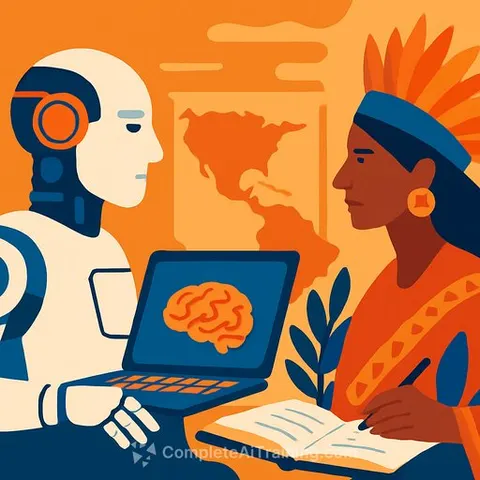
‘AI Colonialism’: A Threat to Cultural Diversity in Writing
Artificial intelligence is becoming a common tool for writers, promising to speed up the process and reshape how we create text. But a recent US study warns of a hidden danger: AI could be pushing a western writing style that flattens cultural uniqueness and homogenizes diverse voices.
By adopting AI writing assistants, people from different cultural backgrounds may find their own stories and expressions filtered through a foreign lens. This can subtly shift how they view their traditions and identity, altering the authenticity of their voice.
The Study: How AI Shapes Writing Styles
A team from Cornell University tested this by asking 118 participants from the US and India to write about cultural topics, some with AI assistance and some without. The goal was to observe changes in their writing styles influenced by the AI.
The results showed that AI helped speed up writing but also changed individual styles significantly. Indian participants, in particular, ended up adopting more Americanized writing patterns. To fit AI suggestions, they often had to revise their original phrasing, which led to cultural details being framed through Western perspectives.
For instance, AI would suggest “Christmas” as an example of a favorite holiday, ignoring important festivals like Deepavali. Indian writers accepted about 25% of AI’s suggestions—more than the 19% acceptance rate of American writers—but frequently adjusted those suggestions to better fit their cultural context.
What This Means: The Rise of 'AI Colonialism'
The researchers call this phenomenon “AI colonialism”—a subtle form of cultural domination where Western writing norms overshadow local identities. The danger lies in losing the rich diversity of human expression as writing styles converge toward a single, dominant standard.
This isn’t just about style. It influences how people perceive their own culture. When their words are shaped by AI that favors one cultural viewpoint, writers risk internalizing a foreign perspective, which can erode cultural pride and uniqueness.
Protecting Cultural Diversity in Writing
Experts stress the need to address this issue by developing AI tools that respect and reflect cultural differences. Cornell’s Global AI Initiative is working on policies and technology that better preserve cultural specificity, emphasizing the importance of diverse voices.
The challenge is clear: to prevent digital tools from becoming agents of cultural homogenization. For writers, this means staying aware of AI’s influence and ensuring their unique cultural perspectives remain intact.
What Writers Can Do
- Be critical of AI suggestions that don’t align with your cultural context.
- Adjust or reject AI-generated content that dilutes your voice or heritage.
- Advocate for AI development that includes diverse datasets and writing styles.
- Keep nurturing your natural writing style alongside AI tools.
Writers aiming to use AI effectively can explore resources and courses to better understand AI’s impact and how to work with it without losing authenticity. For those interested, Complete AI Training offers valuable courses that help writers integrate AI thoughtfully into their craft.
Ultimately, preserving the richness of global storytelling means pushing back against one-size-fits-all AI models and championing diversity in every word we write.