
AI news ·
AI Enhances Early Cancer Detection and Treatment Access in Indonesia
AI aids Indonesia’s cancer treatment by speeding diagnosis and improving therapy choices. Partnerships aim to expand access and cut costs, boosting survival rates nationwide.
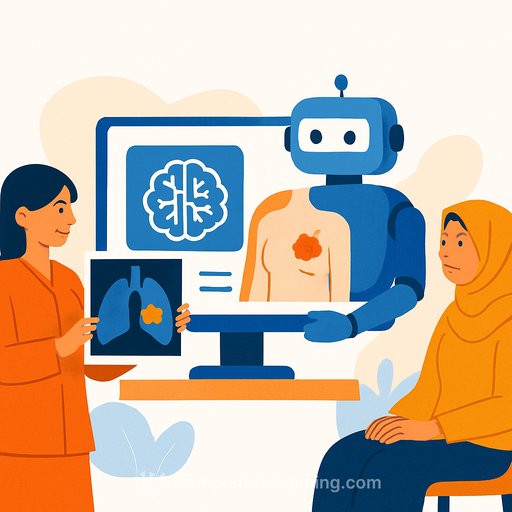
The Role of AI in Cancer Treatment in Indonesia
Artificial intelligence (AI) is becoming a valuable tool in healthcare, especially for cancer treatment. Its advanced analytic abilities help speed up diagnosis, select effective therapies, and improve treatment outcomes for patients.
Indonesia faces a rising number of cancer cases, prompting the government to collaborate with Perthera and Pathgen Diagnostic Technology. This partnership focuses on transferring AI-based technology to strengthen early detection and enhance cancer management across the country.
Addressing the Cancer Challenge
Health Minister Budi Gunadi Sadikin highlighted the urgency of this initiative. Without proper intervention, cancer cases in Indonesia are expected to rise by over 70% by 2050. Currently, approximately 400,000 new cases emerge annually, with more than half resulting in fatalities.
“Technology is advancing quickly. Accurate early detection is crucial, and public awareness about the importance of regular check-ups must increase. This involves both treatment and education,” the Minister stated in Jakarta.
AI’s Impact on Treatment and Costs
Dr. Susanti, CEO of Pathgen Diagnostic Technology, explained that AI can increase cancer patients’ survival chances by 2.5 times. Moreover, AI-driven treatment reduces costs by about 30% through precise drug selection, minimizing errors.
“Using AI systems allows targeted therapies, lowering the financial burden. We aim for broad implementation in Indonesia so all patients, including those under the BPJS Health program, have equal access to early detection and the right treatment,” she added.
Ensuring Access and Efficiency
Dr. Susanti is committed to eliminating barriers to proper cancer care in Indonesia. Director General of Pharmaceuticals and Medical Devices, Lucia Rizka Andalusia, described how AI collects and analyzes data from multiple medical sources. This accelerates diagnosis without replacing doctors and offers treatment recommendations based on disease patterns and stages.
“Cancer treatment involves several stages from diagnosis to therapy. AI streamlines decision-making, making the process faster and more precise,” Rizka said. The technology will soon be rolled out in various regions, including for BPJS Health participants, to standardize oncology financing and services nationwide.
For government officials, supporting AI integration in healthcare aligns with public health goals and resource optimization. Effective policy and funding can help ensure this technology reaches all regions and benefits a wider patient population.
Learn more about AI applications in healthcare and training opportunities at Complete AI Training.