
AI news ·
AI-Generated Podcasts Make Scientific Research More Accessible to the Public
AI-generated podcasts effectively summarize scientific research in clear, engaging language. Half of authors mistook AI narration for human voices, highlighting potential for wider accessibility.
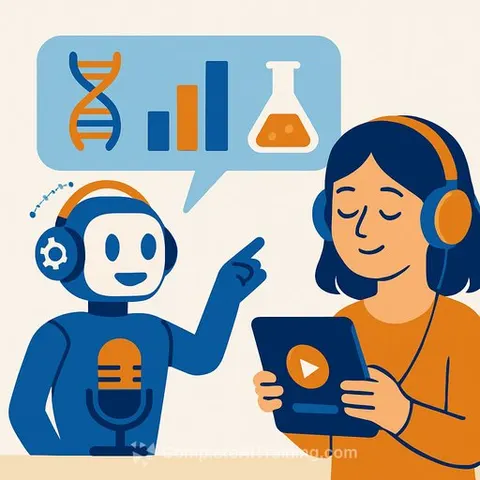
AI-Generated Podcasts Enhance Access to Scientific Research
Artificial intelligence (AI) is starting to play a significant role in science communication. A recent study in the European Journal of Cardiovascular Nursing (EJCN) explored how AI-generated podcasts can summarize scientific papers effectively. Using Google’s NotebookLM, an AI research assistant, researchers created podcasts explaining recent articles from EJCN. The results showed that half of the authors believed the podcasts were narrated by humans.
Study Setup and Findings
Led by Professor Philip Moons from the University of Leuven, Belgium, the study selected 10 different types of scientific articles. Authors consented to participate but were unaware that the podcasts about their work were AI-generated. After listening, the authors evaluated the podcasts on engagement, trustworthiness, and accuracy.
Overall, the podcasts:
- Captured key points in clear, simple language
- Were well-structured and balanced in length and depth
- Presented professional-sounding hosts, with some authors assuming the narrators had medical or nursing backgrounds
- Included conversational interactions that enhanced listener engagement
Most authors found the podcasts reliable, though some noted an American accent and occasionally enthusiastic phrasing like "amazing" or "groundbreaking." Issues included minor inaccuracies, occasional misuse of medical terms, and pronunciation errors. These findings emphasize the need for careful review before public release.
Detecting AI and Audience Suitability
When asked if they would be surprised to learn the podcasts were AI-generated, five authors said yes, expressing shock or amazement. The other five suspected the use of AI. Authors agreed that transparency about AI involvement, proper acknowledgment of authors, and referencing the original articles are essential for ethical communication.
The authors identified patients and the general public as the primary audience for these podcasts due to the accessible tone and simplified explanations. However, healthcare professionals might also benefit by staying updated on research more easily. Some suggested future podcasts could be customized by age, interests, or cultural background as AI technology advances.
Future Potential and Considerations
Professor Moons highlighted that AI-generated podcasts are most suitable for non-technical audiences and expect quality to improve in the near future. The technology could streamline science communication by producing podcasts with minimal effort, such as uploading articles and providing basic prompts.
He envisions a hybrid approach where AI and human podcasters collaborate, capitalizing on AI’s efficiency while preserving human nuance for complex topics. The researchers plan to explore patient and public reception further and consider using AI podcasts to summarize scientific conferences, enhancing accessibility for those unable to attend.
An AI-generated podcast summarizing this research is available through the published paper for those interested in hearing a real example.
Key Takeaways for Science and Research Professionals
- AI-generated podcasts can communicate research in clear, engaging ways for broad audiences.
- Accuracy and tone require careful oversight to maintain trust and clarity.
- Transparency about AI use is critical to ethical science communication.
- These podcasts could increase research visibility and accessibility, especially for patients and non-specialists.
- Future developments may allow customization of voice and language to better suit diverse audiences.
This study offers practical insights into integrating AI tools for wider science communication. For professionals interested in AI applications in research dissemination, keeping abreast of these evolving tools is increasingly valuable.
For more on AI applications and training in various domains, explore Complete AI Training's latest AI courses.