
AI news ·
AI-generated stories rated higher quality than human-written ones in study
In a study of 1,682 adults, AI-generated short stories were rated higher in quality and engagement than human-written ones. Yet readers overwhelmingly preferred stories they believed were written by people, even when that label was wrong.
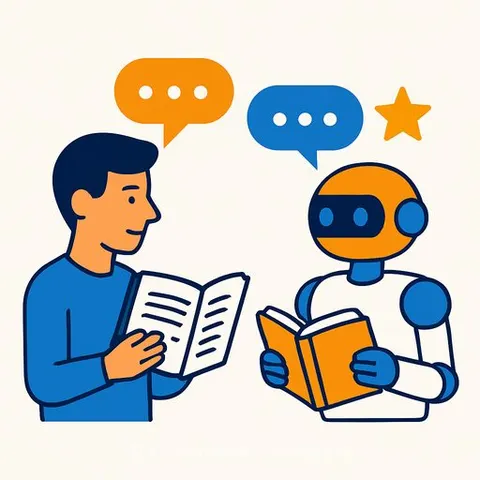
From Homer's Odyssey to Agatha Christie's crime fiction, humans have produced plenty of tales to grace the bookshelf. But research suggests artificial intelligence may now be providing some competition. In a study published in the journal Judgment and Decision Making, 1,682 adults were asked to read one of six short stories - three written by humans and three by ChatGPT. Each AI story had a similar theme to a human-authored work.
Participants who read an AI-generated story rated it as more absorbing and of higher quality than those who read a human-written story. However, participants gave higher ratings to stories they were told were written by people - even when that label was wrong.
AI stories rated higher on quality, but humans still preferred
Dr. Deena Skolnick Weisberg, a senior author of the research from Villanova University, said: "AI systems can already generate short stories that are seen as being at least as good as - if not better than - human-written stories. We should update our views of AI's abilities accordingly." But Weisberg, a creative writer herself, stressed that human authorship still matters. "We may need to make room for AI-generated novels, and for AI/human co-written novels, but that doesn't mean that we still have no more space for us to appreciate all that creativity," she said. "Humans write as a form of creative self-expression or to challenge ourselves, or create sense of our experiences. The fact that AI can generate human-like stories doesn't change any of that."
The study also found that participants with more positive attitudes toward AI gave higher ratings to stories they were told were produced by ChatGPT.
Readers struggle to distinguish human from AI writing
In two follow-up experiments, 905 adults were given two stories on the same theme - one human-written, one AI-generated - and asked to identify the human one. In one experiment, about 40% guessed correctly (worse than chance); in the other, 52% guessed correctly. "There is no general evidence that participants were able to distinguish human-written from AI-generated stories," the authors write. The ability to detect AI was not linked to fiction-reading experience, but those with more familiarity with AI systems were actually less accurate.
Weisberg noted that AI has a distinct style. "AI writing has a particular style that we can learn to recognize with practice - just as we can learn to recognize different human authors' unique styles." She suggested the preference for stories labeled as human-written is tied to a desire for authenticity, not an actual ability to tell them apart.
Why this matters for writers
The study shows that AI-generated stories can already match or exceed human-written ones in reader engagement, but human authorship still carries a unique value - readers prefer it when they believe it is human. For professional writers, the takeaway is clear: focus on the human connection and insight that machines cannot replicate. At the same time, understanding how AI writes can sharpen your own craft. Writers looking to navigate this new landscape may find practical guidance through AI for Writers resources, while those wanting to master the specific tool used in this study can explore ChatGPT Courses.