
AI news ·
AI Hallucination Leads to Embarrassing Legal Blunder in Anthropic Copyright Lawsuit
Anthropic’s AI lawyer Claude generated a fabricated legal citation in a lawsuit involving music publishers. The error was admitted as an honest mistake, highlighting risks of relying on AI without thorough checks.
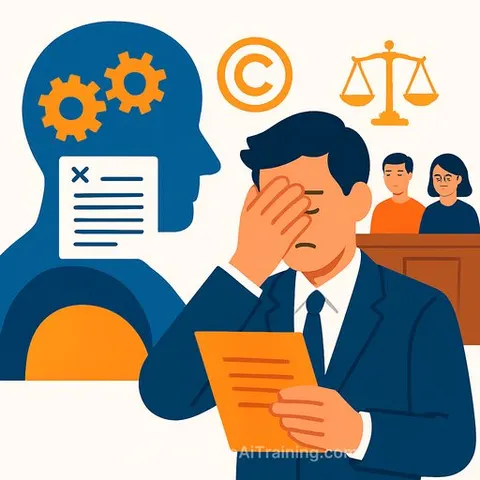
A.I. Lawyer Acknowledges Error After Anthropic’s Claude Invented a Legal Source
Anthropic's legal team admitted to including a fabricated source created by their AI, Claude, during an ongoing lawsuit involving music publishers Universal Music Group, Concord, and ABKCO Music & Records. The incorrect citation appeared in an expert report by Anthropic data scientist Olivia Chen, intended to support the defense against allegations of using copyrighted lyrics to train Anthropic’s large language model.
The AI-generated citation contained accurate bibliographic details like the link, volume, page numbers, and publication year. However, the author and title were false. This discrepancy was revealed in a declaration by Ivana Dukanovic, an associate at Latham & Watkins LLP representing Anthropic.
Details of the Citation Error
The fabricated citation was uncovered after opposing counsel accused Chen of relying on a nonexistent academic report. Although U.S. Magistrate Judge Susan van Keulen denied the request to depose Chen, she described the error as a “very serious and grave issue.” She differentiated between an honest oversight and the AI-induced “hallucination” that produced the false citation.
Dukanovic took responsibility for the mistake, calling it an “honest citation mistake and not a fabrication of authority.” The legal team had identified a genuine article to support Chen’s testimony but asked Claude to format the citation correctly. The AI failed to do so accurately, and the attorney’s manual review missed the error.
“This was an embarrassing and unintentional mistake,” Dukanovic stated in the court filing.
Wider Implications for AI in Legal Practice
This incident highlights the risks of relying on AI tools like Claude for legal citations without thorough verification. Even when AI provides seemingly precise details, the underlying information may be unreliable or entirely fabricated.
Anthropic declined further comment, and Latham & Watkins has not responded to requests for additional information. This case adds to a growing list of lawsuits targeting AI companies for copyright infringement and other legal challenges.
- AI-generated content must be carefully vetted, especially in legal documents.
- Law firms using AI tools should implement strict review procedures to catch errors.
- Legal professionals need to stay informed about AI’s limitations and risks.
For legal professionals interested in exploring how AI tools impact the legal field and improve workflow, resources are available at Complete AI Training.