
AI news ·
AI helps leaders reinvent change management for stalled projects
AI rollouts fail when change management ignores frontline workers, not because of the technology itself. AI voice agents can now gather feedback from hundreds of employees in under a week, replacing months of interviews and surveys.
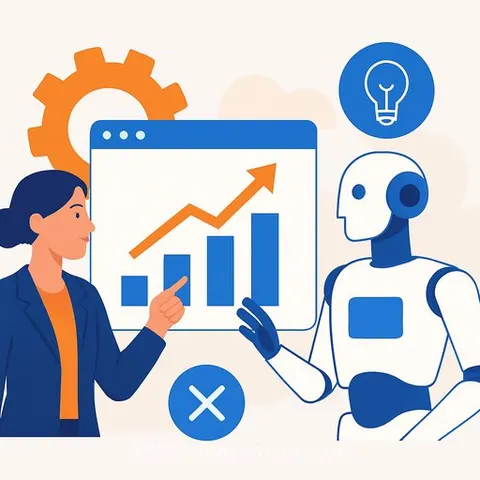
Leaders who blame AI for stalled projects often have a different problem: change management that hasn't kept pace with the technology. Traditional methods - small interview groups, executive stakeholders, representative committees - rely on a handful of voices and leave frontline employees out of the conversation. That gap becomes critical when AI is reshaping how work actually gets done.
The old playbook treats change management as a checkbox. But AI is not a one-time software rollout. It makes change continuous, which means change management has to be continuous too. The good news for managers: AI itself can fix the process.
Why traditional change management breaks down
Most change management programs still collect feedback the same way they did two decades ago. They run a few interviews, survey a sample, and check the box. The people doing the work rarely shape the solution.
Consider an AI rollout in sales. If change leaders only consult sales operations instead of the sellers themselves, the technology may look good on paper but fail in practice. That leads to a familiar pattern: initial compliance, post-launch celebration, steadily declining usage, and a frantic scramble to diagnose problems after the fact.
"Listening to the wrong people - or not listening to enough of the right ones - is a recipe for discovering adoption barriers after the rollout instead of while the change is happening."
Using AI to listen at scale
AI voice agents can now conduct conversations with hundreds of employees in under a week - a task that previously took months of interviews and surveys. AI gathers the information; human change leaders interpret it and make decisions.
This enables what one consultant describes as an "organizational nervous system": continuous employee listening through open-ended conversations, network analysis to identify informal influencers and disconnected teams, and behavioral monitoring that flags adoption friction early. If sales reps consistently abandon an AI assistant before generating proposals, leaders can detect the pattern in days instead of months.
That shift lets experienced change leaders spend less time managing administrative work and more time on coaching and strategic communication.
Three principles for managers
Give every employee a voice. Relying on representative groups misses the people who will actually operate in the new system. Scalable listening mechanisms can capture frontline experiences continuously.
Anchor decisions to measurable outcomes. Start with the KPIs that matter - sales effectiveness, productivity, customer satisfaction - and work backward. If a proposed change doesn't support those outcomes, reconsider it.
Embed change management into operations. Treating it as a parallel workstream or an add-on to a project plan has failed for years. Integration of listening, enablement, measurement, and communications makes change part of how the organization runs.
Employees may initially distrust AI-driven listening. Transparency about data use, anonymity where appropriate, and evidence that leadership responds to feedback can build trust. "Don't tell them how AI makes things better, show them."
Why this matters for managers
Managers overseeing AI adoption need to recognize that their change management approach is likely the bottleneck. The tools for continuous listening and real-time feedback now exist, and they shift the job from designing a rollout to building an ongoing capability. That means reallocating time and budget toward employee feedback loops before problems surface. The leaders who treat change management as a strategic function - not a line item - are the ones who will see their AI investments hold up.