
AI news ·
AI improves at writing while humans must improve at editing
AI generates endless text instantly, shifting the writer's main job from drafting to editing. Professionals must now verify facts and refine machine output to produce clear copy.
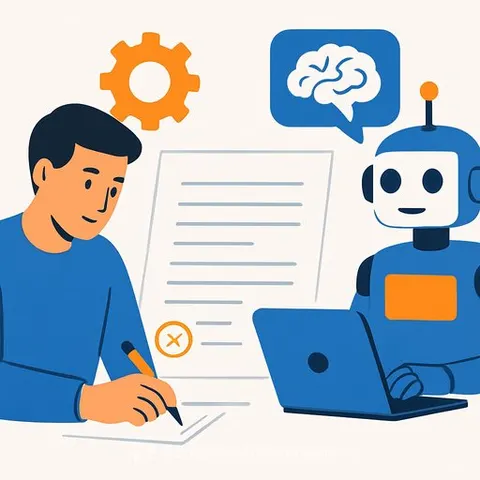
AI large language models now produce reams of text without the suffering that defined writing for generations. The challenge has shifted from putting words on the page to judging which words are worth keeping.
The torment of writing
For Franz Kafka, writing was a process of "unending torments." George Orwell described it as "a long bout of some painful illness." And Hunter S. Thompson, the journalist, saw it as the opposite of sex: "only good when it's over." These writers spoke for a profession that has long understood creation as struggle.
What AI can produce
Large language models (LLMs) have erased that struggle. They can draft emails excellently, longer prose passably, and poetry poorly. Writer's block is no obstacle; any user of an LLM can produce as many words in a day as Kafka did in his life. The output is fast, cheap, and endless.
Editing as the new craft
The real work now lies in editing. AI-generated text often arrives with factual errors, bland phrasing, or structural flab. A human must decide what serves the piece and what to cut. The skills that matter most are no longer drafting from scratch but shaping, verifying, and refining machine output.
Why this matters for writers
Writers who treat AI as a raw-material generator will stay relevant. Developing a strong editing process and learning Prompt Engineering can help writers get the most from these tools. For more on how the craft is evolving, explore AI for Writers. The ability to turn AI's flood of text into clear, accurate prose will define the next generation of writing work.