
AI news ·
AI in Emergency Radiology: Balancing Promise and Pitfalls in Patient Care
AI aids emergency radiology by quickly identifying negative scans, reducing wait times and speeding decisions. Collaboration ensures safe, effective AI use in urgent care.
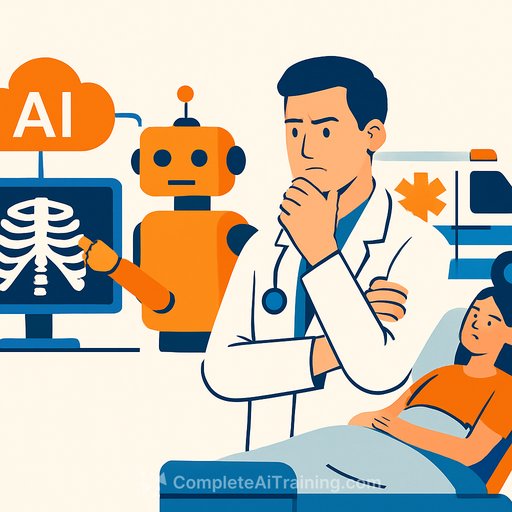
Technology Impact in Emergency Medicine
Emergency Radiology Reports – AI to the Rescue?
Emergency Departments (EDs) face increasing pressure as patient volumes rise. This has brought attention to how Artificial Intelligence (AI) might support clinicians in delivering urgent care more efficiently. The role of AI in the ED was a key topic at the European Society of Emergency Medicine (EUSEM) annual congress in Copenhagen.
Dr Karoline Skogen on AI in the ED
Dr Karoline Skogen, a neuroradiologist at Oslo University Hospitals and researcher in traumatic brain injury (TBI), shared insights on AI’s current and potential impact in emergency radiology. She highlighted that while AI performs well within its training scope, it can miss pathologies it hasn’t been trained to detect. Understanding the capabilities and limits of AI models is essential for safe use.
Skogen explained that AI can improve workflow efficiency by quickly reporting negative scans and x-rays, which can reduce patient waiting times and speed up clinical decisions.
Applications for Brain Bleeds and Fractures
Successful AI integration in the ED depends on close collaboration between radiology, emergency teams, and AI vendors. Skogen recommends developing AI algorithms trained on local data, where hospitals maintain control over the software’s code and application.
At her hospital, an in-house AI tool for detecting brain bleeds has been clinically implemented. This required commitment from both technical and clinical staff but has helped bridge the gap between developers and frontline medical professionals.
Joining the “AI Adventure”
AI is already part of emergency care in many European hospitals. Skogen encourages clinicians to actively engage with AI development and implementation to guide its use effectively. The more clinicians participate, the better the technology can support patient care.
- Dr Noa Galtung from Charite in Berlin discussed AI’s role in infection diagnostics.
- Dr Rick Body from the University of Manchester addressed concerns related to the “Black Box” nature of some AI systems.
- Dr Tanja Krones from the University Hospital of Zurich examined AI’s potential to address ethical dilemmas, such as decisions around “do not resuscitate” orders.
Profile: Dr Karoline Skogen
Dr Karoline Skogen is a neuroradiologist at Oslo University Hospitals with a PhD in brain tumors. She splits her time between clinical work and research focused on traumatic brain injury and brain tumors. Her current projects include developing and clinically implementing AI algorithms, both in-house and commercially available, to support emergency radiology.